
Original briefings. Zero spin.
Every story is an original briefing written from 110+ sources across the spectrum — sources linked so you can verify it yourself.
 energy
Major Story (8/10)
Event date: August 30, 2026
energy
Major Story (8/10)
Event date: August 30, 2026
Pentagon's 35% Stake in Venezuela Oil Deal Comes Into Focus, But Experts Doubt Quick Payoff
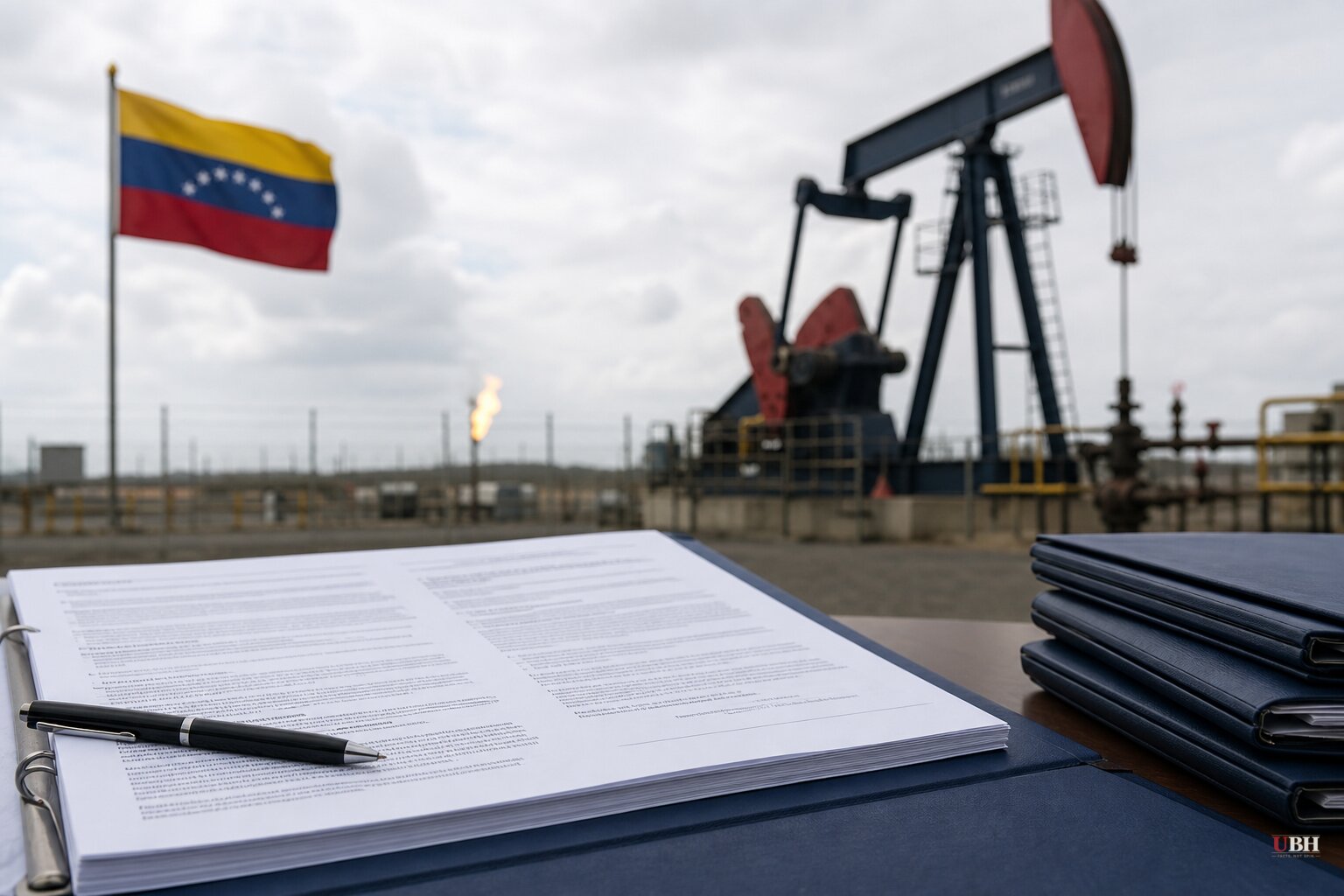
Since Venezuela's National Assembly approved the U.S. oil agreement and officials signed contracts in Caracas earlier this week, the financial architecture behind President Trump's "biggest oil deal in world history" has come into sharper focus, along with growing skepticism about how fast it will actually help American drivers.
According to CBS News, the White House says the Pentagon will take a 35% equity stake in North American Blue Energy Partners, or NABEP, a private company granted 100-year concessions by the Venezuelan government to develop 17 oil fields. The U.S. will also have the right to buy 20% of the oil the venture produces at a discounted, at-cost rate, CBS reported.
An unnamed U.S. official told the Epoch Times the arrangement gives Washington "55% effective output" of the new joint venture, making it, in the official's words, "the second-largest corporate holder of proven reserves after Saudi Aramco." Secretary of State Marco Rubio has called the deal "a huge win" that will bring nearly $100 billion in private investment into Venezuela.
Experts Say Don't Expect Quick Relief
The timeline for actually seeing that oil reach American refineries or the Strategic Petroleum Reserve is where the optimism runs into resistance. David Goldwyn, a former federal energy official who now heads Goldwyn Global Strategies and chairs the Atlantic Council's energy advisory group, told CBS News "this project is very unlikely to produce new investment and new production anytime soon." He estimated the U.S. is "at least two years, if not five to seven years at best," away from seeing Venezuelan oil reach the SPR.
That's a fair concern grounded in Venezuela's track record. The country produces only about 1.25 million barrels a day despite sitting on the world's largest proven reserves, roughly 303 billion barrels, according to the U.S. Energy Information Administration. Decades of sanctions, mismanagement and crumbling infrastructure are the reason, not a lack of oil underground.
There's also a technical mismatch CBS flagged: Venezuelan crude is heavy, while most of the oil sitting in America's underground salt caverns is lighter. Converting it for SPR storage isn't automatic. The reserve itself sits at just under 290 million barrels, its lowest level since the 1980s, after the Biden administration released more than 200 million barrels during the Russia-Ukraine war and the Trump administration drew down another 100 million-plus barrels responding to the Iran conflict, per CBS News.
A Notable Political Reversal in Caracas
One of the more striking developments this week came from Venezuela's own government. Interior Minister Diosdado Cabello, a long-suspected drug trafficker who previously demanded that "not a drop" of Venezuelan oil go to the United States, publicly voiced support for the deal, according to Breitbart News. That's a sharp turn from a figure who has spent years as one of the regime's most hardline anti-American voices.
U.S. Energy Secretary Chris Wright also traveled to Caracas this week to help finalize terms, Breitbart reported, putting a Cabinet-level energy official on the ground alongside the diplomatic and defense negotiators, Rubio and Defense Secretary Pete Hegseth, who Trump credited with striking the original agreement.
Domestic Moves While the World Watches Oil Flows
Back home, the administration isn't waiting on Venezuelan barrels to address gas prices. The EPA issued a temporary emergency fuel waiver effective September 1 aimed at boosting the domestic gasoline supply, according to Breitbart News. AAA put the national average for regular gas at roughly $4.07 a gallon in late August, compared with about $3.19 a year earlier, Fox News reported.
Meanwhile, trade sources told Breitbart that Saudi Aramco resumed loading tankers at its Juaymah and Ras Tanura terminals inside the contested waters of the Strait of Hormuz, a sign that the broader Iran-driven disruption to global crude shipping may be easing on at least one front, separate from anything tied to Venezuela.
Venezuela's Vice President Delcy Rodriguez has said the 25-year bilateral project targets 1.5 million barrels per day of production and could generate roughly $209 billion in state revenue at a $65-per-barrel benchmark, with about $19 of that flowing to Venezuela per barrel, according to Reuters reporting carried by the Daily Signal. Whether Venezuela's oil infrastructure, after years of neglect, can actually reach that production target on anything close to that timeline remains the open question every source in this story keeps circling back to.
Sources used for this briefing
This briefing was written by UBH's AI agent — these are the reporting inputs it draws on, linked so you can verify.


