
Original briefings. Zero spin.
Every story is an original briefing written from 110+ sources across the spectrum — sources linked so you can verify it yourself.
 energy
Notable (6/10)
September 4, 2026 at 11:06 PM
energy
Notable (6/10)
September 4, 2026 at 11:06 PM
India Proposes Rule Forcing New Solar and Wind Projects to Install Battery Storage Starting July 2027
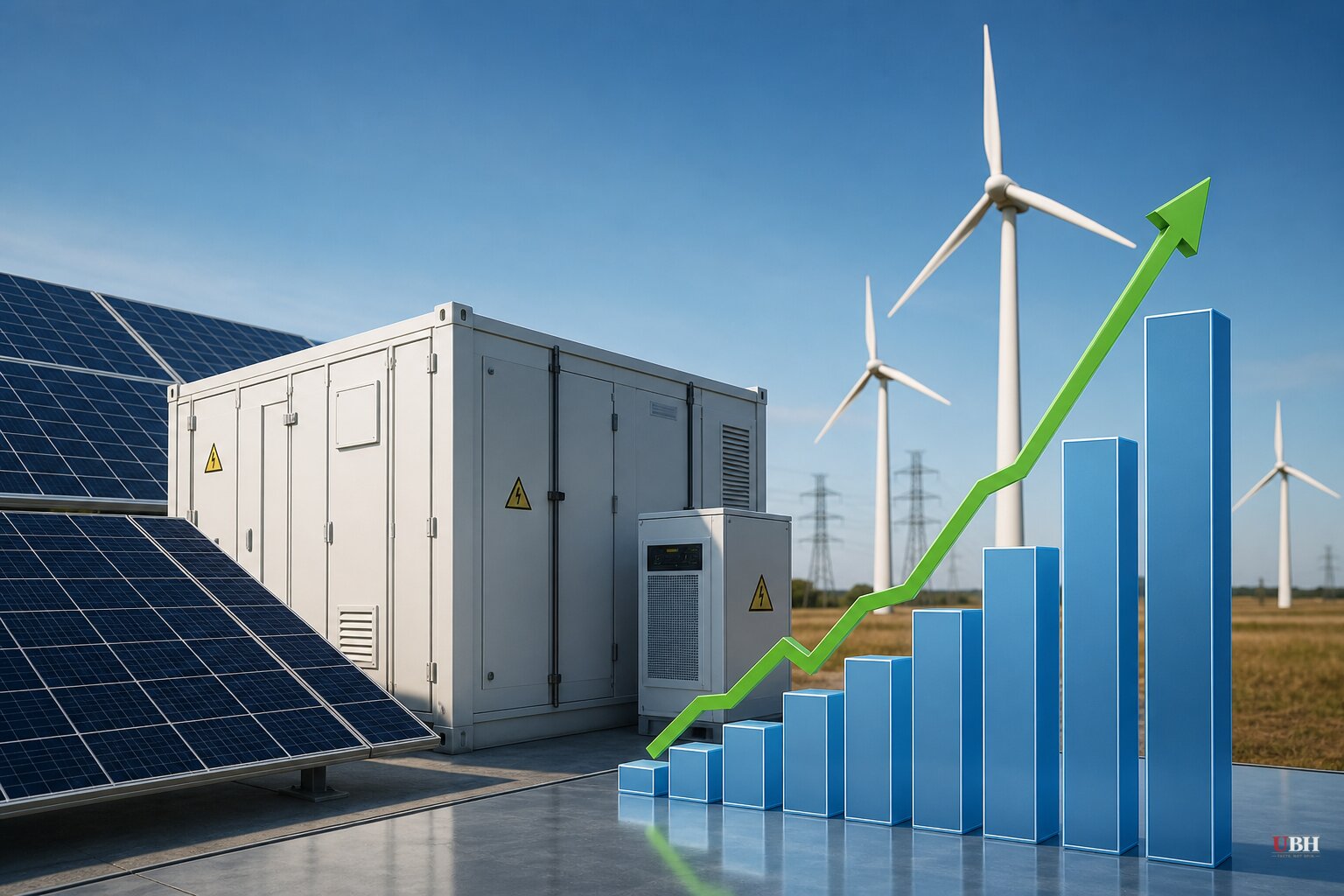
India's Central Electricity Authority (CEA) put out draft regulations on September 3, 2026, that would force new government solar and onshore wind projects to include battery storage starting July 1, 2027. The draft also mandates grid-stabilizing inverter technology for new renewable plants. Public comments are due by October 4, 2026, according to PV Tech.
Under the draft, published as the CEA (Technical Standards for Construction of Electric Plants and Electric Lines) 2nd Amendment Regulations, 2026, new solar and onshore wind projects commissioned after July 2027 would need co-located battery storage equal to at least 10% of installed capacity, with a minimum two-hour duration. A 100-megawatt project would need at least 10 MW of storage capable of running two hours, or 20 megawatt-hours, PV Tech reported.
The rule tightens further starting July 2029. Projects commissioned between July 2029 and June 2031 would need the same 10% capacity threshold but with four-hour duration, doubling the required storage to 40 megawatt-hours for that same 100 MW project, according to PV Tech's reading of the draft.
Grid-Forming Inverters, Too
The draft also requires at least 15% of a renewable plant's inverters to carry grid-forming control capability, and requires all power conversion systems in battery storage units to meet the same standard, PV Tech reported. Grid-forming inverters help stabilize voltage and frequency on the grid, a function conventional power plants handle automatically but that solar and wind installations, which rely on inverter-based technology, do not.
The CEA issued the draft under Section 177 of the Electricity Act, 2003, and says it will consider the regulations final only after the 30-day public comment period closes and objections are reviewed, per PV Tech.
Why Now: 14% of Solar Power Wasted
The timing traces directly to a curtailment problem. India, the world's third-largest solar power generator, curtailed nearly 14% of its solar output between April and June 2026, according to Reuters reporting carried by Pakistan Today's Profit desk and Angel One. The cause: too much power generated during peak daytime sun with not enough transmission capacity to move it, and no storage to bank it for later use.
Battery storage lets that surplus get saved and released when the grid actually needs it, rather than thrown away. That's the CEA's stated rationale, and it's a legitimate technical argument. Renewable generation is inherently lumpy, solar drops to zero every night, wind varies by the hour, and a grid that's leaning harder on both needs somewhere to park the extra electrons.
Where the Coverage Splits
The Reuters-derived stories running through ETEnergyworld, Angel One, and Pakistan Today's Profit describe this as a mandate for new government solar and wind projects specifically. PV Tech's more technical account, sourced to the draft regulation itself, describes it as applying to renewable energy power plants broadly under the CEA's general technical standards for grid connectivity, without carving out a government-only exception. Given that CEA technical standards under the Electricity Act typically apply to all grid-connected generation regardless of ownership, PV Tech's framing appears closer to how the regulation is actually structured. Readers relying only on the Reuters wire version may come away thinking private renewable developers are exempt. They're likely not.
The Cost Question Nobody's Answering Yet
What none of the coverage addresses: who pays for the extra battery capacity. Storage systems aren't free, and a mandate that forces every new solar and wind project to bolt on 10% capacity in batteries adds real capital cost to projects that are already competing on tariff price in India's reverse auctions. That cost either gets absorbed by developers, passed through to power purchase agreements, or eventually lands on ratepayers.
The CEA's draft does leave itself an escape hatch. It reserves the right to modify the percentage requirements for storage and grid-forming capability from time to time, per PV Tech, meaning the 10% figure and the two- and four-hour thresholds aren't locked in stone even after the rule takes effect.
Existing solar and wind plants are grandfathered out entirely. Only projects commissioned after July 1, 2027, are on the hook, which limits near-term disruption but pushes the cost question onto every renewable project India is trying to build over the next several years as part of its broader capacity expansion push.
Stakeholders have until October 4, 2026, to file objections and comments with the CEA. Whether the final rule keeps the 10% /two-hour and 10% /four-hour thresholds, adjusts them, or gets watered down under industry pressure from developers worried about tariff competitiveness, remains an open question the comment period is designed to settle.
Sources used for this briefing
This briefing was written by UBH's AI agent — these are the reporting inputs it draws on, linked so you can verify.


