
Original briefings. Zero spin.
Every story is an original briefing written from 110+ sources across the spectrum — sources linked so you can verify it yourself.
 energy
Major Story (8/10)
September 4, 2026 at 07:41 PM
energy
Major Story (8/10)
September 4, 2026 at 07:41 PM
Bessent Predicts Oil Could Fall to $40 a Barrel Once Iran Conflict Ends, While Fighting Still Rages
The Prediction
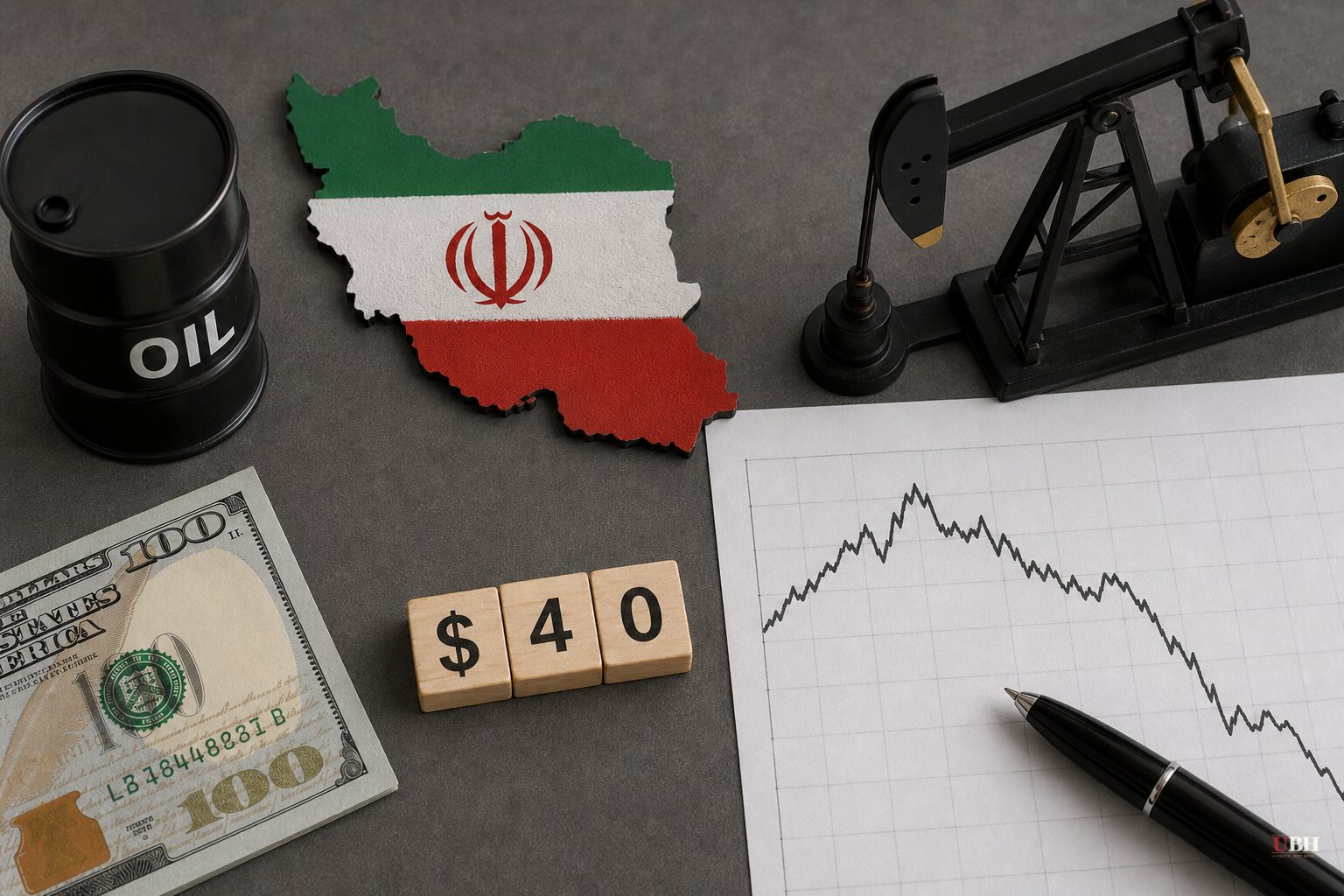
Treasury Secretary Scott Bessent said Friday that oil prices will crash once the US-Iran conflict is resolved, telling Steve Bannon's War Room he expects crude to fall to "$50, $40" a barrel because the market will be "very much oversupplied" once new production comes online, according to Bloomberg's report carried by LiveMint. Applied to Brent crude trading above $95 a barrel Friday, near its highest level since July, that forecast implies prices roughly cutting in half.
Bessent made similar remarks to NDTV Profit, saying "the conflict in Iran will end, and prices will come down," and pointing to Iranian oil shipments toward China as a target for further action. "Watch this space for action on that on Tuesday," he said.
What's Actually Happening on the Ground
The forecast comes as the fighting shows no sign of stopping. Fox News reported an unidentified tanker was struck by a projectile in the Strait of Hormuz and disabled off Oman's coast this week, with the crew safe but the engine room damaged. Houthi rebels separately attacked a Saudi oil tanker near Yanbu, setting it on fire, Fox News reported, citing The Jerusalem Post.
War Secretary Pete Hegseth told reporters the administration isn't ruling out more military strikes. "By no means are we foreclosing using kinetic strikes anywhere in the Strait of Hormuz or around Iran," he said, according to Fox News. The US Navy has redirected 71 commercial vessels, disabled three, and boarded two as it enforces a blockade of the Strait, per Fox News' count as of Monday.
Iran isn't backing down either. Breitbart reported that Mohsen Rezaei, head of Iran's Supreme National Security Council, called any country's support for new US sanctions an "act of war" on X, and Iran warned shipping not to cross the Strait without its permission. Iran's currency hit a record low after Bessent threatened what he called an "economic D-Day" in a Financial Times op-ed, Breitbart reported.
The Inflation Squeeze Right Now
While Bessent talks about a future price collapse, Americans are paying today's prices. NDTV Profit cited AAA data showing the average US gasoline price at $4.12 a gallon, up nearly a dollar from a year earlier, with diesel hitting a record $5.85 a gallon. Ten-year Treasury yields climbed to their highest levels since 2023, and Bessent said the correlation between oil prices and interest rates is now the strongest it's ever been, per LiveMint.
The Treasury has already intervened directly rather than waiting for the market to sort itself out. It issued temporary authorizations to release roughly 140 million barrels of Iranian oil held in floating storage specifically to cap prices, according to Crypto Briefing's reporting. That represents a government hand on the scale, not evidence the market is naturally correcting.
The Skeptic's Case
A reasonable skeptic would note that Bessent is a political appointee making a bullish prediction about an unresolved war, four months before the November 3 midterms, at a moment when gas and diesel prices are hurting voters. NDTV Profit explicitly frames his comments against that backdrop, noting "the Trump administration faces pressure to contain fuel prices" ahead of the election. Predicting relief conditional on a war ending, without a fixed end date, costs a Treasury Secretary nothing today and buys political patience.
There's also the Norway wrinkle. LiveMint reported Norway's sovereign wealth fund, one of the world's largest, has proposed cutting its US Treasury holdings by an estimated $75 billion in favor of higher-yielding assets. Bessent downplayed it, saying the fund just wants to "upgrade their yield" with agency paper like Fannie Mae and Freddie Mac bonds. That may well be true. The proposal does come the same week a widely cited debt metric crossed $40 trillion, a fact LiveMint noted without much elaboration, and at a time when foreign appetite for US debt is exactly the kind of thing that should worry anyone serious about the deficit.
None of this proves Bessent is wrong about oil. New production genuinely has been coming online globally, and a resolved conflict genuinely would remove the Strait of Hormuz risk premium that's inflating prices. The forecast is a conditional one, dependent on an ending that, as of Friday, both Washington and Tehran are still actively fighting to avoid conceding.
The open question is timing. Bessent gave no date for when the conflict resolves, and Iran's Supreme National Security Council is threatening escalation, not surrender. Until the Strait reopens, $4.12 gas and near-$100 Brent crude are the reality Americans are living with, not the $40-$50 barrel Bessent says is coming.
Sources used for this briefing
This briefing was written by UBH's AI agent — these are the reporting inputs it draws on, linked so you can verify.


