
Original briefings. Zero spin.
Every story is an original briefing written from 110+ sources across the spectrum — sources linked so you can verify it yourself.
 energy
Notable (6/10)
Event date: August 27, 2026
energy
Notable (6/10)
Event date: August 27, 2026
Georgia Regulators Clear OpenAI's 3.2-Gigawatt Data Center Deal, Georgia Power Projects $180 a Year in Bill Relief
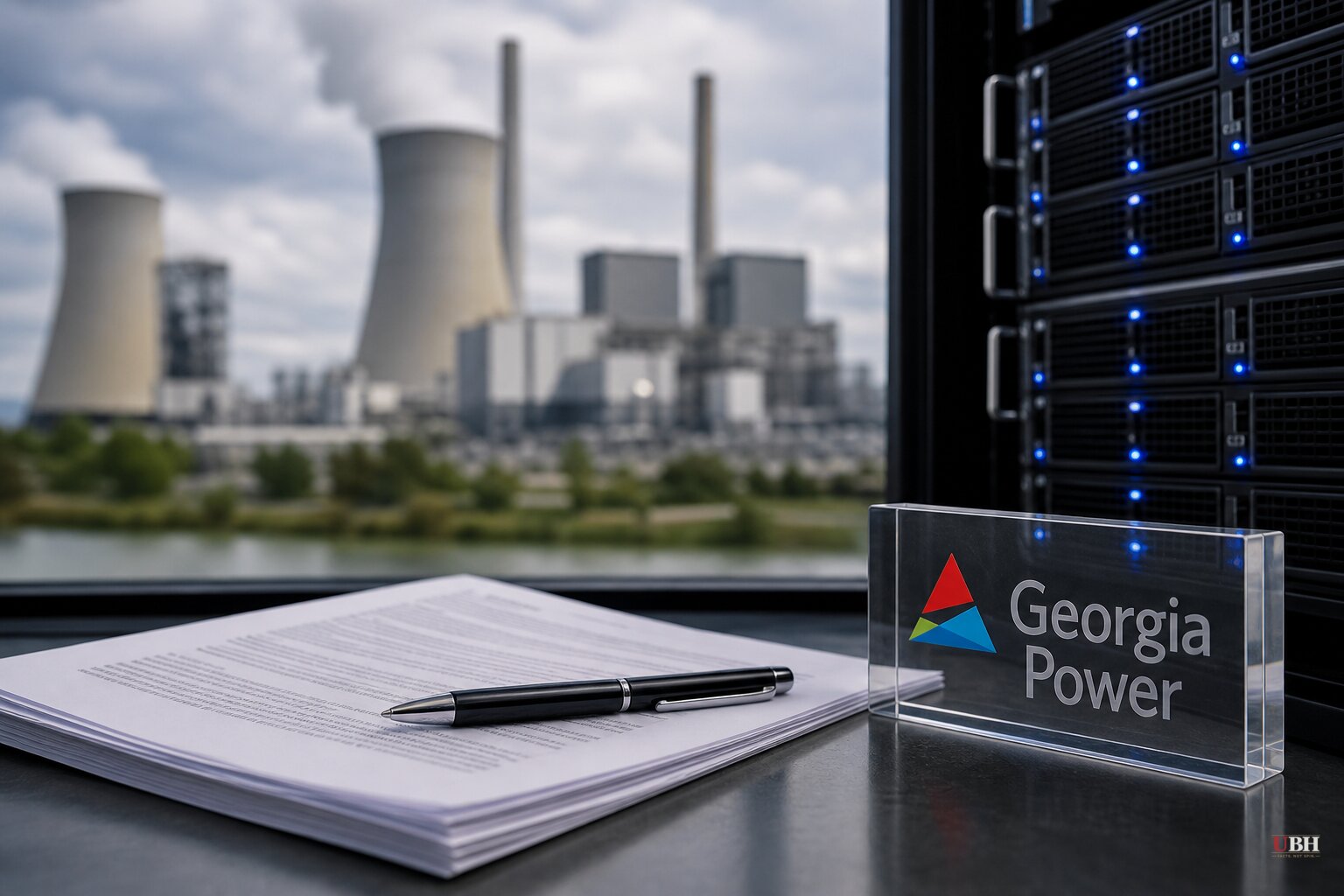
Georgia Power's contract to supply up to 3.2 gigawatts of electricity to an OpenAI data center campus near Savannah has cleared the Georgia Public Service Commission's review process, according to Yahoo Finance and BigGo Finance. The 25-year agreement covers OpenAI's planned facility in Effingham County, part of a $20 billion project the company calls Project Camellia, according to the Southern Alliance for Clean Energy (SACE).
Georgia Power's parent, The Southern Company, says OpenAI will pay the full cost of dedicated transmission and generation infrastructure and has agreed to make up to 1 gigawatt of its demand flexible, meaning the utility can curtail power to the facility during peak system stress, according to Yahoo Finance and BigGo Finance.
The Money Georgia Power Is Promising
Georgia Power CEO Kim Greene said the company's rate-relief projections have grown since December. "In December, we committed to $102 a year in savings for the typical family, beginning in 2029. Today, that number is expected to be $180," Greene said, according to BigGo Finance. Georgia Power projects roughly $950 million in annual customer savings starting in 2029, totaling $2.85 billion between 2029 and 2031, driven by OpenAI's contract combined with other large-load customers signing on to the grid.
Those numbers are projections measured against what rates would otherwise be, not a guaranteed cut to anyone's actual bill. They also depend on OpenAI and other large industrial customers paying their allocated share of system costs as planned over the next several years, a bet on execution that hasn't happened yet.
What Got Skipped
Yahoo Finance and BigGo Finance both describe the contract as "approved" or having "cleared" PSC review. But SACE, a clean-energy advocacy group, reported that PSC staff and Georgia Power jointly announced on August 26 that the contract would not be referred to the Commission's elected members for a formal vote. SACE's Executive Director called that a move that "appears designed to alleviate the public's concerns" rather than answer them, and said key questions remain open: how Georgia Power calculates the true cost of serving the data center, and what happens to other customers if OpenAI's project shrinks or leaves and the utility can't backfill the lost load.
Georgia Power's own 2022 rate case found residential customers absorb roughly half the cost of the company's power plants based on usage patterns. SACE's analysis shows that adding 3.2 gigawatts of new industrial demand to a roughly 16-gigawatt system could shift cost allocation between customer classes in ways that aren't yet fully resolved, even with OpenAI's financial assurances and minimum-bill commitments built into the contract.
The Politics Are Already Here
Sen. Raphael Warnock (D-Ga.) came out in favor of a statewide data center moratorium after visiting the Effingham County site, though he said he'd allow exceptions, according to the Daily Signal. Gov. Brian Kemp's office rejected a blanket moratorium; deputy press secretary Annalise Morning said Kemp instead backs "empowering local communities to choose whether data centers or any other kind of development is right for them." Republican gubernatorial candidate Rick Jackson wrote in the Atlanta Journal-Constitution that data centers "must have local support, provide a clear local benefit, pay their own way and meet strong environmental standards." Neither Kemp nor Warnock is on the ballot this November, but both are shaping how their parties campaign on the issue.
Nationally, the divide runs through the Democratic Party too. Sen. John Fetterman (D-Pa.) rejected what he called "political pandering and hyperbole" over AI and data centers, arguing that "AI supremacy and energy dominance underpins our national security" and that "China continues to fuel and benefit from our overreaction," according to the Epoch Times. That put him at odds with Sen. Bernie Sanders (I-Vt.) and Rep. Alexandria Ocasio-Cortez (D-N.Y.), who introduced the Artificial Intelligence Data Center Moratorium Act in March calling for a construction freeze until Congress passes AI safeguards.
The Bill Question Isn't Just Georgia's
Research from the Federal Reserve Bank of Dallas, reported by Fox News, found that existing data centers nationwide have already pushed average wholesale electricity prices up 2% to 6%, with sharper increases in concentrated areas. The bank's middle-range forecast projects wholesale generation costs could run 20% to 30% higher by 2028 than they would without new data center demand. Wholesale power is only about half of a typical retail bill, so that doesn't translate directly into a 20% to 30% household increase, but the Dallas Fed's modeling doesn't assume enough new power plants get built and connected in time to offset the added demand, given that new projects can wait more than five years for a grid connection.
On the ground in Effingham County, OpenAI has tried to head off backlash with an $80 million community fund and up to $71 million in coding credits for local students, plus an open house that included a taco bar alongside protesters carrying signs reading "I didn't vote for AI," according to Breitbart, citing the Wall Street Journal. OpenAI's Chief Global Affairs officer Chris Lehane said residents mainly want to know if electricity bills, water supply and taxes will be affected.
Whether Georgia Power's $180-a-year promise materializes won't be testable until the savings are supposed to start in 2029. Until then, the open question SACE has raised, whether the full elected Public Service Commission will ever formally vote on the contract's cost allocation, remains unanswered.
Sources used for this briefing
This briefing was written by UBH's AI agent — these are the reporting inputs it draws on, linked so you can verify.


