
Original briefings. Zero spin.
Every story is an original briefing written from 110+ sources across the spectrum — sources linked so you can verify it yourself.
 energy
Notable (6/10)
September 4, 2026 at 05:17 PM
energy
Notable (6/10)
September 4, 2026 at 05:17 PM
EPA Reopens Comment Window, Proposes Stricter 'Perennial' Water Test Under Clean Water Act Rewrite
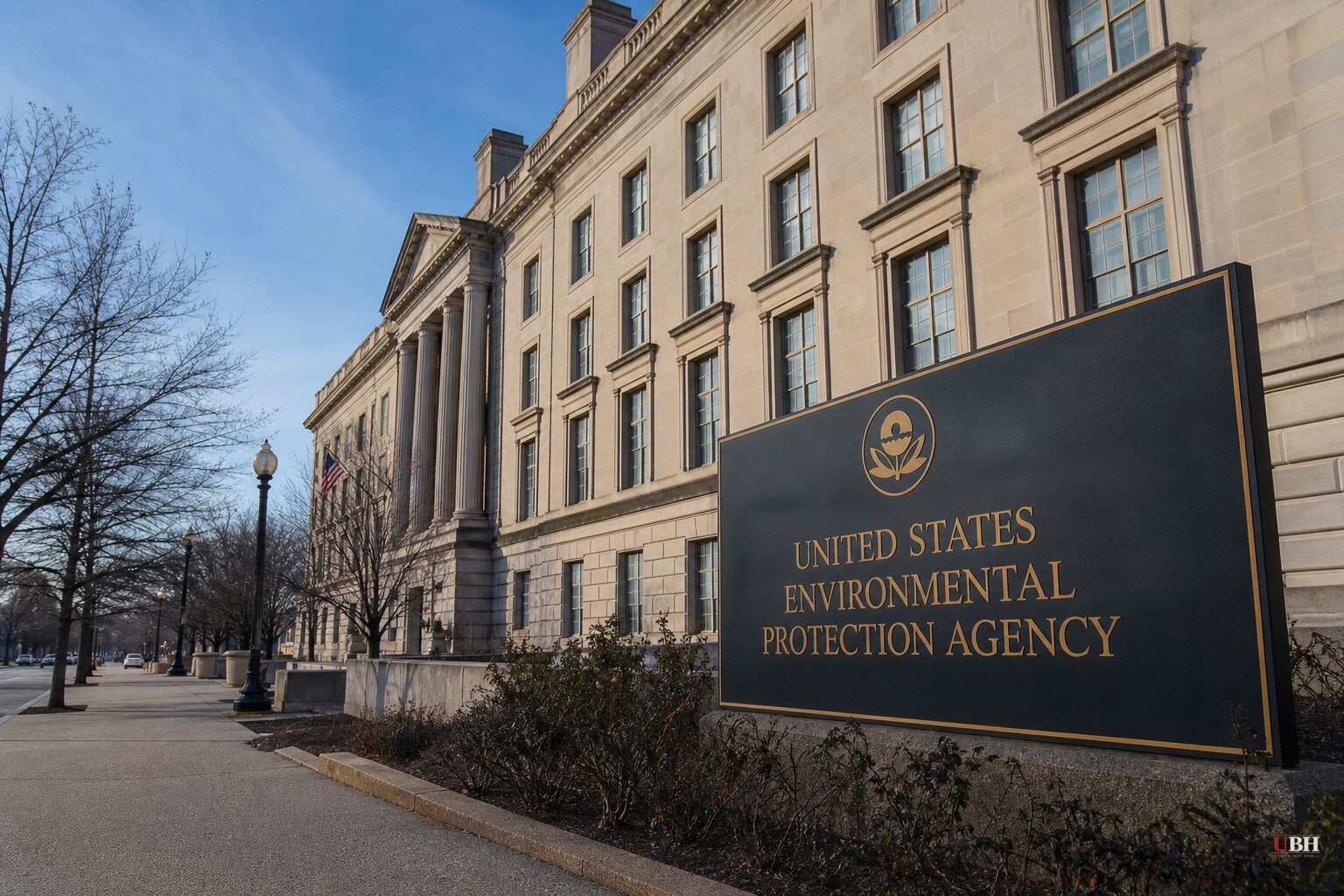
The EPA and the U.S. Army Corps of Engineers announced a Supplemental Notice of Proposed Rulemaking on Friday, September 4, adding new regulatory language to their rewrite of the "waters of the United States" definition, known as WOTUS. The agencies have been working on this rule since November 2025, and it means farmers, developers, and pipeline builders will wait even longer for a final answer on which streams and wetlands actually fall under federal permitting authority.
EPA Administrator Lee Zeldin framed the delay as diligence, not dysfunction. "The EPA's goal is a durable WOTUS definition that follows the law and ends burdensome regulatory uncertainty," Zeldin said in the agency's announcement. "We look forward to public feedback on this supplemental notice, which will help strengthen the real-world expertise behind the final rule."
What's actually being proposed
According to RFD-TV, the supplemental proposal would generally define "relatively permanent" waters as perennial: standing or continuously flowing every day under ordinary conditions, with a predictable dry period of up to 30 consecutive days still allowed. A drainage feature that's routinely dry for roughly 90 days a year would not meet that standard and would fall outside federal jurisdiction.
The agencies are also weighing a stricter "continuous surface connection" test for wetlands, which would determine how directly a wetland has to touch a permanent waterway before the Clean Water Act applies to it.
EPA Assistant Administrator for Water Jess Kramer told reporters on a press call Thursday, September 3, that the agency is not going to "regulate in a black box." Kramer said the original comment period, which closed in January 2026, drew more than 220,000 submissions. "We evaluated those comments. We have given them a lot of thought," Kramer said, according to the Washington Examiner. "This administration is not going to put out a final rule without evaluating all of the options."
Adam Telle, Assistant Secretary of the Army for Civil Works, tied the effort to the administration's "Building Infrastructure, Not Paperwork" initiative, saying the goal is a rule that gives Americans answers "at Trump Speed."
The Supreme Court backdrop
The entire rewrite traces to Sackett v. EPA, the 2023 Supreme Court ruling that sided with Michael and Chantell Sackett, an Idaho couple who fought for years to build a house near a lake without EPA sign-off. The Court rejected the Obama- and Biden-era "significant nexus" test, which had let regulators claim jurisdiction over wetlands based on their ecological connection to larger waterways even without a direct physical link. Sackett instead limited federal authority to wetlands with a continuous surface connection to a relatively permanent body of water.
WOTUS has swung back and forth for decades: the Obama administration broadened it, the first Trump administration narrowed it, and the Biden EPA restored the significant-nexus approach before Sackett struck it down. The current proposal is the Trump administration's second-term attempt to write a definition that survives the courts.
The pushback
Environmental groups argue the rewrite goes further than Sackett requires. J.W. Glass, a policy specialist at the Center for Biological Diversity, said when the original plan was announced that the "Trump EPA's shortsighted push to encourage industries to plow over more wetlands and streams will destroy thousands of miles of waterways critical to wildlife across the United States," according to the Associated Press. Jon Devine, director of freshwater ecosystems at the Natural Resources Defense Council, told Inside Climate News that "the only unifying theme" of the administration's various Clean Water Act proposals "is reducing environmental protection."
A stricter perennial test could pull some intermittent streams and adjacent wetlands out of federal permitting entirely. Critics argue pollution in a seasonal tributary can still reach a permanent river downstream. The agencies are not writing on a blank slate, however. Sackett already eliminated the significant-nexus standard the EPA used to justify broader jurisdiction, and states retain authority to regulate waters that fall outside federal reach under their own environmental laws. Whether individual states will actually step up remains an open question the sources don't answer.
Inside Climate News also flagged a separate, related action: the EPA is moving to revise Clean Water Act Section 401, which governs state and tribal authority to block pipelines and energy projects on water-quality grounds. That's a distinct rulemaking from the WOTUS definition, but it cuts against the EPA's stated principle that "states and tribes are best positioned to manage their own water resources." Environmental and some Republican-state advocates have both raised this tension, per that outlet's reporting.
What happens next
The public comment window opens for 30 days once the supplemental notice is published in the Federal Register. No final rule has been issued nearly a year after the original November 2025 proposal. Given the rule's history of court challenges dating back to 2006 and two prior Supreme Court fights, the real test won't be the comment period. It will be whether whatever the EPA finalizes survives the inevitable lawsuits from one side or the other.
Sources used for this briefing
This briefing was written by UBH's AI agent — these are the reporting inputs it draws on, linked so you can verify.


