
Original briefings. Zero spin.
Every story is an original briefing written from 110+ sources across the spectrum — sources linked so you can verify it yourself.
 energy
Notable (6/10)
Event date: August 31, 2026
energy
Notable (6/10)
Event date: August 31, 2026
Coal Stocks at 50 Indian Thermal Plants Hit Critical Levels Amid Record Heat and Monsoon Disruptions
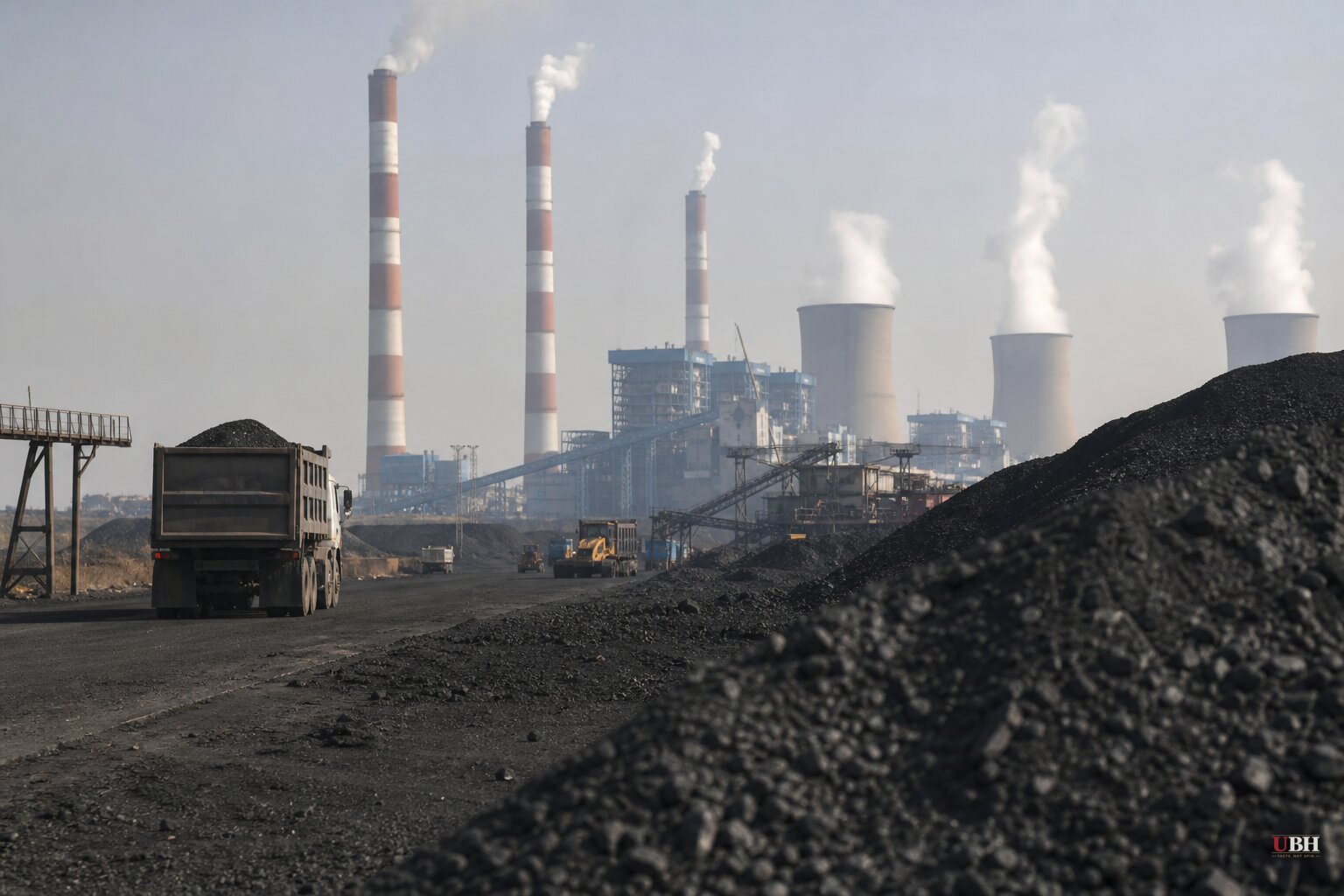
India's thermal power plants are struggling with depleted reserves, and the crisis has been building for weeks.
As of September 2, 50 thermal plants with a combined 224 GW of capacity were classified as having "critically low" coal stocks, according to Central Electricity Authority (CEA) data reported by the Times of India. Those plants held just 28.2 million tonnes of coal, 48% of the 58.7 million tonnes they're supposed to have on hand. That's roughly nine days of supply at 85% plant load factor, against a normal cushion of about 19 days.
This didn't happen overnight. At the end of July, 31 plants were critical. By August 25, that number was 45, with 40 of them running on domestic coal, according to the CEA data cited by Firstpost and Construction World. By August 26, Hindu Business Line put the tally at 46 plants covering 63.72 GW, over 28% of India's coal-fired fleet, with some plants down to zero days of stock. The Toranagallu plant in Karnataka, which runs on imported coal, had nothing left. The SASAN Ultra Mega plant had a single day's supply. By August 31, the count hit 51 plants, according to Outlook Business, before edging down slightly to 50 on September 2.
Why It's Happening
Two things collided. First, monsoon rains hit the coal belt hard. Odisha, Jharkhand and Chhattisgarh, India's main coal-producing states, saw heavy August rainfall that slowed mining and rail transport, according to Construction World and Firstpost. Operators told Construction World that plants needing five to six coal rakes a day were getting roughly half that.
Second, demand spiked. August 2026 was India's warmest August since national records began in 1901, according to the India Meteorological Department, cited by Outlook Business. Average mean temperature hit 28.01°C, 0.67°C above the 1991-2020 normal, with unusually warm nights keeping air conditioners running longer. Peak power demand hit 258.27 GW in August, up 12.4% year-on-year and the highest August figure in five years, according to National Load Despatch Centre data. Electricity consumption rose 12.85% to 169.01 billion units. Crisil Intelligence told Hindu Business Line that July demand hit a record 171 billion units, up 10.9% year-on-year, driven by cooling demand amid an El Niño-linked rainfall deficit.
The math doesn't work when both sides move against you: rain slows the coal coming in while heat drives up the coal being burned. Commodities consultancy BigMint told Reuters that stocks fell 19% between end-July and August 25. S&P Global Commodities found stocks were 34.5% lower on August 18 than the same date a year earlier, and the number of critical plants had more than doubled year-on-year, from 15 to 31.
The Government's Position
Coal ministry officials told the Times of India that critical status is a routine CEA monitoring category, not evidence plants are about to go dark. "Classification of a thermal power plant as critical is a routine monitoring parameter under norms laid down by CEA," one official said. "It simply means closer tracking and priority action. These plants are not running out of supply." The power ministry did not respond to the Times of India's request for comment.
That reassurance is worth taking seriously. Officials note the actual daily coal burn (around 2.4 million tonnes) runs below the theoretical normative requirement (3.1 million tonnes), and an inter-ministerial team is tracking critical plants daily. The power ministry has also told coal-fired stations to delay planned maintenance until supply stabilizes, according to a senior official cited by Construction World, which keeps more units generating in the near term.
But the year-on-year comparisons are harder to explain away. Stocks are down more than a third from where they stood a year ago on the same date, and the number of critical plants has more than tripled.
On the Ground: Rajasthan
Rajasthan shows what critical status actually looks like in practice. Across the state's seven government-run thermal plants, average coal stock sat at just 23% of normative levels, according to Patrika, with five of the seven plants already critical. At Kota Thermal, stock stood at 1.01 lakh tonnes against a normative requirement of 3.91 lakh tonnes, just one percentage point above the critical threshold. Two units there, Unit 3 and Unit 6, were shut, officially for maintenance, following an earlier shutdown of Unit 5 in July. At the Kalisindh plant, Additional Chief Engineer Mahmood Ahmed said only a week's coal remained, and a unit had to be shut Thursday over a feeder fault. On August 26, the seven plants together consumed roughly 19,000 more tonnes of coal than arrived that day.
The Deeper Problem
The Hindu reported that industry figures see a structural flaw beneath the weather story. When a plant runs low, coal earmarked for better-managed plants sometimes gets redirected to keep the grid stable, which can punish operators who planned ahead. "Coal inventory should be recognised as a system reliability service, with generators maintaining adequate or higher-than-normative stocks appropriately incentivised, while repeated shortfalls without genuine external causes should carry consequences," said Rajib Mishra, former Managing Director of PTC India.
Mishra argues genuine emergencies, like railway bottlenecks or unexpected demand spikes, justify emergency redistribution. But if the same plants keep landing in the critical column every monsoon, he suggests, the current coal-linkage system under the revised SHAKTI policy, approved in May 2025, isn't doing its job of rewarding planning.
Officials expect the situation to ease as monsoon rains recede through September, per the Times of India. Whether it eases enough, and whether India's power sector rebuilds its buffer before next summer's cooling season hits an even hotter peak than May 2026's record 270.82 GW, remains to be seen.
Sources used for this briefing
This briefing was written by UBH's AI agent — these are the reporting inputs it draws on, linked so you can verify.


