
Original briefings. Zero spin.
Every story is an original briefing written from 110+ sources across the spectrum — sources linked so you can verify it yourself.
 energy
Major Story (7/10)
Event date: August 31, 2026
energy
Major Story (7/10)
Event date: August 31, 2026
Nepal's Hydropower Empire Takes a $46 Billion Hit After Floods Wipe Out 900 Megawatts of Capacity
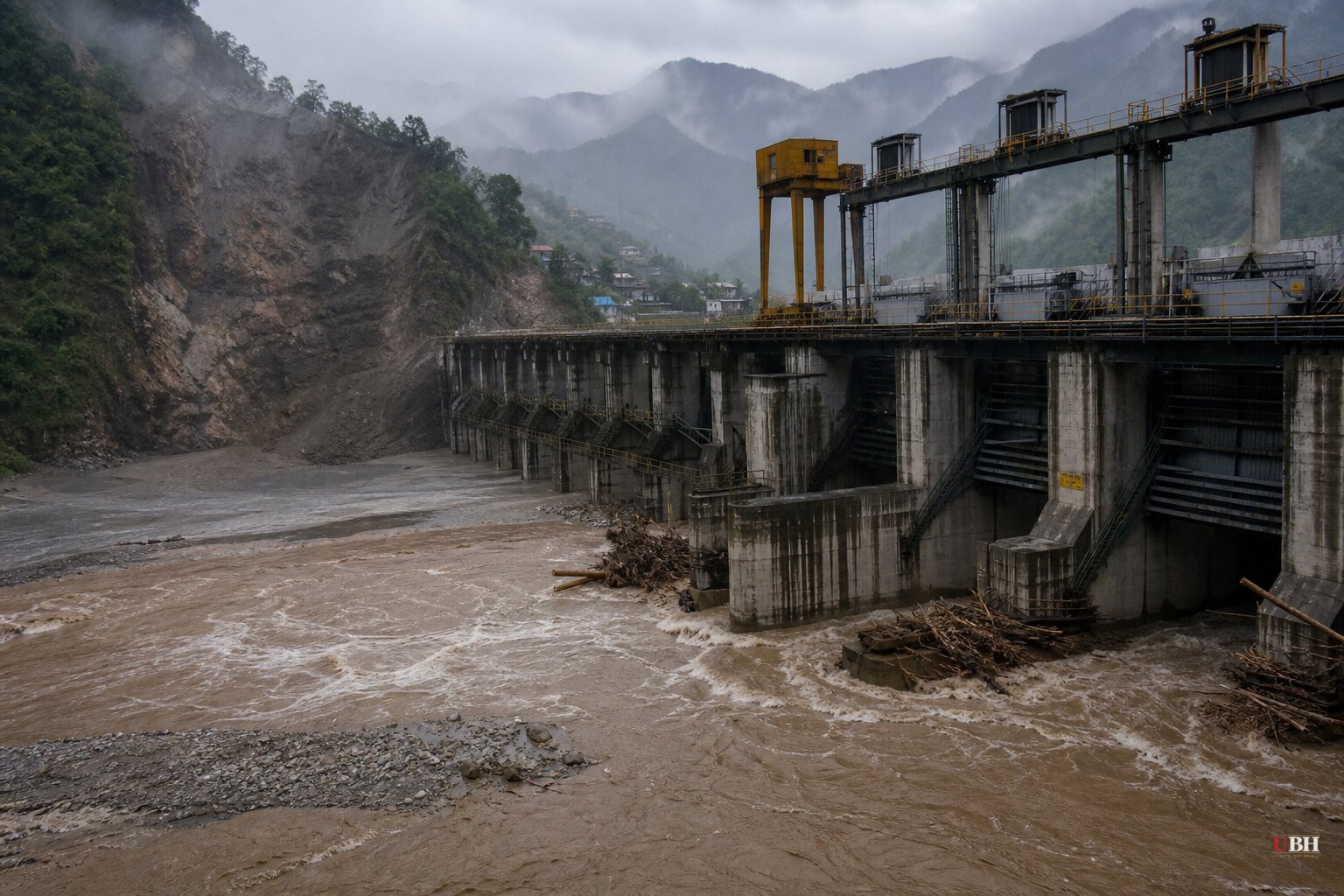
The Damage, By the Numbers
Since the Aug. 26 flash flood that has killed at least 1,295 people according to Nepal's disaster authority, the country's power sector is facing a reckoning it can't dodge: nearly all of Nepal's electricity, and a huge chunk of its export revenue, runs through the same river valleys the flood just tore apart.
Twelve operational hydropower plants totaling 431 megawatts were knocked offline, and another 15 projects under construction, representing roughly 470 megawatts of planned capacity, were heavily damaged, according to an Epoch Times commentary by Patricia Adams and Lawrence Solomon. Combined, that's more than 900 megawatts sitting directly in the flood's path, out of a national installed base of about 3,900 megawatts, per figures from the Nepal Electricity Authority cited by the BBC.
That's more than 10% of Nepal's total generation capacity gone in a single morning, the BBC reported. Nepal Electricity Authority spokesman Rajan Dhakal told the BBC that supply remains adequate for now, but conceded, "the time has come for a rethink of our hydropower policy."
Kulman Ghising, a hydropower expert and former head of the Nepal Electricity Authority, called it a "once-in-a-century" event but said Nepal needs to "design the plants [to be more] resilient to floods" and adopt early-warning systems, according to comments he gave to Mongabay and cited by the BBC.
What Actually Caused It
The mechanical trigger isn't seriously disputed. Geoscientist Jakob Steiner of Austria's University of Graz told the Epoch Times that a chunk of a glacier tongue sheared off because the rock beneath it failed, dropping ice and debris from 5,100 meters to 3,000 meters and damming the river. When that natural dam breached, the pent-up water surged downstream, and it kept picking up construction debris, spoil piles, cofferdams and diversion tunnels as it went.
Where the real dispute starts is over why so much infrastructure was sitting in that river valley in the first place. The BBC frames it as a climate story: the high-altitude Himalayas are warming 50% faster than the global average, and Nepal's own Disaster Risk Reduction and Management Authority has said more than nine in 10 disaster events recorded between 2018 and 2024 were "related to climate." The BBC does note that scientists say it's too soon to draw a firm link between this specific flood and climate change.
Adams and Solomon, writing as commentary for the Epoch Times, argue the opposite: that international lenders, chasing a climate-driven goal of 28,500 megawatts of Nepalese hydropower by 2035, financed a $46 billion buildout of plants, tunnels and access roads squeezed into the floor of a narrow, hazard-prone valley that a market driven purely by domestic demand never would have picked. Their argument is that fear of climate change, not climate change itself, put hundreds of workers and billions in equipment directly in the path of a landslide-dam breach. That's a contested causal claim from named opinion writers, not a peer-reviewed finding, and it doesn't dispute the glacier-collapse mechanism Steiner described. Both sides agree on what physically happened and disagree only on who's responsible for where the infrastructure sat.
The Trapped Workers and the Diplomatic Flap
Mohan Kumar Dangi, president of the Nepal Independent Power Producers' Association, said hundreds of hydropower workers were believed trapped in flooded tunnels in the flood's immediate aftermath, according to Breitbart. South Korean firm Doosan Enerbility had roughly 20 employees trapped at its construction site in Nepal's Rasuwa district. Nine were eventually rescued and returned home, Breitbart reported, while Nepal's initial refusal of outside foreign assistance created a brief diplomatic standoff with Seoul.
The Bigger Squeeze: India, China, and a Possible Power Shortage
Nepal's hydropower sector is also caught in a geopolitical tug-of-war. India has built rules barring its own consumers from buying Nepalese electricity generated by projects with Chinese financing ties, according to Breitbart, and has already pulled four hydropower projects away from Chinese firms, including one tied to Beijing's Belt and Road Initiative announced during Xi Jinping's 2019 visit to Nepal. Some Nepalese officials worry that between India's buying restrictions and its appetite for Nepal's surplus power, the country could face shortages even with 120 operational plants and 235 more under construction, per Breitbart's reporting, tapping less than 10% of Nepal's theoretical 42,000-megawatt potential.
Nepal earns close to $200 million a year exporting hydroelectricity to India and Bangladesh, the BBC reported, income the country can't easily replace. Operators still don't know whether any of the 12 damaged plants can be brought back online, the BBC reported, and no government timeline for that assessment has been announced.
Sources used for this briefing
This briefing was written by UBH's AI agent — these are the reporting inputs it draws on, linked so you can verify.


