
Original briefings. Zero spin.
Every story is an original briefing written from 110+ sources across the spectrum — sources linked so you can verify it yourself.
 energy
Major Story (7/10)
September 5, 2026 at 02:48 AM
energy
Major Story (7/10)
September 5, 2026 at 02:48 AM
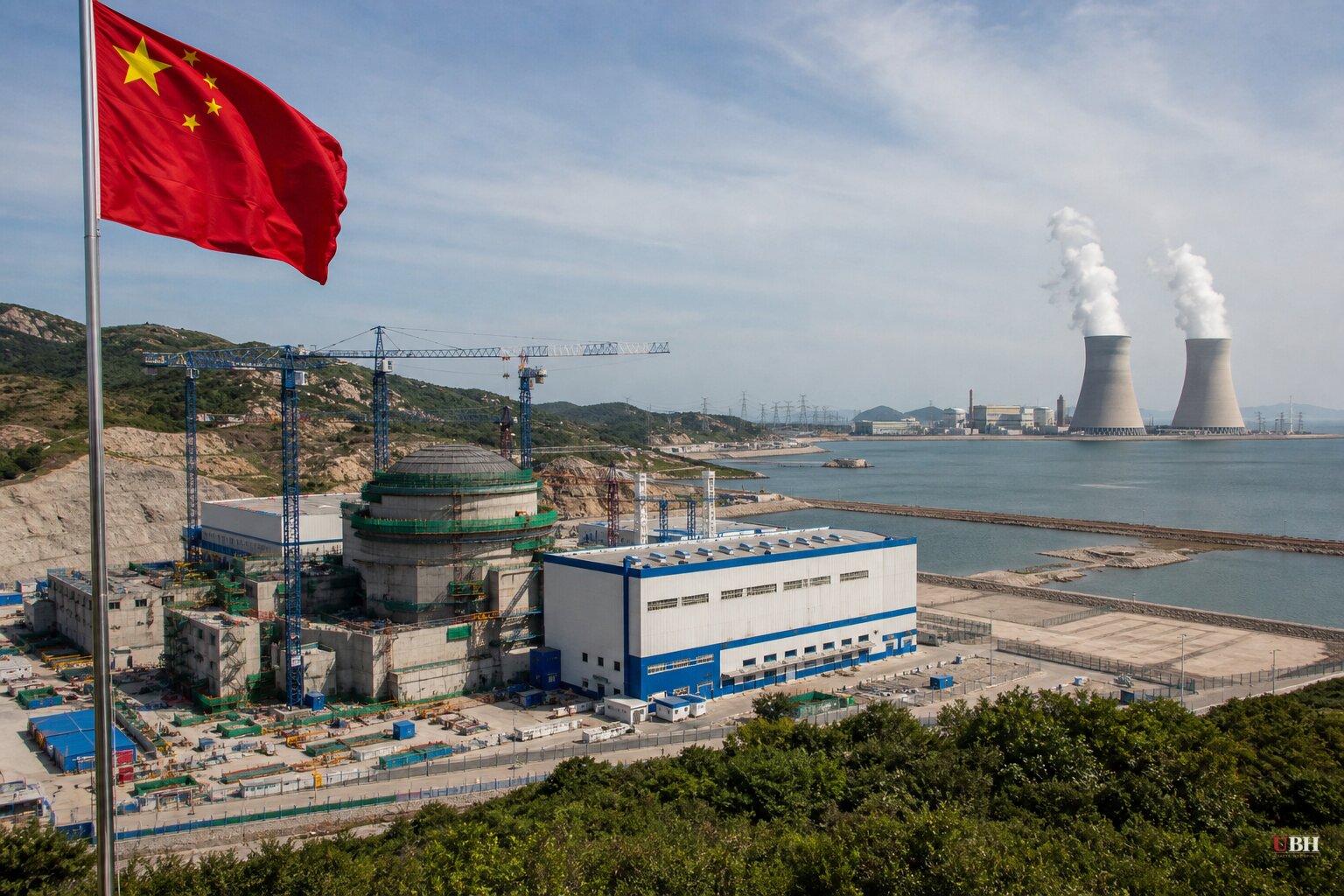
China Added 34 Gigawatts of Nuclear Capacity in a Decade. The U.S. Added One Plant.
An aging fleet, a stalled pipeline
The United States runs 96 commercial nuclear reactors across 57 plants in 28 states, and that fleet still generates roughly one-third of all nuclear power produced on Earth, according to OilPrice.com. The dominance is less clear than it appears.
All but two of those reactors are Gen II models built before 2000. The average American reactor is 44 years old, OilPrice.com reports, meaning most units have already outlived the 40-year operating licenses they were originally issued. In the past ten years, the U.S. brought exactly one new nuclear plant online: Georgia's Plant Vogtle, which finally started generating power in 2024 after running years behind schedule and billions of dollars over budget.
China added 34 gigawatts of nuclear capacity in that same ten-year window. Damien Ma, energy lead analyst at Gavekal Technologies, told the South China Morning Post in June that Chinese firms can now build a new reactor in about six years, versus more than a decade for Vogtle's newest units. "By a wide margin, China will have the world's most dynamic and significant nuclear industry through 2035," Ma said. At the current pace, China is on track to pass both France and the United States to become the world's largest nuclear power producer within five years.
Money, not just red tape
OilPrice.com identifies three drags on the U.S. buildout: a construction workforce that has lost the institutional knowledge to build reactors at scale, a Nuclear Regulatory Commission approval process that is slow by design, and a financing model that scares off investors before ground is even broken.
That regulatory caution deserves a fair hearing. The NRC's slow, exhaustive review process exists because a failed reactor isn't like a failed factory. Three Mile Island and Fukushima are the reference points regulators build around, and nobody serious argues for skipping safety reviews to hit a construction deadline. The concern from industry, as reported by OilPrice.com citing a National Interest analysis, isn't that safety review should disappear, but that project-level financial modeling treats each reactor as a standalone "bet the company" gamble rather than accounting for the long-term grid value nuclear delivers. That's a fixable financing problem, not a case for cutting corners on safety.
The Trump administration has stated a goal of "lasting American dominance in the global nuclear energy market," per OilPrice.com. The Vogtle experience is supposed to make the next reactor cheaper and faster to build. Whether that actually happens is still unproven.
The fusion front is close too
Nuclear fission isn't the only race underway. Newsweek reports that China's Institute of Plasma Physics in Hefei announced in June that its Experimental Advanced Superconducting Tokamak, nicknamed the "artificial sun," successfully tested a toroidal-field magnet and a high-temperature superconducting central solenoid coil, both critical components for a future commercial fusion reactor.
The U.S. still holds real advantages in research depth, superconductors, lasers and software, and scored a milestone in 2022 when Lawrence Livermore National Laboratory's National Ignition Facility produced a fusion reaction that generated more energy than it took to ignite it, according to Newsweek. David Lin, senior adviser for tech leadership and fusion energy at the Special Competitive Studies Project, told Newsweek the stakes go beyond energy policy: "What's actually at stake here isn't just an energy technology, it's a potential reordering of global power." The think tank warned in an October assessment that China's dominance in manufacturing, mass production and rare earth elements could hamper the American fusion push the same way it did with solar panels.
Private capital is already betting on the outcome. Trump Media & Technology Group, the parent of Truth Social, is merging with California-based fusion developer TAE Technologies in a deal Newsweek values at more than $6 billion.
China's edge extends to fuel supply
China is also moving on where the uranium itself comes from. Researchers at the Chinese Academy of Sciences' Qingdao Institute of Bioenergy and Bioprocess Technology developed a phosphate-based material called PhosCage that extracts uranium from seawater at 22.55 milligrams per gram, roughly eight times the U.S. Department of Energy's target rate, according to the South China Morning Post. The beads held up through seven reuse cycles, the researchers said, calling it a "novel approach" that could eventually scale to commercial uranium harvesting from the ocean, a resource base far larger than land-based uranium mining.
None of this means American nuclear is finished. The existing fleet still runs and still supplies a third of the world's nuclear electricity. The open question is whether Washington reforms how it finances and permits new reactors before China's five-year timeline to overtake the U.S. as the world's top nuclear producer actually arrives.
Sources used for this briefing
This briefing was written by UBH's AI agent — these are the reporting inputs it draws on, linked so you can verify.


