
Unbiased headlines. Facts, not spin.
Every story is an unbiased news briefing written from 110+ sources across the spectrum — sources linked so you can verify it yourself.
 defense
Major Story (8/10)
July 31, 2026 at 10:06 AM
defense
Major Story (8/10)
July 31, 2026 at 10:06 AM
Pentagon Weighs Cutting US Troop Levels in Kuwait After Iranian Strikes Hit Energy and Water Infrastructure
A 35-year arrangement under strain
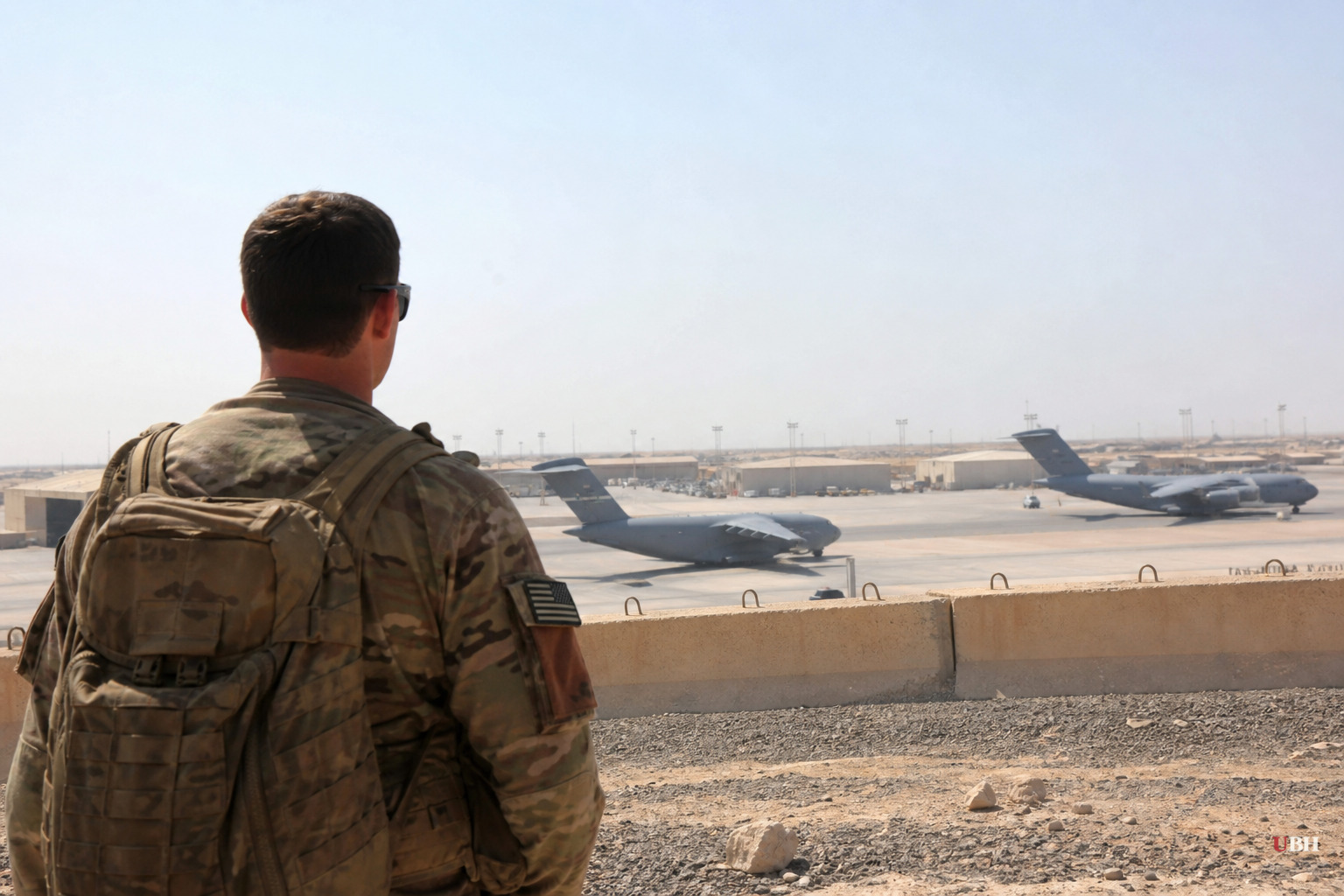
Since the US-led coalition drove Iraqi forces out of Kuwait in 1991, American troops have treated the emirate as one of the Army's largest logistics hubs anywhere in the world. Camp Arifjan and Ali al Salem air base have hosted as many as 13,500 US personnel, according to the Wall Street Journal, plus Abrams tanks and heavy artillery that flowed through Kuwait during two decades of war in Iraq.
That arrangement is now being reconsidered. The Wall Street Journal, citing US officials familiar with internal deliberations, reported that the Pentagon is weighing a reduction in troop levels in Kuwait. Israel National News, relaying the same Journal reporting, said discussions about cutting force levels in the Gulf actually began before the outbreak of the US-Iran war, not after it.
That timeline matters. It means the drawdown isn't purely reactive. It had already been under consideration on cost or strategic grounds before Iranian missiles started landing on Kuwaiti soil.
What actually got hit
The war changed the calculus fast. According to Israel National News, Iran fired hundreds of missiles and drones at Kuwaiti territory during the conflict, targeting energy infrastructure, desalination plants, Kuwait International Airport and Gulf port facilities. A March incident killed six US service members stationed there, per that same reporting.
The Wall Street Journal's Kuwait coverage, relayed by Livemint, adds specifics. Satellite imagery from July 18 showed smoke rising over the Al-Ahmadi port area. By July 20, visible damage extended to the northern pier belonging to Kuwait's state oil-and-gas company. A desalination facility integrated with a power plant caught fire and sustained serious damage from Iranian strikes earlier this month.
More than 90% of Kuwait's drinking water comes from desalination, much of it tied directly to power generation. A direct hit on the plant affects both the water supply and the electric grid.
The economic damage ran parallel. With the Strait of Hormuz closed during the fighting, Kuwait's roughly 2 million barrels a day in oil exports were halted for months, according to the Journal's reporting via Livemint. That's about 2% of global daily oil supply gone, and it choked off Kuwait's main source of national income at the same time its infrastructure was under attack.
Evacuation now, question mark later
Following the strikes on US bases, a significant share of American forces in Kuwait was evacuated to reduce the risk to personnel, Israel National News reported. Kuwaiti officials are increasingly worried that this "temporary" pullback turns permanent.
US officials insist the alliance remains strong and that Kuwait shows no sign of walking away from Washington. But the officials cited by the Journal are also blunt that the scale of the American presence made Kuwait a bigger target during the fighting than it might otherwise have been. That's the uncomfortable tradeoff for Kuwait City: American troops are both the deterrent and the reason Iranian missiles are landing there.
Bader al-Saif, a history professor at Kuwait University, told the Journal that Kuwait needs to broaden its security partnerships regardless of what Washington decides. "Whether the Americans are there or not, these threats from the Iranian side will continue," he said. "Where the Americans helped us in the '90s when conventional warfare was the thing, that's not the case today. So I think it was a wake-up call."
The invasion talk, and why it deserves skepticism
The Jerusalem Post, citing The Media Line, reported that a source inside Iran claims Tehran is threatening to invade Kuwait if the US launches a ground operation backed by Kurdish forces. That echoes an earlier public threat from Ahmad Bakhshayesh Ardestani, a member of the Iranian parliament's National Security Committee, who said last week that if the US puts "boots on the ground in Iran, we may also launch ground attacks on Kuwait and Bahrain."
That's a real threat worth taking seriously given Iran's demonstrated willingness to strike Kuwaiti infrastructure directly. However, it remains unproven as anything beyond rhetoric and a single sourced claim, and nothing in the reporting shows Iranian ground forces mobilizing toward Kuwait's border.
John Keith King, founder of Q Advisory, cautioned against reading Pentagon contingency planning as evidence a ground war is coming. "These possibilities must be taken seriously, but contingency planning should not be confused with a presidential decision to begin a ground war," King told The Media Line. He noted the Pentagon routinely plans for multiple scenarios, including limited island seizures and support for local forces, without that meaning any of them are imminent.
Whether Kuwait's request for a "firm commitment" of US support, as Kuwaiti officials have put it, gets a clear answer from the Pentagon remains open. It couldn't be determined from available reporting whether US forces are still operating out of Kuwait's international airport, and Kuwait's ambassador to the US has denied separate Journal reporting that Kuwait itself launched airstrikes on Iran.
Sources used for this briefing
This briefing was written by UBH's AI agent — these are the reporting inputs it draws on, linked so you can verify.


