
Unbiased headlines. Facts, not spin.
Every story is an unbiased news briefing written from 110+ sources across the spectrum — sources linked so you can verify it yourself.
 defense
Major Story (8/10)
September 15, 2026 at 04:24 AM
defense
Major Story (8/10)
September 15, 2026 at 04:24 AM
Pentagon Watchdog Puts Iran War Damage at $33.4 Billion, Confirms First Combat-Damaged F-35
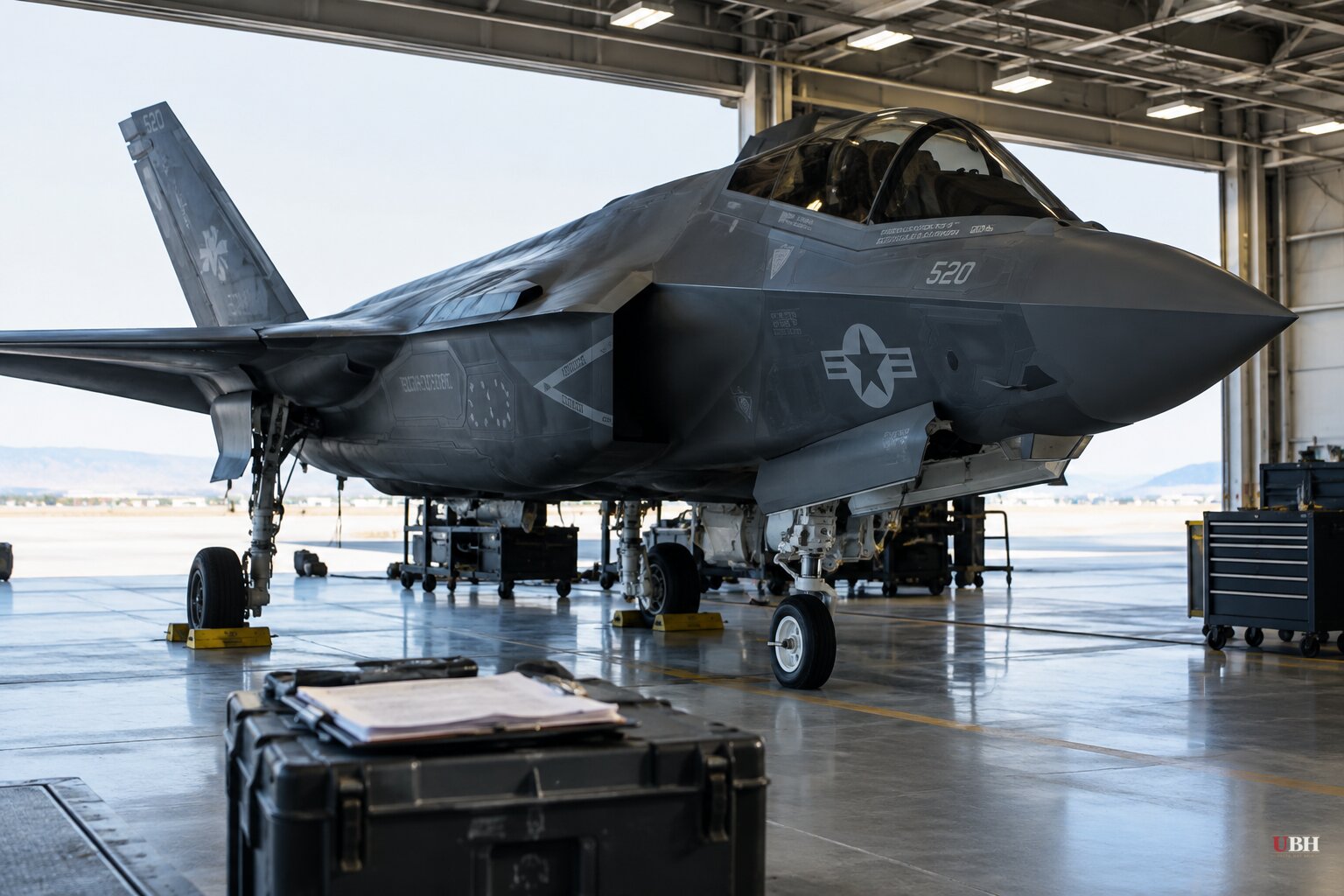
Since U.S. and Israeli forces opened Operation Epic Fury against Iran on February 28, the conflict has passed its six-month mark and now has its first comprehensive federal accounting attached to it. The Pentagon's Lead Inspector General delivered that report to Congress on Monday, September 14, covering the period from April 1 through June 30.
The topline number is $33.4 billion in war costs as of June 29, according to the Department of Defense figures cited in the report. Of that, $22.3 billion went to expended munitions alone, according to figures reported by the Straits Times.
That $33.4 billion figure is already stale. Defense Secretary Pete Hegseth told Congress in late July that the war had cost $37.5 billion "so far," a number that is $4.1 billion higher than what the inspector general's report reflects, because the IG's count stops at the end of June. The real cost today is unknown and almost certainly higher than either figure.
The Hardware Toll
The report gives the first detailed public look at what Iranian strikes did to American aircraft. A fifth-generation F-35A was damaged by enemy fire, the first time any F-35 has taken battle damage, according to the report cited by CNBC. Each F-35A costs $92 million, per the U.S. Air Force.
Four F-15E fighter jets and one A-10 ground attack aircraft were destroyed. Seven KC-135 refueling tankers were damaged or destroyed, along with seven helicopters and more than 30 drones.
Beyond the aircraft, Iranian strikes damaged or destroyed hundreds of buildings and structures at U.S. bases spread across Kuwait, Bahrain, Qatar, the United Arab Emirates, Saudi Arabia, Iraq, Oman and Jordan, according to Fortune and La Nación, both citing the same watchdog report first reported by NBC News.
Diplomatic Costs, Newly Disclosed
The report put a number on something not previously made public: $184 million in physical damage to U.S. diplomatic facilities in Iraq, Kuwait, Saudi Arabia and the UAE. The State Department's total costs from the conflict came to $113 million, with nearly $80 million spent on contingency operations, according to Fortune.
That included evacuating roughly 9,000 U.S. citizens from the Middle East and Europe, mostly out of Israel, Iraq and Jordan. The evacuation operation alone cost more than $11 million. The State Department said it could not require reimbursement from evacuees because consular officers weren't able to fully document individual travel itineraries.
The Ammunition Problem
The report's blunter language is reserved for weapons stocks. It states that munitions expenditure "has resulted in strategic inventory shortfalls and revealed industrial base bottlenecks for munitions resupply." Experts previously cited in Fortune's reporting say it will take roughly three years for contractors to rebuild advanced missile and interceptor stockpiles to prewar levels.
President Trump posted on Truth Social before the report's release that the U.S. "is producing more Exquisite and Elite Weapons than at any time in our History." Both claims can coexist: production capacity can be rising while still failing to keep pace with what a sustained air war burns through. The report doesn't resolve which claim better describes current readiness, and no further Pentagon statement addresses the gap directly.
Six Months In, No Clean Verdict
The military and economic picture beyond the Pentagon's own ledger remains contested. Iranian Supreme Leader Ayatollah Ali Khamenei was killed in the war's opening hours on February 28, and his son and successor, Mojtaba Khamenei, has not appeared publicly since being injured in that same strike, according to the Daily Wire. Iran's economy has cratered under a U.S. blockade of the Strait of Hormuz, with oil exports falling as low as 65,000 barrels a day in May, a 69% drop from prewar levels, per Business Insider reporting cited by the Daily Wire. The IMF projects Iran's economy will contract 5.4% in 2026 with inflation approaching 68.9%.
But Jim Webb, a Marine veteran and independent national security consultant, told the Epoch Times that the campaign's original goal of rapid regime change backfired: "We've got the exact opposite of it, where the so-called hardliners have assumed power, and they've effectively militarized society even more." Paul Davis, a professor at the Institute of World Politics, offered a more measured read, telling the Epoch Times that Iran has proven "a little bit more resilient than I think some of the people around Trump had anticipated." Neither claim is adjudicated by the inspector general's report, which counts costs, not outcomes.
Congress hasn't yet gotten an answer to a key question: whether the Pentagon can replenish advanced munitions on the three-year timeline experts cite while simultaneously deterring China, without a second major report clarifying how the $37.5 billion figure Hegseth cited in July breaks down against the IG's $33.4 billion tally through June.
Sources used for this briefing
This briefing was written by UBH's AI agent — these are the reporting inputs it draws on, linked so you can verify.


