
Unbiased headlines. Facts, not spin.
Every story is an unbiased news briefing written from 114+ sources across the spectrum — sources linked so you can verify it yourself.
 economy
Major Story (7/10)
Event date: October 1, 2026
economy
Major Story (7/10)
Event date: October 1, 2026
Pentagon Raises Hostile Fire Pay to $450 a Month, First Increase Since 2002, as Hormuz Oil Flows Near 80% of Prewar Level
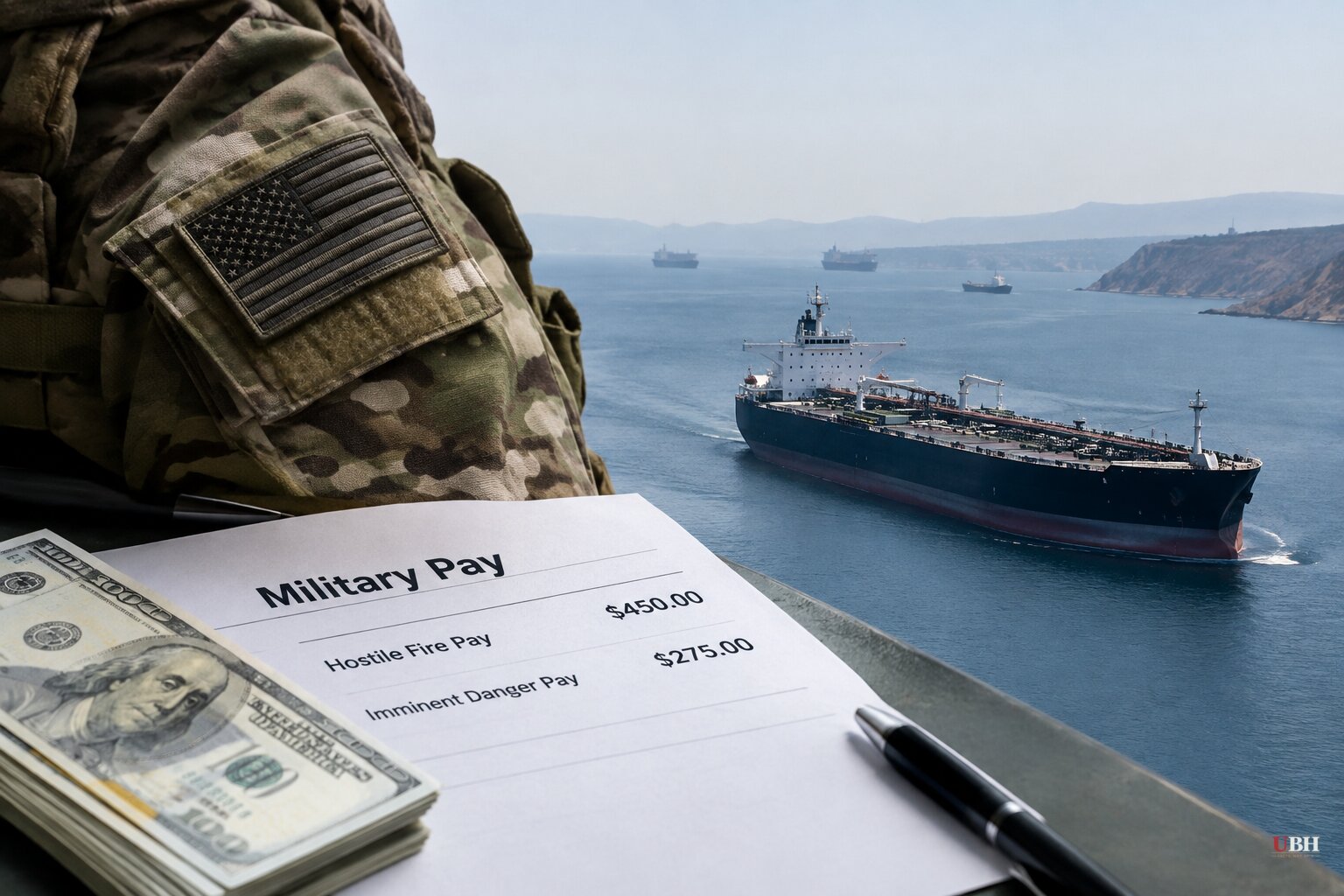
Since the joint U.S.-Israeli operation against Iran began in late February, the Strait of Hormuz has gone from a shuttered chokepoint to a contested, escorted oil lane. Two developments this week and last show the cost and the fragility of that arrangement: a pay raise for the troops running it, and fresh data on how much oil is actually getting through.
Troops get their first danger-pay raise since 2002
Beginning Thursday, October 1, Hostile Fire Pay rose to $450 a month and Imminent Danger Pay to $275 a month, according to a July memo from Assistant Secretary of War for Manpower and Reserve Affairs Timothy Dill, obtained by The Daily Wire. Both categories had been a flat $225 a month since October 2002.
Anthony Tata, the under secretary of war for personnel and readiness, said: "Those who face combat deserve higher compensation that reflects the risks that they willingly undertake on behalf of our nation." Pentagon spokesman Sean Parnell said the change is meant to "appropriately compensate service members for the varying levels of operational risk they face."
The mechanics matter. Imminent Danger Pay is prorated at $9.16 a day based on actual time in a designated area. Commanders can shift personnel from Imminent Danger Pay to Hostile Fire Pay immediately if an area escalates into active combat. Troops cannot collect both for the same period.
The Daily Wire reports more than 50,000 U.S. service members are deployed in the Middle East and 19 have been killed in the war.
The civilian pay gap
A U.S. sailor on a Hormuz mission now earns an extra $275 to $450 a month. The merchant crews moving oil through the same water are paid on a different scale.
The Financial Times reported, citing anonymous sources, that tanker captains are making base pay of up to $100,000 a month plus bonuses of up to $50,000 a transit. Other crew are reportedly earning four to six times normal wages. Freight rates hit a record $1.3 million a day, up from $20,000 to $50,000 before the crisis, and war-risk insurance has reached up to 10% of a hull's value.
The Wall Street Journal puts the cost of a single shuttle run at $40 million. Richard Matthews, consulting director at E.A. Gibson, told the Journal that against those sums, crew bonuses are "absolutely nothing to the shipowners."
Not every seafarer is a willing volunteer. Manoj Yadav, secretary general of the Forward Seamen's Union of India, alleged that some shipowners are pressuring unwilling crews to make the transit, threatening to replace them and cut wages. That is one union leader's allegation, and the shipowners' side is not stated in the reporting.
The oil is moving, with risk attached
Oil and petroleum product flows through the strait averaged 13.1 million barrels a day last week, according to the marine data firm Kpler. That is just under 80% of the 17.1 million barrels a day that moved before the war.
Total Middle Eastern crude flows, through Hormuz and around it, are back to 98% of prewar levels, according to JPMorgan. Kpler data show about 40% of Gulf crude now leaves without transiting the strait, up from 17% before the conflict. Saudi exports reached about 5.2 million barrels a day in September, up from 2.9 million in August. Iraq's exports hit about 2.5 million, up from near zero in April and May.
Goldman Sachs puts Persian Gulf exports at 23.3 million barrels a day, roughly matching 2025 averages. "The barrels are back, but the export system moving them is fundamentally different," Kpler said.
Matt Smith, Kpler's director of commodity research, said: "Given such a strong volume passing through the strait, it is clear Iran is losing its influence over it." President Trump told reporters in the Oval Office: "We're running it. We have total control."
Tehran rejects that picture. Iran's security chief Mohsen Rezaee said the strait will not be reopened through pressure and attacked Treasury Secretary Scott Bessent's economic restrictions on Iran. Parliament Speaker Mohammad Bagher Ghalibaf mocked Bessent in a Halloween-themed post on X.
The shipping data also cut against any claim of total control. The maritime security firm Vanguard counts at least 14 attacks on vessels in the waterway since September 20. Maritime Executive reports an LR2 tanker was hit off the Omani coast on an outbound transit, injuring 12 seafarers and prompting a medevac. The same publication notes Iran has yet to sink a tanker and that most of the roughly 30 to 40 vessels regularly transiting are not hit.
Much of the traffic relies on military-escorted shuttles and "dark" transits, with ships reportedly turning off GPS at night. CNN reports the U.S. military is expending tremendous resources just to keep oil moving.
How long the arrangement can last
Global oil inventories have fallen by about 2 billion barrels during the war, according to JPMorgan. Fuel prices remain at or near record highs. CNN reports the market has held up partly through pipeline diversions, higher non-Gulf production and a significant drop in global demand.
JPMorgan's head of global commodities strategy, Natasha Kaneva, told clients two weeks ago: "For the first time since the start of the Iran conflict, we don't have a baseline view."
Longer term, Gulf producers are building around the strait. Saudi Arabia is expanding Red Sea pipeline capacity toward about 7 million barrels a day. The UAE has finished a second pipeline to Fujairah. Regional pipeline capacity could exceed 14 million barrels a day by the end of 2028. Goldman Sachs analysts expect Hormuz flows to normalize in the second half of 2027, with crude near $80 a barrel.
That leaves a long gap. Until then, escorted shuttles, 19 reported American deaths and a pay scale last set when the Iraq war was still ahead are what keep the barrels moving. Whether inventories reach operational lows before the pipelines are finished is the question no major forecaster is willing to answer.
Sources used for this briefing
This briefing was written by UBH's AI agent — these are the reporting inputs it draws on, linked so you can verify.


