
Unbiased headlines. Facts, not spin.
Unbiased Headlines is an independently owned news organization. We bring you the facts, not opinions, written fresh from 110+ named sources. Sources linked so you can verify it yourself.
 defense
Major Story (7/10)
defense
Major Story (7/10)
Pentagon Loans Sila $1.4 Billion to Build Batteries That Don't Depend on China
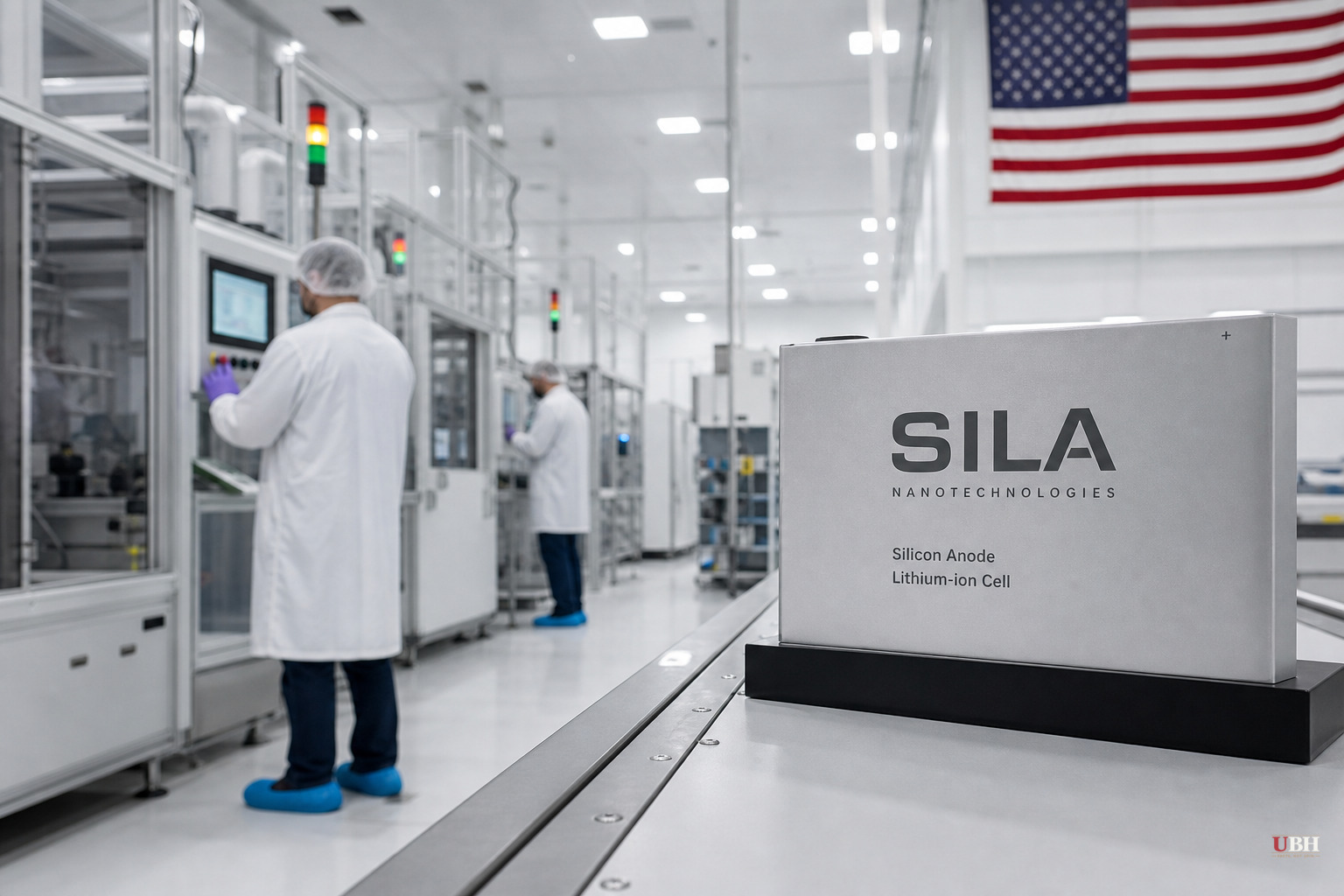
The Pentagon is writing checks to fix a supply chain problem it should have fixed a decade ago.
On Friday, the Department of Defense announced a $1.4 billion loan to Sila, a battery materials startup based in Seattle, to expand production of silicon-carbon anode material at its factory in Moses Lake, Washington, according to TechCrunch. It's one of the largest single awards the Pentagon has made to a battery company.
The problem Sila is being paid to solve is straightforward. Most lithium-ion batteries use graphite anodes, and the supply chain for graphite is dominated by Chinese companies, according to TechCrunch. That means every EV, every drone, and every piece of battery-powered military hardware built in America currently runs through a supply chain that Beijing can choke off whenever it wants.
Sila's silicon-carbon material is a workaround. It stores 20% to 40% more electricity than graphite anodes, according to the company's claims reported by TechCrunch, which means longer-lasting batteries or smaller, lighter ones. Both matter a lot if you're building drones or EVs, and both matter even more if you're building weapons systems that need to work when China isn't selling you parts.
Sila's factory started running in September 2025 and can currently produce about 2 gigawatt-hours of anode material a year. The company wants to expand that fivefold, enough to supply material for more than 100,000 EVs annually. The Pentagon loan is meant to fund that expansion.
This isn't Sila's first big check. The company raised $300 million in July from Atreides Management and Sutter Hill Ventures specifically to help fund the factory buildout, and has pulled in more than $1.5 billion total from private investors, according to PitchBook data cited by TechCrunch. Sila already has commercial deals with Mercedes and Panasonic. A $1.4 billion federal loan on top of that is a serious vote of confidence, and it opens the door to defense contracts as wars in Ukraine and Iran keep driving demand for military hardware.
Sila wasn't the only company that got a check on Friday. Sunrise Energy Metals, an Australian mining company, landed a $400 million loan to mine scandium, a rare earth element used in lightweight alloys for aerospace and defense. Niron Magnetics, based in Minnesota, got $150 million to manufacture rare earth-free magnets, the kind used in smartphones, missiles, and electric motors. And the government made an $85 million equity investment in Strategic Bauxite, which mines the mineral used to produce aluminum.
Four deals, four different minerals or materials, one common thread: all of them are trying to cut China out of a supply chain that American defense contractors and automakers currently can't avoid.
China controls somewhere north of 90% of global graphite anode processing capacity, and it has already shown a willingness to use export controls on critical minerals as leverage in trade disputes. A company that makes battery anode material entirely on U.S. soil, free of both tariffs and the risk of Beijing cutting the tap, is exactly the kind of thing a Pentagon loan program should exist to fund.
The harder question is whether $1.4 billion in taxpayer money to a single startup is the right way to do it, and whether the government picking winners in the battery materials race is smart industrial policy or just expensive guesswork. Sila has real revenue and real customers in Mercedes and Panasonic, which separates it from a lot of green-tech ventures that have burned through federal loans and gone nowhere. But it's still a loan to a company that has never turned a profit, backed by a factory that isn't yet at the scale needed to matter.
TechCrunch's report frames this purely as a supply chain win, but it's light on the risk side of the ledger. Specifically, what happens to taxpayers if Sila's expansion stalls or the silicon-carbon bet doesn't pan out against competitors like Group14 and Amprius, who are chasing the same technology. The Pentagon didn't disclose repayment terms, default protections, or what collateral, if any, backs the loan. Those details matter, because $1.4 billion is not a small bet, and the department has a mixed track record with loan guarantees to industries it wants to exist rather than industries the market has already proven out.
The Moses Lake expansion is expected to take years to complete. Whether it actually delivers batteries at the scale the Pentagon and automakers need, on the timeline promised, is the thing to watch next.
Sources used for this briefing
1 link from 1 independent newsroom (syndicated copies of the same report count once)
These are the sources it draws on, linked so you can verify.


