
Unbiased headlines. Facts, not spin.
Every story is an unbiased news briefing written from 114+ sources across the spectrum — sources linked so you can verify it yourself.
 defense
Major Story (8/10)
Event date: August 19, 2026
defense
Major Story (8/10)
Event date: August 19, 2026
Kim Jong Un Shrugs Off Trump's Drill Cutback, North Korea Fires 10 Missiles as China's Top Diplomat Lands in Seoul
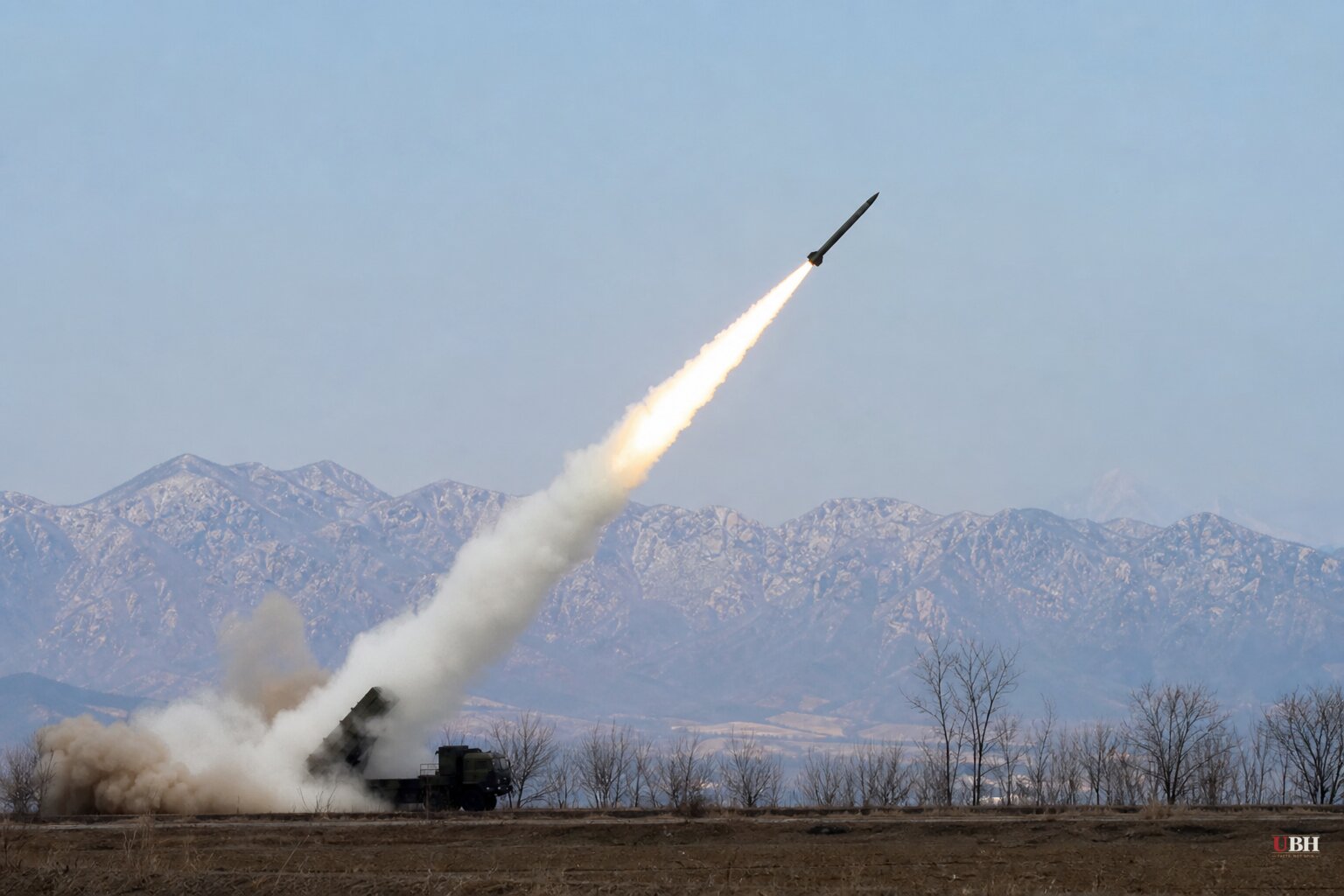
Since Trump ordered the Pentagon to scale back joint exercises with South Korea earlier this week, the payoff he was hoping for hasn't materialized. North Korea answered instead with missiles.
South Korea's Joint Chiefs of Staff said Pyongyang fired about 10 short-range ballistic missiles from around the capital eastward toward the sea on Thursday, according to NPR. The launch came hours after Trump said he'd meet Kim Jong Un later this year.
The U.S. and South Korean militaries wrapped up the annual Ulchi Freedom Shield exercise six days early on Friday, a conciliatory gesture toward the North, NPR reported. Kim Jong Un's sister, Kim Yo Jong, dismissed the move in a statement carried by state media, calling the shortened drills "unworthy of comment" and insisting the exercises remain "provocative and offensive" regardless of length.
She also threw cold water on Trump's claim of personal outreach to her brother. "I am not aware of it at all," she said, according to NPR, though she added that "the relationship between the two leaders is still excellent."
Kuyoun Chung, a political scientist at Kangwon National University, told NPR that Kim's statement reads less like a slammed door and more like Pyongyang "raising the price of reengagement." North Korea has repeatedly demanded recognition of its nuclear status as a precondition for renewed diplomacy, something Washington has refused because it would abandon the U.S. policy goal of denuclearization along with existing U.N. Security Council resolutions.
The China angle
While North Korea calibrates its response, Beijing is moving fast. South Korea's Foreign Ministry announced that Chinese Foreign Minister Wang Yi will visit Seoul, holding meetings with South Korean Foreign Minister Cho Hyun and a courtesy call on South Korean President Lee Jae-myung, according to Breitbart, citing Korea Joongang Daily.
The South China Morning Post, also cited by Breitbart, framed the trip as Beijing exploiting the diplomatic opening Trump created, part of a broader effort to pull Southeast Asian nations closer to China if they conclude Washington won't reliably back them against Chinese pressure.
Political Wire, citing Politico and the Los Angeles Times, reported that the snub has "America's allies in Asia rethinking how much they can depend on the U.S. for defense" and looking to each other rather than Washington to hedge their bets.
Why Trump made the call
Victor Cha, the Korea chair at the Center for Strategic and International Studies, told Fox News Digital the decision was less about North Korea alone and more a "two for one" play: pressure Seoul to speed up a stalled $350 billion trade and investment framework while dangling incentives to pull Kim back to the table.
Cha said Trump has grown frustrated that South Korea hasn't moved fast enough on investment commitments, even as Trump earlier threatened to raise tariffs on South Korean goods by 25%. Fox News noted the timing is awkward. Secretary of State Marco Rubio had called South Korea an "indispensable partner" in a "historic new era" of cooperation just three days before Trump's announcement.
Trump has also said Seoul's refusal to help the U.S. during its confrontation with Iran factored into his decision, according to Breitbart. That's a notable reversal from five months earlier, when Trump said the U.S. "NEVER DID" need South Korean help to reopen the Strait of Hormuz.
The case for skepticism, and the case against it
Critics, including the Daily Wire's opinion pages, argue Trump is blurring the line between ally and adversary in a way that invites exploitation, pointing to Trump's past friction with Zelensky, his comments to Taiwan, and delayed arms sales as part of a pattern. That's a fair reading of the sequence of events these sources lay out.
The administration's defenders have a real argument too. South Korea is a wealthy, developed economy, and Cha's reporting confirms Trump's actual grievance is concrete, not abstract, tied to a specific $350 billion investment deal that has moved slower than agreements with Japan running in parallel. Pressuring a rich ally to pay more for its own defense and move faster on commitments it already made isn't inherently reckless; it's a negotiating tactic previous administrations avoided.
South Korea's presidential office, the Guardian reported through Korean affairs experts, responded diplomatically, expressing hope that warmer U.S.-North Korea ties might open space for broader dialogue on peace and stability. But experts told the Guardian the gesture likely won't satisfy Pyongyang, which wants the drills eliminated entirely, not shortened, and some worried Seoul may lean further on China as an alternative security guarantor.
The unresolved question is whether Kim Yo Jong's "raising the price" framing, as Chung described it to NPR, means a Trump-Kim meeting is still on the table this year or whether Pyongyang's missile test was the real answer. Wang Yi's two days of meetings in Seoul this week may tell Washington how much ground China gained while the exercise schedule got shorter.
Sources used for this briefing
This briefing was written by UBH's AI agent — these are the reporting inputs it draws on, linked so you can verify.


