
Unbiased headlines. Facts, not spin.
Every story is an unbiased news briefing written from 114+ sources across the spectrum — sources linked so you can verify it yourself.
 defense
Notable (6/10)
October 8, 2026 at 09:17 PM
defense
Notable (6/10)
October 8, 2026 at 09:17 PM
Rubio in Lisbon: Pressure on NATO Allies to Spend More Is 'Not a Hostile Thing'
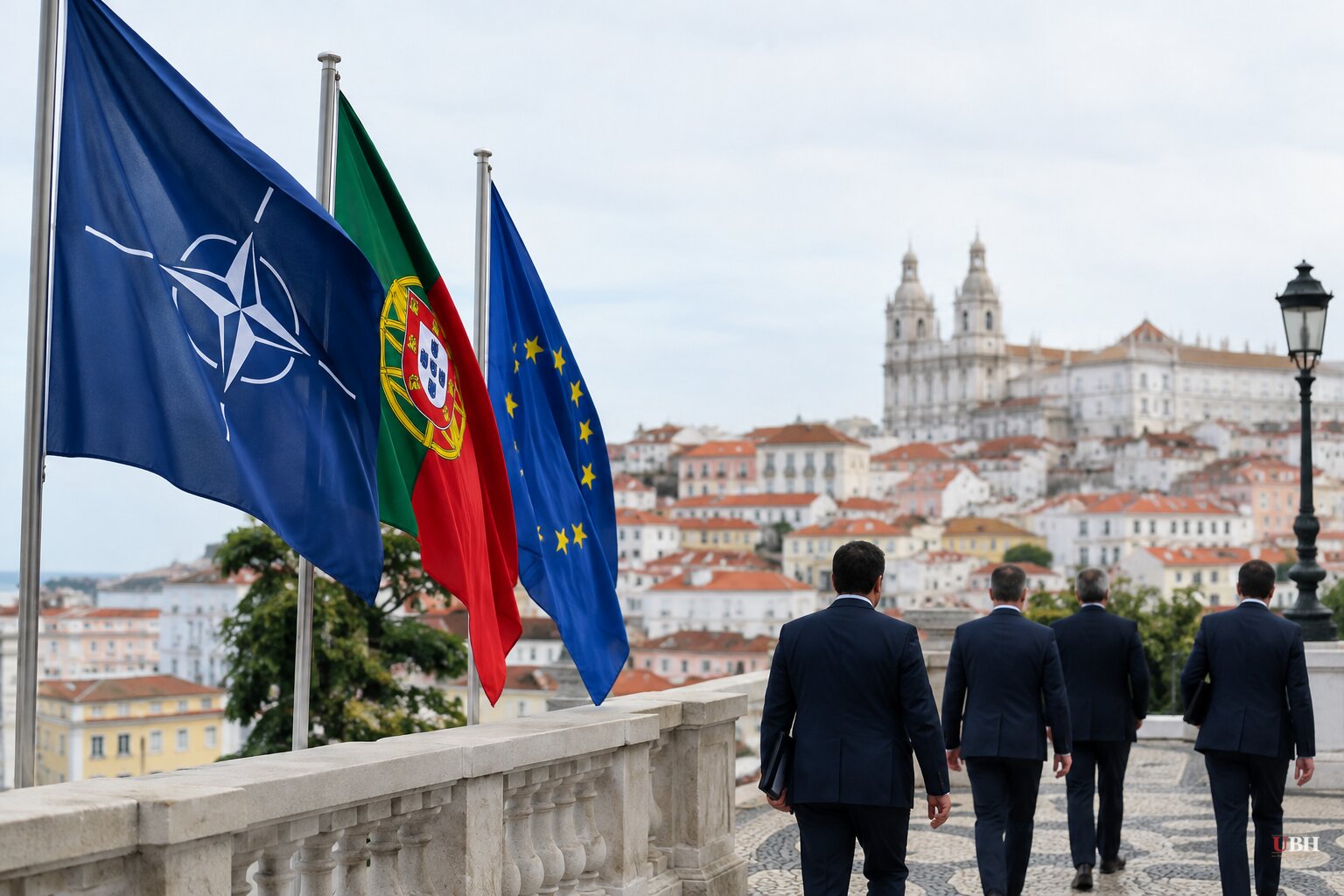
U.S. Secretary of State Marco Rubio told reporters in Lisbon on Thursday, Oct. 8, that American pressure on NATO allies to spend more on defense "is not a hostile thing."
He said the Trump administration wants the alliance to be a stronger deterrent. "The stronger the members of NATO are, the stronger NATO is, the stronger the alliances and the stronger the deterrence is," Rubio said.
Lisbon was the last stop on a three-nation swing through NATO members that also took in Iceland and Greece.
The numbers behind the demand
President Donald Trump has long complained that allies spend too little of their budgets on defense and leave the United States to carry an unfair load. NATO members committed last year to raise spending to 5% of economic output by 2035.
Portugal, a country of fewer than 11 million people, spends just over 2% of GDP on defense, according to NATO. Its government says it plans to reach around 3%, a figure that includes dual-use investments in civilian infrastructure.
That is still well short of the 5% Trump has demanded. Reaching it would require a major increase in spending across Europe.
Rubio praised Portugal's efforts anyway. He also conceded the obvious: "Every country is of a different size and proportion. Some countries can contribute more than others, but every country in NATO needs to be as strong as they can possibly be."
Who is stepping up, and who is not
Rubio said many countries have "stepped up," and he named Germany. Others, he said without naming them, "are dragging."
In Athens earlier in the day he acknowledged that those countries face heavy domestic pressure. Some members of the 32-country alliance have been reluctant to divert money from other government priorities.
Rubio framed the demand as defensive. "NATO exists more than anything else as a defensive alliance that acts as a deterrent against hostility, and it has served us well for decades," he said. "If we want it to continue to serve us, we need to make sure that it is strong."
His tone is softer than that of Defense Secretary Pete Hegseth. Hegseth has taken a combative line toward the alliance amid tensions over the Iran war. He has accused some members of "free-riding" and ordered a review of American military forces in Europe. The results of that review have not been announced.
The UK government is also under pressure to lay out how it will hit the spending target. Reports say Prime Minister Andy Burnham is considering delaying an announcement on a key funding milestone.
Ukraine and the sabotage risk
Rubio tied the spending push to the war in Ukraine, which Russia began with its full-scale invasion on Feb. 24, 2022. He said an apparent stalemate could bring military escalation in Europe.
"That escalation could wind up being a sabotage campaign in neighboring countries that are members of NATO," Rubio said. That could "quickly turn what is a war between two countries into a much broader and far more dangerous regional conflict."
European officials have accused Moscow of running a campaign of sabotage and disruption meant to undermine support for Ukraine and destabilize European countries. Moscow's response was not part of Rubio's remarks.
On peace talks, Rubio was blunt about the limits of U.S. patience. The administration will keep trying to facilitate a negotiated settlement, he said, but it has been difficult. "We have tried, we will continue to try, but we're also not going to invest in pointless processes if we can't make progress."
He spoke after new Russian strikes in eastern Ukraine killed 30 people.
What comes next
Portugal's plan puts it at roughly 3% by its own accounting, with part of that coming from dual-use civilian projects. Washington is asking for 5%. Whether Rubio's "not hostile" framing holds will depend partly on how the administration treats allies that stay short of the target, and on what Hegseth's review of U.S. forces in Europe recommends.
Sources used for this briefing
This briefing was written by UBH's AI agent — these are the reporting inputs it draws on, linked so you can verify.


