
Unbiased headlines. Facts, not spin.
Unbiased Headlines is an independently owned news organization. We bring you the facts, not opinions, written fresh from 110+ named sources. Sources linked so you can verify it yourself.
 defense
Sponsored
Major Story (8/10)
Six Outages and a Critical NGINX Flaw: Securing Software When the Network Goes Dark
In six days this month, six large systems failed in public: Microsoft 365, the Federal Aviation Administration's air traffic network, Chase's banking services, United Airlines' departures, the National Security Agency's classified internal network and Apple's online services. Every organization that has described a cause pointed to a bug, an upgrade, maintenance or an internal update. None has said it was a cyberattack.
The same week brought two genuine security stories: F5 patched five critical flaws in the NGINX web server, and an extortion group listed Visa and JPMorgan Chase on its leak site. Together they raise a question that matters most for systems that cannot count on a network: how do you change software safely, and how do you patch it when it is cut off?
What Each Organization Says Broke
Microsoft's outage began Thursday, Nov. 12, and service was restored Saturday. Charles Lamanna, a Microsoft executive vice president, wrote that a latent bug from July was triggered by extra load and reduced server capacity. Because the defect was months old, he wrote, "our normal rollback, flighting, and feature flags were unable to quickly revert the change." The Guardian reported that Microsoft did not attribute the outage to a cybersecurity breach.
On Friday, Nov. 13, the FAA halted departures nationwide for more than four hours. Transportation Secretary Sean Duffy said that during "routine maintenance," contractor L3Harris upgraded copper wire to fiber-optic cable at a remote site, and a router then overloaded a critical communication system. FAA Administrator Bryan Bedford said the agency saw "zero evidence of anything nefarious."
On Monday, Nov. 16, Chase said its problems were a technical bug, not a cyber issue, according to CBS News. That evening, United held departures for about an hour and a half after it could not provide final aircraft weights, according to a pilots' union memo seen by Reuters. United said: "There is no indication that this was a cybersecurity-related issue."
On Tuesday, Nov. 17, an NSA spokesperson described a "temporary degradation during scheduled routine maintenance." Two U.S. officials told CBS News there was no evidence of a cyberattack, and two sources said the outage resulted from routine system patching. The same day, Apple said an internal update had caused outages and that it was not a cyberattack, according to a statement reported by 9to5Mac and Bloomberg's Mark Gurman.
No agency or company has linked any of these failures to one another.
The Week's Actual Security News
On Wednesday, Nov. 18, F5 released fixes for five NGINX vulnerabilities, each rated 9.2 on the CVSS 4.0 scale, that can let an unauthenticated attacker run code on an affected server, SecurityWeek reported. The most widely reachable, CVE-2026-123007, needs only HTTP/2 to be switched on and affects NGINX releases back to version 1.9.5 from 2015. Rapid7 has published proof-of-concept exploit code. The research firm Xint says it chained that flaw with a Linux kernel bug to escape a Docker container and gain root on the host. F5 has made no mention of exploitation in the wild.
Separately, an extortion group calling itself n0n listed Visa, Mastercard and JPMorgan Chase on its data leak site with a 48-hour deadline. Visa confirmed a security incident at a third-party service provider in the Asia-Pacific region and said its core systems and card numbers were not affected, according to OODA Loop's summary of Cybernews reporting. JPMorgan later said attackers accessed marketing data held by some of its vendors, which may include customer names and email addresses, and Mastercard cited a similar incident at a third-party provider.
The Patching Paradox
The two halves of the week point in opposite directions. By the organizations' own accounts, most of the outages trace back to changes: a dormant bug, an equipment upgrade, maintenance, an internal update. The NGINX release is a reminder that not changing software is also a risk. A server running a 2015-era NGINX build with HTTP/2 enabled is exposed whether or not anyone touches it.
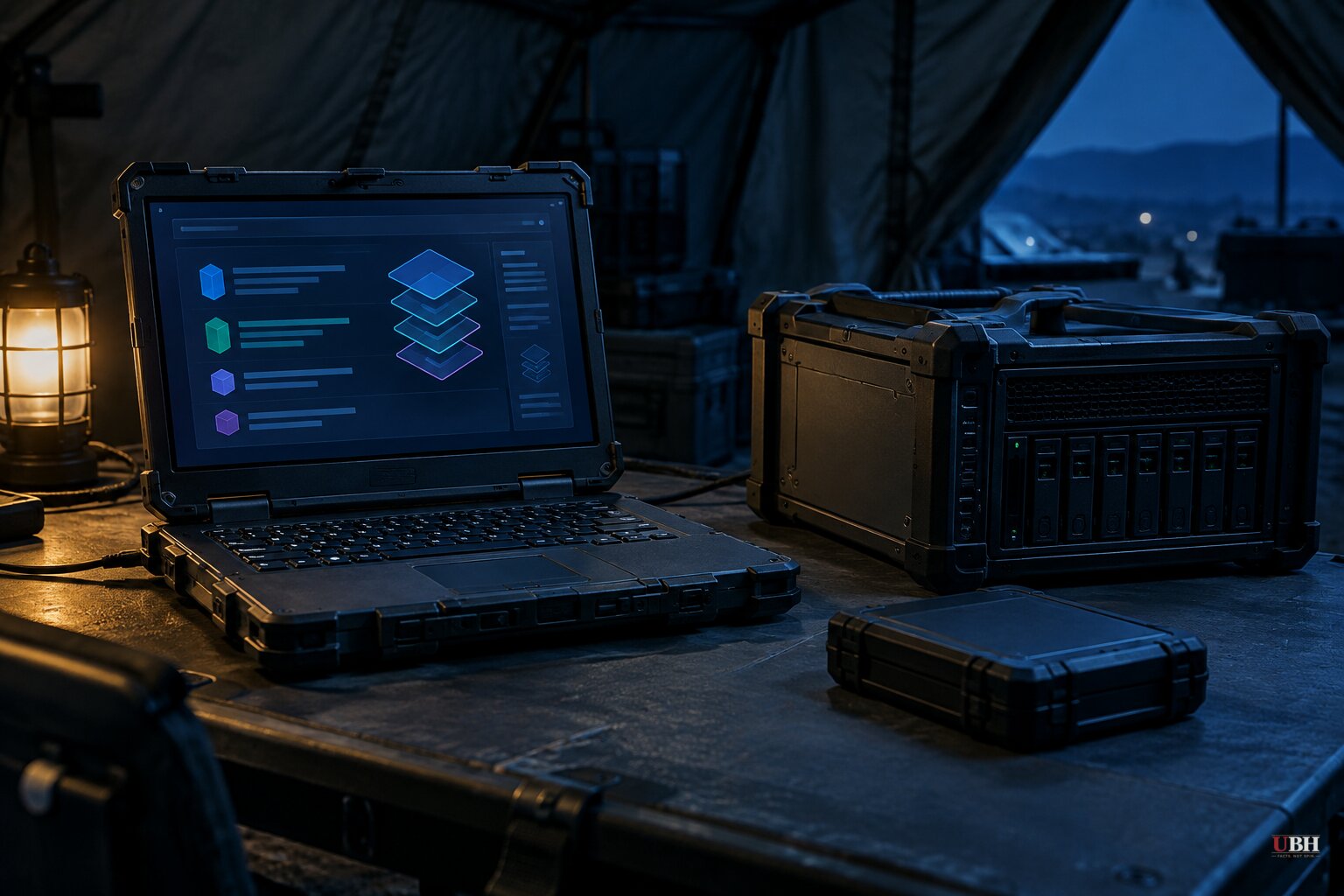
A connected company downloads the fix and restarts. A system on a ship, an aircraft or a forward command post may have nothing to download from. The Defense Department calls these conditions DDIL, for denied, degraded, intermittent and limited. The Navy's chief information officer, which the DoD CIO named executive agent for a cross-service DDIL working group, describes tactical-edge networks that "experience regular disconnects from the broader network, including cloud services, often for substantial periods of time."
What the Guidance Says
Federal guidance already describes much of what disconnected software delivery needs. NIST's Secure Software Development Framework, SP 800-218, tells software producers to make "software integrity verification information available to software acquirers," to securely archive what is needed for each release, and to keep provenance data for every component, "e.g., in a software bill of materials [SBOM]."
CISA describes an SBOM as "a nested inventory, a list of ingredients that make up software components." When an advisory like the NGINX release lands, that inventory is how an operator answers the first question, whether an affected version is running, without querying a vendor over a network that may not exist.
How Defense Unicorns Approaches It
Defense Unicorns, a sponsor of Unbiased Headlines, builds software delivery tools for this setting. The company describes its Unified Defense Stack (UDS) as "a secure, portable, airgap-native software delivery platform purpose-built for military systems." It says airgap-native means applications, dependencies, configurations and required artifacts "can be packaged together and transported into disconnected, restricted, and DDIL environments."
Under the hood, the company says, UDS uses Zarf, an open-source packaging tool. Zarf's documentation says it generates SBOMs for all components by default and includes them in the package itself, in a format that can be used with vulnerability scanners. The company's UDS Fleet, launched June 2, is aimed at managing software across distributed tactical systems. Defense Unicorns says UDS Fleet lets mission applications be "deployed without network connectivity" and "restored to a known-good operational baseline in minutes."
These are the company's descriptions of its own products. None of the outages or incidents described above involved Defense Unicorns or military edge systems, and packaging does not prevent a faulty update from being shipped.
What To Watch
Microsoft has since published a final report listing 13 fixes, and the FAA says it is still performing a root cause analysis. Xint says Linux distributions may backport NGINX fixes without changing the reported version number, and it is withholding most details of the kernel flaw until a patch is available. For any organization, connected or not, the practical questions are the same: can it tell which software versions are running, can it roll a bad change back, and can it get a fix to systems that are offline?
This article includes sponsored content from Defense Unicorns, a sponsor of Unbiased Headlines. Defense Unicorns' statements about its own products reflect the company's stated position; Unbiased Headlines has not independently verified every claim. Defense Unicorns had no editorial control over this article's reporting on the outages and security incidents described here, and no endorsement by any agency or company named in this article is implied.
Defense Unicorns is a sponsor of Unbiased Headlines. Unified Defense Stack (UDS) is the company's airgap-native software delivery platform for military systems, built on open-source components including UDS Core and Zarf.
Sources used for this briefing
21 links from 15 independent newsrooms (syndicated copies of the same report count once)
These are the sources it draws on, linked so you can verify.


