
Unbiased headlines. Facts, not spin.
Unbiased Headlines is an independently owned news organization. We bring you the facts, not opinions, written fresh from 110+ named sources. Sources linked so you can verify it yourself.
 defense
Major Story (7/10)
Event date: November 16, 2026 ·
Kushner Says Trump May Consider NATO-Style Guarantee for Ukraine; Russia's Ryabkov Has Called Such Guarantees Unacceptable
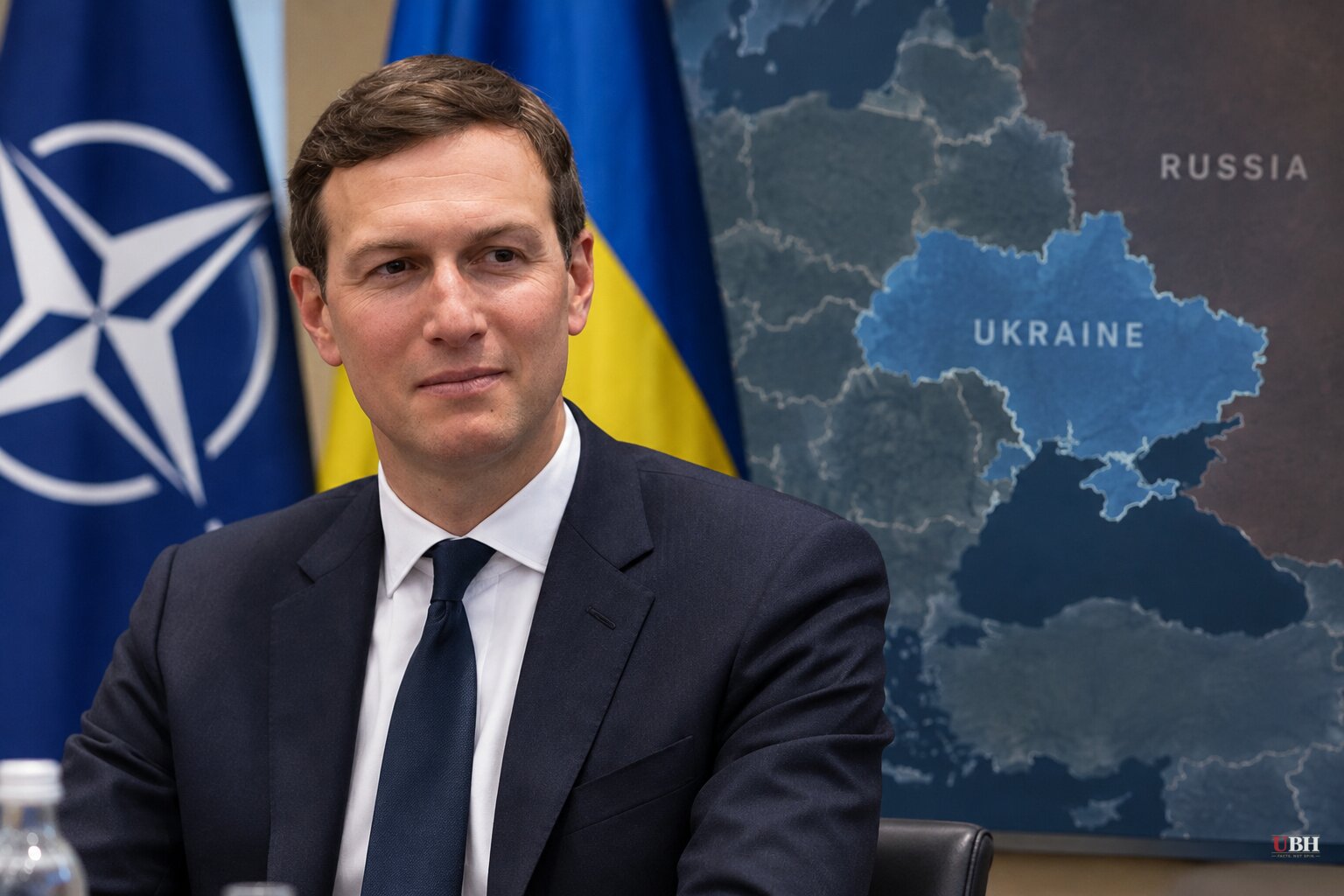
Since U.S.-brokered talks between Russia and Ukraine in Abu Dhabi on Nov. 10 and 11, the fight over what protects Ukraine after a ceasefire has become the central question in the negotiations. On Sunday, Nov. 22, Trump's special envoy Jared Kushner put the Trump administration's most detailed public position on that question into a long post on X.
What Kushner said
Kushner wrote that Trump may consider security guarantees for Ukraine modeled on NATO's collective-defense commitments, if Trump is convinced the risk of another Russian invasion has been sufficiently reduced. He called Russia's reported willingness to discuss such guarantees "a major step forward" and a possible sign that Moscow is serious about peace.
He did not announce a U.S. commitment. Kushner said Trump would have to approve any proposed guarantee, subject to constitutional and congressional processes.
He agreed with Ukrainian President Volodymyr Zelenskyy that any guarantee must be "specific, credible, and clearly documented." A credible one, backed by deterrence and arrangements to prevent escalation, could "dramatically reduce the risk of another war," he wrote.
A U.S. official told RFE/RL that the statement carries weight because of Kushner's role. "The special envoy does not make statements without thought or understanding of all the parties involved, especially President Trump, who trusts him to negotiate," the official said.
The wider framework
Kushner tied Ukraine's guarantees to a broader postwar European security architecture. He proposed permanent channels for consultation, crisis communication, military deconfliction, transparency and reciprocal measures to reduce escalation. He wrote that any arrangement must preserve the sovereignty and independent decision-making of the countries involved.
The stated goal: a future in which "Ukraine is secure, Europe is stronger, Russia has confidence that NATO is not seeking confrontation, and NATO and its partners have confidence that Russia will respect the sovereignty and security of its neighbors."
He also argued that lasting security requires an economic plan for Ukraine, including institutional reforms and self-reliance. Citing Trump's conversation with leaders of the Coalition of the Willing, he said the hundreds of billions of dollars spent on the war could go instead to jobs, growth, lower energy prices and infrastructure.
Kushner said Washington intends to work with Kyiv, European partners and Moscow in the coming weeks to develop the arrangements.
Moscow's position
Kushner's description of Russia's stance is hard to square with what Russian officials have said in public. Deputy Foreign Minister Sergei Ryabkov last week called NATO-like guarantees for Ukraine unacceptable.
Russia has welcomed something different: a discussion of the broader European security framework. The Kremlin has described such a review as vital for a settlement. Russia's demands in that area go back to draft agreements it sent to the U.S. and NATO in December 2021, two months before the invasion. They asked for a pledge that NATO would not expand to Ukraine, Georgia or any other former Soviet state, and for the alliance to keep troops out of areas where it was not present in 1997. NATO allies rejected those demands as a nonstarter.
Putin said on Nov. 12 that European troops deployed to Ukraine after a ceasefire would be regarded as a threat to Moscow. "In other words, the war would resume immediately," he said.
What Kyiv wants
Zelenskyy has said full NATO membership remains the clearest security guarantee for Ukraine and would strengthen the alliance. He said so after a Coalition of the Willing meeting in Berlin.
On Nov. 13, he told reporters the Americans had asked in Abu Dhabi: "What if Ukraine joins NATO? Would Ukraine withdraw from Donbas?" He said it was the first time the question had been raised. He said Ukraine would not give up territory or recognize occupied land as Russian. But if the U.S. and NATO partners confirmed a "comprehensive security package," he said he would put the proposal to Ukrainian voters. "We need specifics, and we don't have them yet," he said.
Zelenskyy also rejected the idea of enshrining neutrality, which he said would require changing Ukraine's constitution. He suggested Moscow's push to revisit European security reflects a desire to "change borders in Europe," and said he believes "the Russians want to redistribute influence in Europe first and foremost."
William Taylor, a former U.S. ambassador to Ukraine, told CNN that NATO membership could be the guarantee that gets Ukraine to accept a ceasefire. But admitting a new member requires unanimous consent of all current members. "There may be, however, a couple of nation member states in NATO who would not agree," Taylor said. "So it's not a firm offer at this point."
Where the talks stand
The Abu Dhabi round was the first direct Russia-Ukraine negotiation since February and ended without a breakthrough. It did produce an agreement on a large prisoner exchange, Kushner said afterward. Kushner and Witkoff then met with both Zelenskyy and Putin.
Before the talks, a U.S. official said on a background call that the administration had asked Russia to accept an "Article Four and an Article Five-like security guarantee" for Ukraine, "effectively very similar to NATO." The same official said Trump had not decided what guarantee the U.S. itself would provide, calling it a "really, really big deal." Kushner's Nov. 22 post keeps that decision open.
Territory is unresolved. Russia continues to demand all of Donetsk, while Ukraine wants the conflict frozen along the current line of contact.
The next step is the multiparty work Kushner described. That means U.S., Ukrainian, European and Russian officials trying to turn a guarantee Moscow has publicly rejected into something all of them can sign, followed by Trump's decision and a congressional process that has not been defined.
Sources used for this briefing
7 links from 7 independent newsrooms (syndicated copies of the same report count once)
These are the sources it draws on, linked so you can verify.


