
Unbiased headlines. Facts, not spin.
Every story is an unbiased news briefing written from 110+ sources across the spectrum — sources linked so you can verify it yourself.
 defense
Breaking / Critical (9/10)
Event date: September 15, 2026
defense
Breaking / Critical (9/10)
Event date: September 15, 2026
Pentagon Inspector General: Iran War Has Cost $3.7 Billion in Equipment, Nearly 60 Aircraft Lost or Damaged
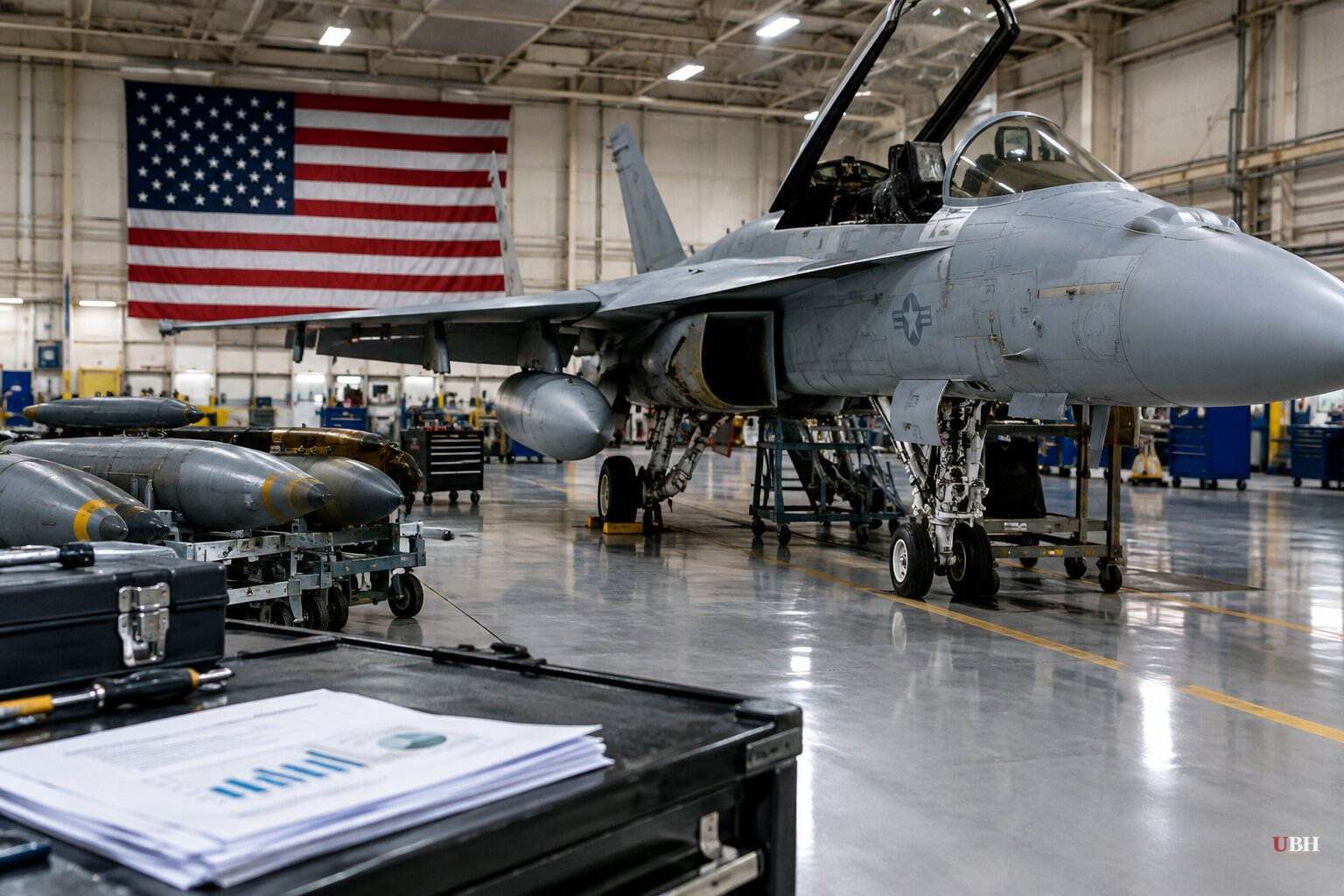
Since U.S. strikes on Iran's nuclear and military sites began February 28, 2026, the Pentagon has confirmed 18 American troops killed and 750 wounded, according to Department of Defense data cited by MS NOW. This week, for the first time, the government put a dollar figure on the physical damage: $3.7 billion in equipment losses, including nearly 60 aircraft, according to a Defense Department inspector general report obtained by CBS News.
The report is described by CBS News as a first-of-its-kind mandatory disclosure to Congress. It confirms U.S. Central Command reported Iranian strikes on American bases in Kuwait, Bahrain, Qatar, the UAE, Saudi Arabia, Iraq, Oman and Jordan between April and June.
CBS News published photos, obtained exclusively from active-duty service members speaking on condition of anonymity, that it says reveal for the first time the scale of destruction at multiple U.S. positions. One image shows the tail of a Boeing E-3 Sentry radar aircraft severed from its charred fuselage at Prince Sultan Air Base in Saudi Arabia. Others show hollowed-out barracks at the same base standing next to intact T-wall barriers, fortifications built for grenades and mortars that proved useless against missiles and drones. Similar damage was photographed at Camp Buehring in Kuwait.
"This is major damage to our bases that hasn't been communicated to the American public," one deployed service member told CBS News. "We're standing there with our eyes closed getting punched in the face." The same service member pushed back directly on Defense Secretary Pete Hegseth's characterization of attacks as isolated "squirters" getting through defenses after the March 1 strike on Port of Shuaiba in Kuwait that killed six U.S. troops: "We're not defending these bases. We're just watching them get destroyed."
At Naval Support Activity Bahrain, struck by missiles and one-way attack drones the same day the war began, the Pentagon initially reported no major impact on operations. The Wall Street Journal later put the damage at roughly $400 million, according to Military Times. Acting Navy Secretary Hung Cao offered a blunter assessment to an Epoch Times reporter: Iran "blew the hell out of Bahrain."
CENTCOM has not publicly detailed most of the missile and drone attacks, arguing that doing so would hand Iran intelligence about which strikes succeeded and where American defenses are thin, according to MS NOW. Broadcasting which interceptors failed and which barracks were empty tells an adversary exactly where to aim next. But that same silence is what has left Congress and military families finding out about $3.7 billion in losses from an inspector general report and leaked photos rather than from the Pentagon itself. A dollar figure on destroyed aircraft, delivered to Congress under a legal reporting requirement, is accountability to the people paying for it, not a battlefield map handed to Tehran.
Lt. Gen. James P. Isenhower, commanding general of the Army's Combined Arms Command, told reporters at a Pentagon briefing this week that two decades of air dominance in Iraq and Afghanistan left the force out of practice against precision missiles and drones. "For 20 years we didn't have to worry about anything coming out of the sky, and we lost proficiency," Isenhower said, adding that the Army is now retraining units to disperse and conceal rather than mass at large command posts. "Hiding in plain sight has become an imperative on the modern battlefield."
Jonathan Schanzer, executive director of the Foundation for Defense of Democracies, told The Daily Wire the damage exposes three linked problems: base proximity to Iran, the sheer volume of Iranian fire, and a finite U.S. supply of defensive interceptors. Bases in Qatar, Bahrain and Kuwait leave defenders "only a few minutes to respond," he said, and he floated relocating installations like Al Udeid in Qatar farther from Iranian range. But he acknowledged that wouldn't solve everything. Jordan, farther from Iran, has also been hit, including a July attack on Muwaffaq Salti Air Base that killed three U.S. soldiers. Replenishing the standoff weapons and interceptors already expended, he said, could take two to three years.
Johnny Odom's 22-year-old son has been stationed in Jordan since March; his base was hit by Iranian missiles the day he arrived. Odom, a retired disabled Army combat veteran, told MS NOW his son sends videos of bunkers shaking as blasts land nearby, sometimes moving the structures ten inches. "My son already has nightmares," Odom said. "He's not even home yet."
The inspector general's $3.7 billion figure and the CBS News photos answer part of what families like the Odoms have been asking for months: proof of what their loved ones are actually facing. What remains unanswered is whether the Pentagon will change where it stations roughly 40,000 troops still sitting on bases within Iranian missile range, and whether Congress, now holding a mandatory damage report it didn't have before this week, will push for more disclosure than CENTCOM has been willing to give.
Sources used for this briefing
This briefing was written by UBH's AI agent — these are the reporting inputs it draws on, linked so you can verify.


