
Unbiased headlines. Facts, not spin.
Every story is an unbiased news briefing written from 110+ sources across the spectrum — sources linked so you can verify it yourself.
 defense
Major Story (8/10)
July 31, 2026 at 11:38 PM
defense
Major Story (8/10)
July 31, 2026 at 11:38 PM
Patriot Missile Stockpile Fell Below 827 After Iran Conflict, Down From 2,300 Pre-War
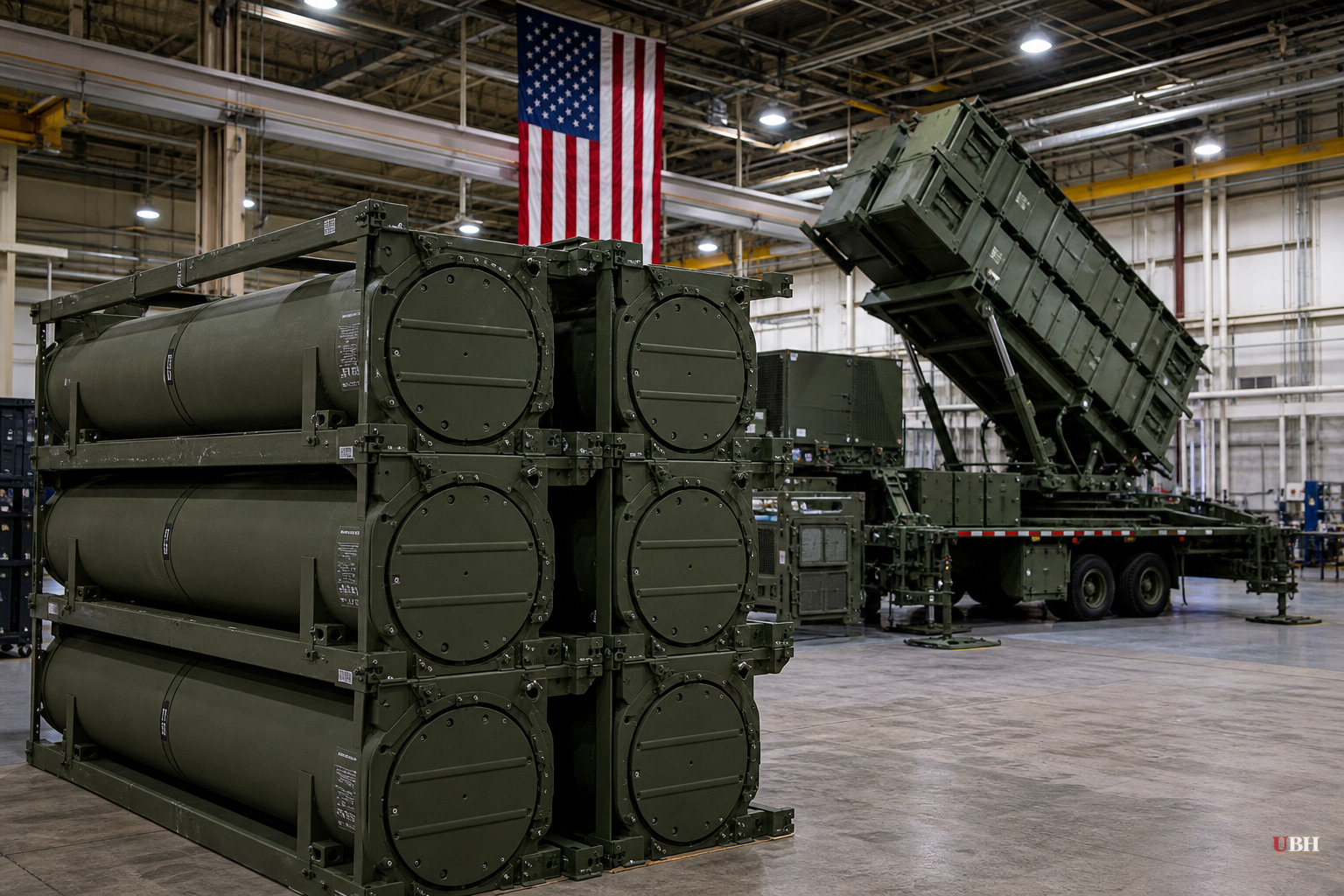
The U.S. military spent down a huge chunk of its missile defense arsenal fighting Iran, and the numbers are stark.
Patriot interceptor inventories fell from roughly 2,300 before the conflict to fewer than 827, according to the Center for Strategic and International Studies (CSIS), which based its estimate on open-source budget figures submitted to Congress. THAAD interceptors dropped from 452 to fewer than 278 over the same stretch. It's more than half the global Patriot inventory and nearly half of THAAD stock, gone.
"If you look at what we've expended for the Patriots, for example, over half the global inventory has now been consumed in the Middle East. Similar to the THAAD interceptors as well," said Kelly Grieco, a missile expert at the Stimson Center, in comments reported by Fox News. "So that really leaves us with very little excess to be able to use in other theaters, whether it's defending U.S. forces in Europe or the Indo-Pacific."
These interceptors don't just protect troops in the Middle East. They're the same systems that would need to defend Guam, Japan, or Taiwan if China moved on the Pacific. CSIS estimates it could take three years or more to rebuild these stockpiles to pre-war levels.
The Pentagon has spent years talking publicly about pivoting toward a two-war posture that accounts for both a Middle East contingency and a Pacific one involving China. A depleted interceptor stockpile complicates that math no matter which administration is doing the planning.
Jerry McGinn, who tracks the defense industrial base at CSIS, explained why this isn't a quick fix. The Tomahawk, Patriot, and THAAD systems were designed decades ago for performance, not mass production.
"They weren't built or designed to be produced at scale," McGinn said, according to Fox News. "So they take two to three years from this contract award to actually come off the assembly line because these are very intricate systems. They're essentially handmade in a lot of ways."
This manufacturing bottleneck predates the Iran conflict. It's the product of decades of defense industrial consolidation and a peacetime assumption that stockpiles wouldn't need to be drawn down this fast, this often.
The Pentagon has requested $67 billion in emergency funding for fiscal year 2026, according to Bloomberg. Of that, $18.2 billion is earmarked specifically to replace the advanced Patriot missiles, Navy Tomahawks, and THAAD interceptors burned through during the conflict.
The Pentagon is also trying to change its buying habits going forward. Half of the munitions requested in the 2027 budget are lower-cost weapons priced at $600,000 or less, and CSIS's McGinn projects that by 2031, roughly 70% of Pentagon munitions purchases will fall into that cheaper category. This represents a shift in strategy: fewer exquisite, expensive, hard-to-replace interceptors, more mass-producible munitions that can be replenished quickly during a prolonged fight. Whether that shift happens fast enough to matter depends on funding follow-through from Congress and actual production ramp-up from contractors like Lockheed Martin and RTX, which build the Patriot and THAAD systems.
There's a legitimate case that America's response to Iran was measured and necessary to protect U.S. forces and allies, and that stockpile depletion is simply the cost of doing that. There's also a legitimate case that policymakers should have seen this coming and diversified the industrial base years ago, when Ukraine's war first exposed how thin U.S. munitions stocks had become. Both are true at once.
What remains unresolved is whether the $18.2 billion request gets fully funded by Congress, and whether contractors can actually compress that two-to-three-year production timeline. Until either happens, the CSIS estimate stands: the U.S. has less missile defense capacity to spare for the Pacific than it did before the Iran conflict began, and rebuilding it is a multi-year project.
Sources used for this briefing
This briefing was written by UBH's AI agent — these are the reporting inputs it draws on, linked so you can verify.


