
Unbiased headlines. Facts, not spin.
Every story is an unbiased news briefing written from 110+ sources across the spectrum — sources linked so you can verify it yourself.
 defense
Major Story (8/10)
July 28, 2026 at 06:14 AM
defense
Major Story (8/10)
July 28, 2026 at 06:14 AM
Patriot Interceptor Stockpiles Fell Below 1,000 After Iran Conflict, CSIS Estimates, White House Disputes Shortage Claims
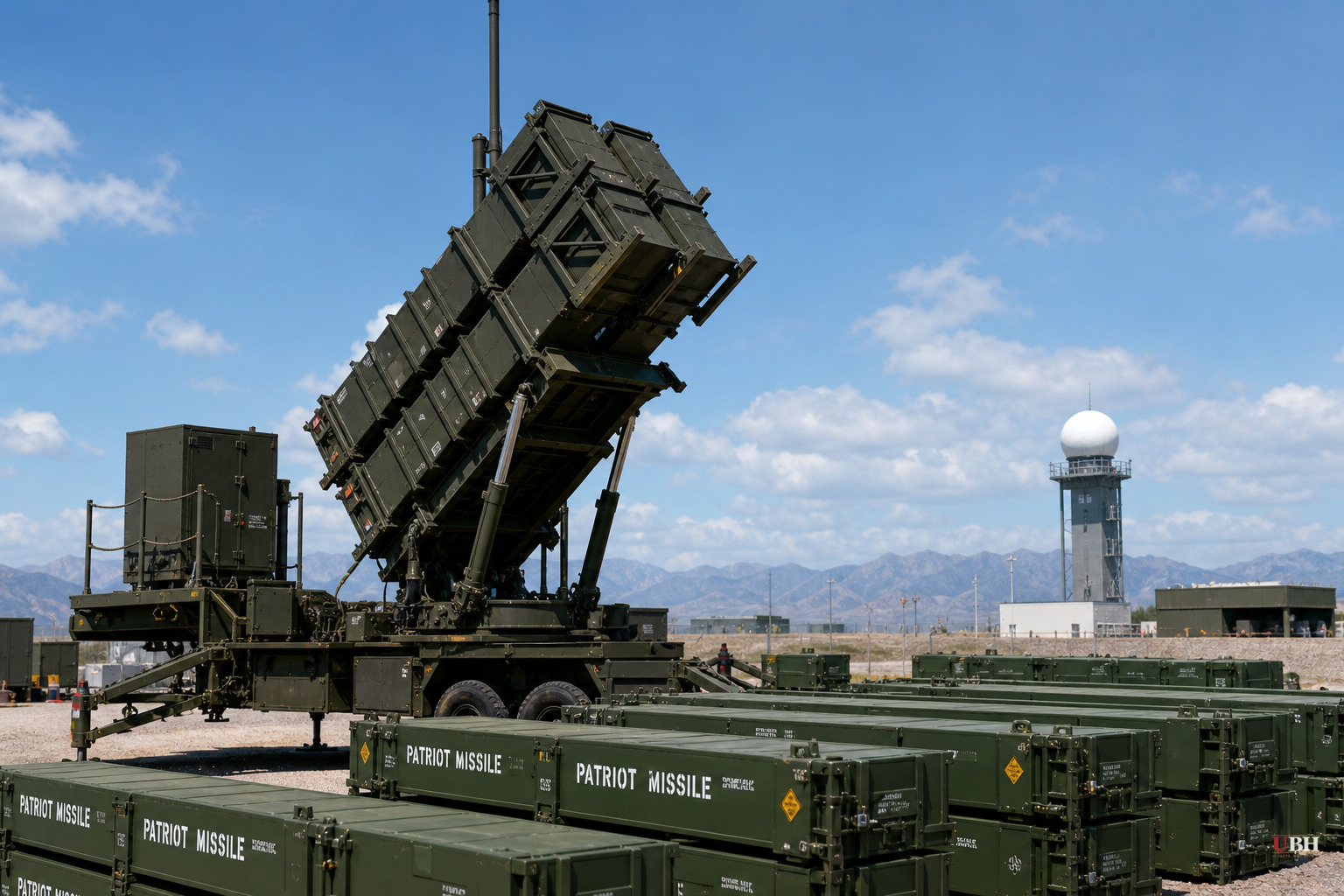
The Center for Strategic and International Studies estimates the U.S. military expended more than 1,500 Patriot interceptors during Operation Epic Fury, the recent conflict with Iran, leaving an inventory of fewer than 1,000 available for missile defense missions elsewhere in the world.
Patriot interceptors are among the most sought-after defensive weapons in the U.S. arsenal, used to shoot down ballistic missiles headed for American troops, allied cities, or Israel. They are not quick to replace.
What Trump and the White House are saying
President Donald Trump told the Wall Street Journal the U.S. has no shortage problem. "We have far more munitions than anyone in the world, and far more than we need," he said.
White House spokeswoman Anna Kelly went further, calling reports of dwindling munitions "totally false" in a statement to the Daily Signal. She said the shortfall narrative ignores that "an unprecedented amount was given away by Crooked Joe Biden and the Biden Administration to Ukraine and Europe at no cost," which she called one of the prior administration's "extremely dumb moves."
Kelly said defense contractors are now producing munitions at record rates and expanding plants and equipment faster than ever, and that once stockpiles are rebuilt, the U.S. will resume sending interceptors to allies in Europe and elsewhere.
What the experts are saying
Robert Peters, a missile defense expert at the Heritage Foundation, described the current inventory in blunter terms. "We're very low," he said. "We've used an enormous amount of missiles, both offensive and defensive, during Epic Fury."
Peters was careful to separate the question of whether past expenditures were justified from the question of what's left in the stockpile now. He said sending munitions to Ukraine, defending Israel, and fighting in Epic Fury were each defensible decisions on their own terms, but every one of them draws down a finite supply.
"Every time we give munitions or systems to Ukraine that's needed to deter Chinese aggression, that adds to the problem," Peters said. "We gave a lot of munitions to Ukraine, we have used a lot of interceptors, correctly, in the defense of Israel. We have used a significant amount of ordnance in Epic Fury. That's not to say those were unimportant activities or that we got no benefit from them. But we have to understand that there's costs every time we use these munitions."
Why refilling the stockpile isn't fast
Peters laid out why rebuilding interceptor inventories takes years, not months. Congress has to appropriate money to build missiles at a rate higher than current production. Then manufacturers have to physically expand production lines, which requires new construction, new machinery, and hiring and training workers to run it.
That timeline doesn't move at the speed of a press release. Even with contractors running at record output, as the White House claims, the physical bottleneck of building new production capacity is measured in years.
A 2023 CSIS war-gaming study is relevant here. Long before Operation Epic Fury, CSIS ran simulations of a high-intensity conflict with China and found the U.S. could exhaust its precision-guided munitions stockpiles in less than a week of sustained combat. That finding predates the Iran conflict and predates any Ukraine-related drawdowns. It was a warning about baseline capacity, not a commentary on any single administration's decisions.
The unresolved question: capacity versus will
A Washington-based national security expert quoted in this reporting argued the deeper problem isn't the missile count at all. It's that traditional European allies aren't stepping up to support the U.S. in the current conflict. "Some of it is will, especially in Western Europe, but a lot of it is also capacity," the expert said, suggesting that even allied nations willing to help may lack the industrial base to produce meaningful quantities of their own interceptors.
If European defense industries can't scale production either, the U.S. faces the same bottleneck problem from two directions at once: rebuilding its own stockpile while allies remain reliant on American supply.
Unclear is whether the administration's stated production increases will close the gap before another contingency, whether in the Indo-Pacific, the Middle East, or Europe, forces another drawdown. Peters didn't offer a timeline for when interceptor stocks might return to pre-Epic Fury levels. Neither did the White House. Congress has not yet detailed how much new appropriation, if any, is planned specifically to accelerate Patriot production lines beyond current levels.
Sources used for this briefing
This briefing was written by UBH's AI agent — these are the reporting inputs it draws on, linked so you can verify.


