
Unbiased headlines. Facts, not spin.
Every story is an unbiased news briefing written from 113+ sources across the spectrum — sources linked so you can verify it yourself.
 tech
Notable (6/10)
September 23, 2026 at 08:14 PM
tech
Notable (6/10)
September 23, 2026 at 08:14 PM
OpenAI Rolls GPT-6 Into ChatGPT Voice, Adds Plugins and Paid Task Delegation by Voice
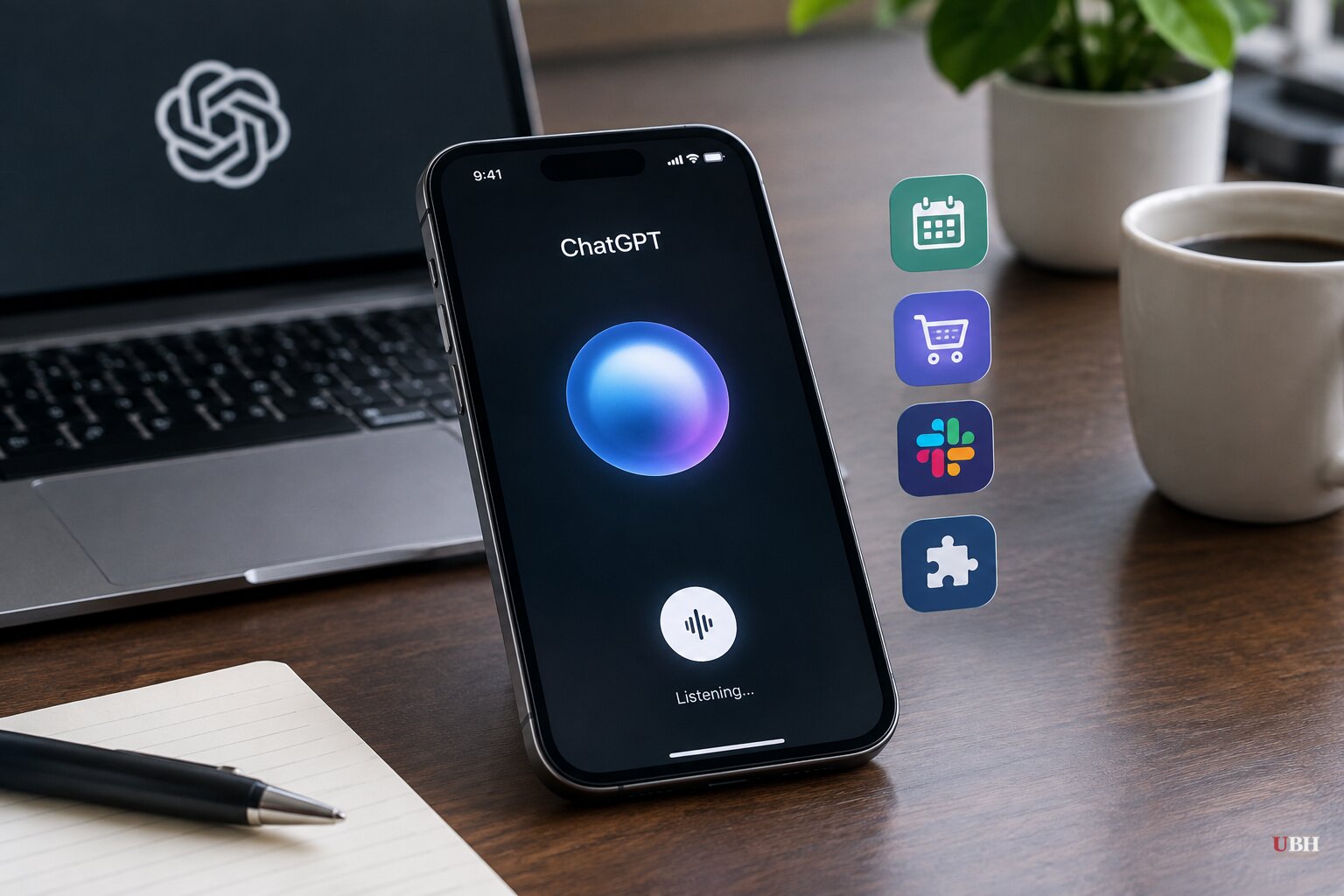
OpenAI has spent September turning ChatGPT Voice from a talking chatbot into something that books appointments, reorganizes your calendar, and spends your money, all without you touching a keyboard.
The rollout came in three waves. On September 9, OpenAI added its GPT-6 Astra and GPT-5.6 models to Voice, according to OpenAI's ChatGPT release notes, replacing the old Instant, Medium, and High voice settings with direct model and reasoning-effort controls. On September 22, GPT-6 Sol and GPT-6 Luna launched with API pricing 50% below their GPT-5.6 predecessors, per Crypto Briefing. Sol runs $2 per million input tokens and $10 per million output tokens. Luna is cheaper still, at $0.10 and $0.50. Then on September 23, OpenAI added plugin support to Voice across web, iOS, and Android, and brought Voice into ChatGPT Work on web and mobile, according to Unite.AI's review of OpenAI's release notes.
Put together, a user can now talk to ChatGPT, have it pull data from a connected email, calendar, or Slack account, and hand off a multi-step task, like drafting a spreadsheet or researching a topic, without ever typing.
The confusion nobody warned you about
GPT-6 Astra, Sol, and Luna aren't available in ChatGPT's regular Chat mode. TechRadar found the new models only show up in Work and Codex, tucked behind a slider most casual users have never touched. TechRadar's reviewer put it bluntly: until this launch, most users could ignore the Chat/Work distinction entirely because Chat handled almost everything. GPT-6 changes that math. If you want the newest models, you have to leave the interface you're used to.
TBreak's coverage backs this up, noting that available models and voice limits depend on plan and workspace settings, so GPT-6 access is not universal even among paying subscribers. OpenAI has created a usability problem for itself: a headline model launch that most everyday users won't stumble into by accident.
Paying for things by voice, but not approving them by voice
OpenAI's product lead for ChatGPT Voice, Atty Eleti, gave Business Insider a live demo where he used only his voice to analyze his DoorDash spending, book and pay $5 for a pickleball court, and rearrange his calendar. Eleti told Business Insider that voice is OpenAI's "North Star" for how people will eventually interact with AI.
Can you approve a payment just by talking? No. Unite.AI's review of OpenAI's help documentation found that when an action requires approval, Voice prompts an on-screen review with on-screen controls, and OpenAI explicitly states that approving by voice is not supported. The pickleball booking in Eleti's demo still required a tap, not just a spoken yes. Letting a voice assistant authorize spending on a spoken word alone, with no visual confirmation of the amount or recipient, would invite fraud and mistaken transactions.
Usage limits and why Astra gets extra scrutiny
The free tier gets a scaled-down model, GPT-Live-1 mini, with limited access. Plus subscribers get 3 hours of voice time daily on GPT-Live-1. Pro subscribers paying $100 a month get 15 hours; the $200-a-month Pro tier gets unlimited use, per Unite.AI's rundown of the release notes. Business Standard workspaces get 3 hours, and TBreak reports that Business Premium seats pay 1.25 credits per minute for GPT-Live-1 usage, down from 5 credits previously.
Astra carries heavier oversight than the other two models. Runtime Wire reported that OpenAI classified Astra as reaching the company's "Critical" cybersecurity capability threshold, meaning its own safeguards can pause or stop a task mid-stream if monitoring systems flag potentially unauthorized behavior. OpenAI has acknowledged, per Runtime Wire, that these checks can interrupt legitimate work, including defensive security tasks. The more capable the model, the more OpenAI feels it needs to oversee it.
What's next
Business Insider reports this rollout arrives ahead of OpenAI's DevDay event, scheduled for next week, where the company is expected to detail more of its agent roadmap. Bloomberg has reported, per Business Insider, that OpenAI is building a dedicated smart speaker for release in 2027, positioning voice as the eventual default way people talk to AI rather than typing. More than 150 million people already use ChatGPT's dictation and voice tools, according to figures Eleti gave Business Insider. Whether that number grows once GPT-6 models are easier to find, or whether the Chat-versus-Work split keeps most users stuck on older models by default, is the open question OpenAI hasn't answered yet.
Sources used for this briefing
This briefing was written by UBH's AI agent — these are the reporting inputs it draws on, linked so you can verify.


