
Unbiased headlines. Facts, not spin.
Unbiased Headlines is an independently owned news organization. We bring you the facts, not opinions, written fresh from 110+ named sources. Sources linked so you can verify it yourself.
 energy
Major Story (7/10)
Event date: November 5, 2026 ·
Oil Traders Seek U.S. Licenses for About 50 Sanctioned Tankers as Freight Rates Soar, Bloomberg Reports
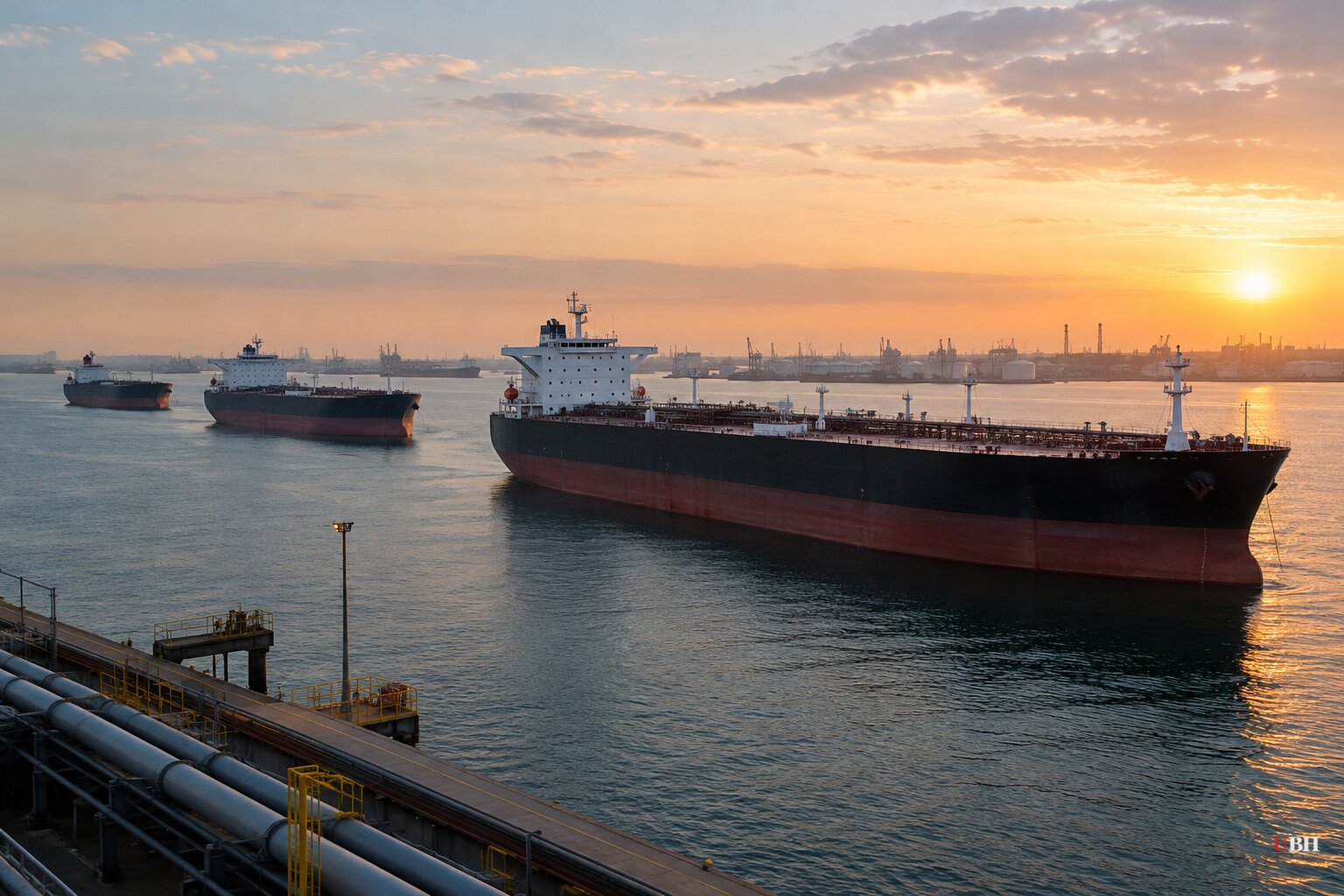
Some of the world's biggest oil traders want sanctioned tankers back in service, and they are asking the U.S. government for permission.
Trafigura, Vitol, Mercuria and Abu Dhabi National Oil Co. are negotiating with U.S. officials for licenses to purchase or lease blacklisted vessels, Bloomberg reported Friday, Nov. 6, citing people familiar with the discussions. The talks cover about 50 ships. Treasury officials are weighing approvals case by case, and nothing has been finalized.
The freight squeeze
The shortage of vessels is the reason for the push. Shipping disruptions tied to the Iran war have forced tankers onto longer routes, driven up insurance costs and tied ships up in transfers around the Strait of Hormuz.
The cost of chartering a supertanker from the U.S. Gulf Coast to China reached nearly $80 million in October. That is roughly ten times the average before the conflict.
Valero estimated last month that moving U.S. crude to Asia had reached $30 to $35 per barrel, against about $5 a year earlier.
The price signal is already showing up in orders. Asian purchases of U.S. crude for November delivery fell roughly 50% in October, which could push shipments to their lowest level in seven years.
What Washington has said
Energy Secretary Chris Wright said last month that the administration was exploring arrangements that would let investors acquire and refurbish blacklisted tankers to carry legitimate oil cargoes.
In mid-October, an anonymous U.S. official told Reuters that Washington was considering letting sanctioned tankers carry oil and products that are not themselves sanctioned. Under that outline, Russian and Iranian oil would stay under sanctions, and companies would apply to Treasury.
No formal easing has been published. OFAC's listed actions from Oct. 14 through Nov. 4 include no license covering these tankers. The Oct. 21 entry dealt with Iran-related wind-down and safety licenses and a Russia-related license on the sale of Lukoil International GmbH.
The existing sanctions remain in force. On Oct. 8, the State Department sanctioned ten entities, six individuals and five vessels tied to Iranian oil or petrochemicals under Executive Order 13846. Treasury hit 17 entities and their vessels the same day under Executive Order 13902.
As of Nov. 4, U.S. sanctions covered 1,568 ships, including 462 crude tankers, according to Treasury data compiled by Bloomberg.
Why the details matter
Not every approved ship would help. Restoring idled tankers adds real capacity. Legalizing vessels that already move sanctioned oil adds far less.
Many of the blacklisted ships are aging and need repairs, inspections and insurance before they can enter ordinary commercial service. U.S. authorization would also not lift restrictions imposed by the European Union or Britain.
There is a policy tension too. The U.S. is running a blockade of Iranian oil. CENTCOM said on Saturday that 138 commercial vessels had been redirected to enforce it, and Kpler's tracking shows Iranian exports near zero. Licensing sanctioned hulls while that blockade is in place means Treasury has to separate legitimate cargoes from the oil the government is trying to choke off. The reporting does not say how it would police that.
The market backdrop
Physical oil is moving even as the strait stays contested. Kpler data showed total oil flows at 24.5 million barrels per day in the week ending Oct. 18, above the 24.4 million average from late February, just before the war. That total includes cargoes rerouted around Hormuz, such as through the Red Sea. Vortexa's lower estimate was 18 million barrels a day.
Traffic through the strait itself is a different matter. Kpler counted about 20 completed transits over a ten-day stretch, compared with more than 100 a day in peacetime. CENTCOM said about 400 merchant ships passed through in a single week. The Islamic Revolutionary Guard Corps insists the strait is "closed." CENTCOM says it is "open." Many ships run with transponders off, which makes counting hard.
Brent futures settled at $94.62 on Nov. 4, down 8.7%, and were at about $96.88 around 11 a.m. ET Thursday, Nov. 5. That is still well above the roughly $72 close on Feb. 27, the day before the war began.
Giovanni Staunovo of UBS said the modest rebound reflects the unresolved situation in the Middle East. June Goh of Sparta Commodities said more volatility is likely because there is no clear path to a diplomatic end to the war and strategic reserves have been drawn thin.
The political clock
Democrats flipped both the House and Senate on Nov. 3. Vice President JD Vance blamed the Iran war for Republican losses, and President Donald Trump told reporters Vance's assessment was largely true because the war pushed up gasoline prices.
AAA put the national average for regular at $4.10 on Nov. 5, against almost $3.08 a year earlier. Diesel hit an all-time high of $6.53 in late September, up from $3.76 before the war.
Before the election, the administration rolled out a string of fuel-price moves, including an $8 billion farm aid package and a plan to import Russian diesel. Bob McNally, founder of Rapidan Energy Group and a former energy adviser to President George W. Bush, said "there are no silver bullets here. None of them will solve the underlying problem." He also gave the administration credit for "looking under more rocks than most."
Douglas Holtz-Eakin of the center-right American Action Forum said the scramble "looks and feels panicky," and added that the administration cannot move diesel prices in two weeks.
GasBuddy's Patrick De Haan said the national average could fall to $3.65 in the weeks ahead if wholesale losses from Nov. 4 carry through.
The new Congress does not take office until January. House Minority Leader Hakeem Jeffries said in a Nov. 4 letter that House Democrats must act in their first 100 days to stop the war.
What remains open is which vessels Treasury would clear, if it clears any. Wright has said the talks are happening. The traders say they want licenses. Treasury has not announced a decision.
Sources used for this briefing
7 links from 6 independent newsrooms (syndicated copies of the same report count once)
These are the sources it draws on, linked so you can verify.


