
Unbiased headlines. Facts, not spin.
Every story is an unbiased news briefing written from 110+ sources across the spectrum — sources linked so you can verify it yourself.
 energy
Breaking / Critical (9/10)
Event date: September 14, 2026
energy
Breaking / Critical (9/10)
Event date: September 14, 2026
Oil Surges Past $100 a Barrel as Saudi Pipeline Attacks and Houthi Advance Rattle Markets
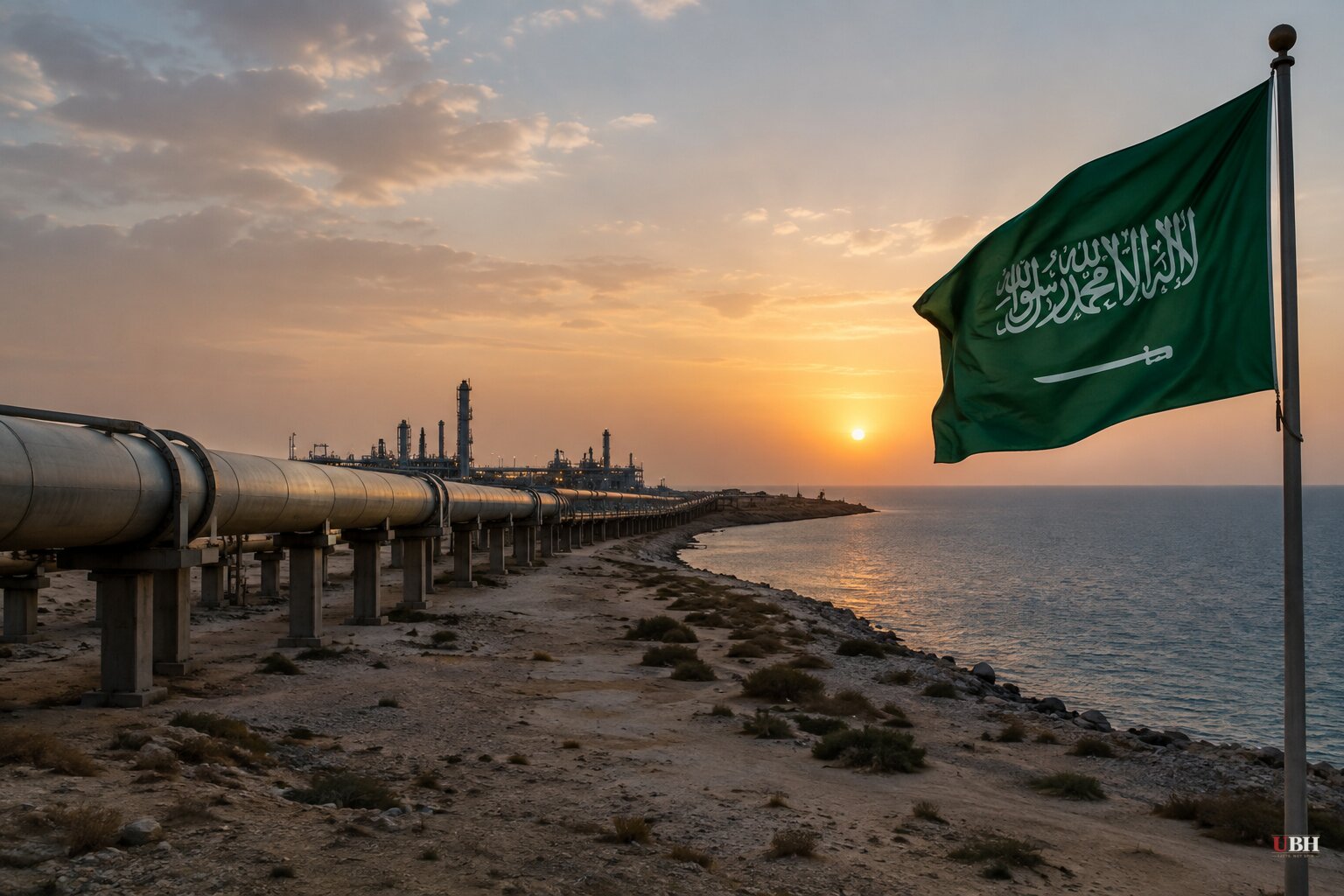
Oil prices jumped again this week, and the fighting in the Middle East is only half the story.
Brent crude rose 4.5%, or $4.68, to $109.29 a barrel on Monday, September 14, according to Mexico Business News. West Texas Intermediate climbed 4.2%, or $4.21, to $104.26. Both benchmarks hit their highest levels since May 2026.
The Guardian reported Brent topped $108 after drone attacks launched from Iraqi territory forced Saudi Arabia to shut its East-West pipeline. Iraq's government confirmed the strikes originated on its soil and ordered an investigation. President Trump said he believed Iran was behind the attacks, but that link has not been independently confirmed and Iraq has not named a culprit publicly.
The pipeline matters because it lets Saudi Arabia reroute roughly 4 million barrels a day, about 4% of global supply, around the Strait of Hormuz to the Red Sea port of Yanbu, according to the Guardian. Saudi traders told the paper Yanbu only has five to seven days of stock to keep exports flowing without the pipeline.
Separately, Houthi forces in Yemen captured Perim Island in the Bab el-Mandeb strait on Sunday, September 13, expanding their control over one of the world's key shipping chokepoints, per the Guardian and Mexico Business News. Iranian authorities issued a compliance list targeting 77 vessels operating in the region, and Gulf Arab states canceled a scheduled meeting with Iranian representatives, Mexico Business News reported. Maritime data cited by the outlet showed vessel transits through the Strait of Hormuz dropped to single digits over the weekend, down from a recent 10-day average of 14.
The pain is showing up at the pump. U.S. retail diesel hit an all-time high of $6.06 a gallon, Mexico Business News reported, and commercial OECD oil stocks sit 47.9 million barrels below the five-year average.
A Volatile Year, Not a One-Day Spike
This rally is part of a much longer, uglier ride. The current U.S.-Israel war with Iran began February 28, 2026, according to BigGo Finance. Brent hit a wartime peak of $112.95 on April 7, per Rapidan Energy president Bob McNally, cited by Suara Garut. A U.S.-Iran memorandum of understanding collapsed June 17, and crude cratered to a summer low of $68.55 about three weeks later.
By August 25, after Treasury Secretary Scott Bessent announced new secondary sanctions targeting buyers of Iranian oil, WTI had fallen again to near $82 and Brent below $88, the Epoch Times reported, even though U.S. crude was still up 43% for the year at that point. Bessent warned any country "facilitating transactions" tied to Iranian oil would be targeted, a message aimed squarely at China, Iran's largest customer, which buys roughly 90% of Tehran's exported oil per the Epoch Times.
Trump had also posted on Truth Social that August that mines had been cleared from the Strait of Hormuz and declared a "zero tolerance policy" on new mine placements, saying the U.S. was monitoring the waterway "through Space Force." That calm didn't last a month.
China Is the Wild Card
Analysts keep flagging a twist: the fighting alone may not explain where prices go next. China is the swing factor.
Kpler data shows China slashed crude imports from 11.5 million barrels a day in February to about 6 million in June, what McNally called a "crash diet" that helped cap prices during the worst of the war, according to Suara Garut. Imports have since crept back up to roughly 7 million barrels a day in July and August, per Amrita Sen of Energy Aspects.
Rebecca Babin, senior energy trader at CIBC Private Wealth, said the market hasn't fully priced in Chinese refiners ramping back up, given soaring profit margins on diesel driven by disruptions in both Iran and Ukraine. "They're going to buy crude and they're going to put product on the market and make money," she told reporters, as relayed by Suara Garut.
Not everyone expects a dramatic Chinese surge. Matt Smith, director of commodity research at Kpler, described China's current buying as steady rather than aggressive. BigGo Finance also notes global oil inventories have fallen roughly 400 million barrels over six months, shrinking the cushion that absorbed the initial shock of the war.
There's already evidence Chinese demand is pushing regional prices. Bloomberg reported that yuan-denominated crude futures on the Shanghai International Energy Exchange hit a record 929.4 yuan, or $138.50 a barrel, the highest since the contract launched in 2018, as Chinese refiners bought more cargoes following the Saudi pipeline shutdown. Oman and Murban crude futures, benchmarks the Chinese contract tends to track, both traded above $126 a barrel.
What's Unresolved
Trump is scheduled to meet Chinese leader Xi Jinping in Washington this month, according to the Epoch Times, though it's unclear how the new Iran sanctions and Beijing's oil purchases from Tehran will factor into that meeting. No date, agenda details, or outcome from that meeting has been confirmed in these reports.
The more immediate clock is on Yanbu's five-to-seven-day inventory buffer. If Saudi Arabia can't restore the East-West pipeline before those stocks run out, another leg up in prices is plausible. Whether China becomes the aggressive buyer Rebecca Babin describes, or the steady one Matt Smith sees, will determine whether this rally retests April's $112.95 wartime peak or fades the way August's spike did.
Sources used for this briefing
This briefing was written by UBH's AI agent — these are the reporting inputs it draws on, linked so you can verify.


