
Original briefings. Zero spin.
Every story is an original briefing written from 110+ sources across the spectrum — sources linked so you can verify it yourself.
 energy
Notable (6/10)
September 14, 2026 at 08:48 AM
energy
Notable (6/10)
September 14, 2026 at 08:48 AM
Exxon Raises 2030 LNG Sales Target to 50 Million Tons a Year
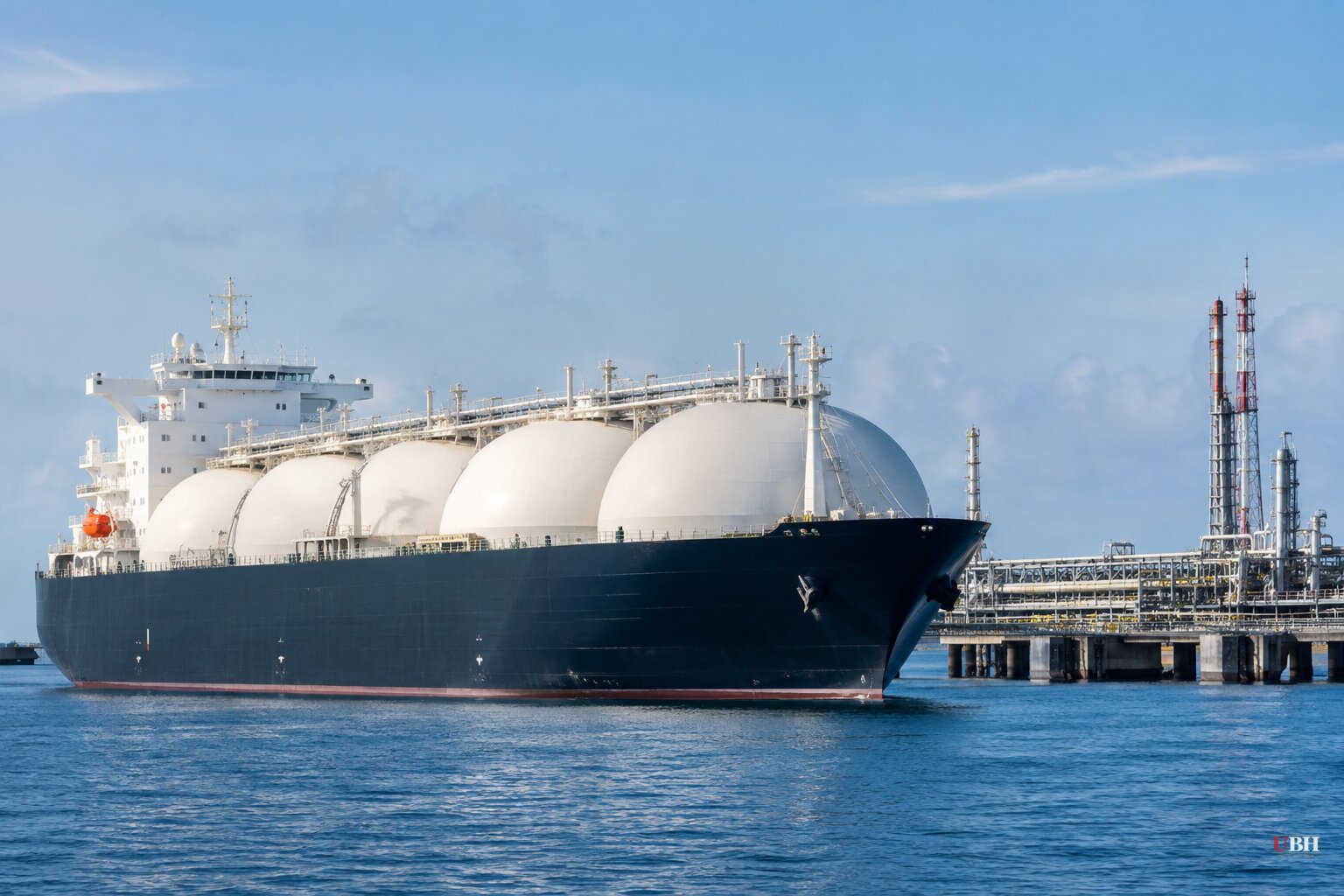
ExxonMobil is betting bigger on natural gas. Peter Clarke, senior vice president for LNG at ExxonMobil International Ltd., told reporters at the Gastech conference in Bangkok on September 13, 2026, that the company now expects its annual LNG sales to hit 50 million tons by 2030. That's up from the prior 40 million ton target, according to Bloomberg and Europe Says.
Clarke framed it as a demand story. Global LNG demand currently sits around 400 million tons a year and is projected to climb to 500 million tons by 2030, then to 1 billion tons by 2050, per Clarke's comments as reported by Europe Says. Exxon wants a growing slice of that pie, and Clarke said sales should keep climbing past 2030 in line with the broader market.
Bloomberg's framing adds a wrinkle. Exxon is raising its LNG bet even as the Middle East war has some countries reconsidering how much they want to depend on the fuel. Bloomberg does not name which nations or specify what alternative they're pursuing, so that's a real but vague caveat, not a fleshed-out counter-trend. Exxon's own bet says the reconsideration, wherever it's happening, isn't big enough to change the company's math.
The Business Behind the Bet
This isn't a company betting on gas out of desperation. Exxon posted adjusted earnings of $14.68 billion in the second quarter of 2026, its strongest quarterly profit in roughly four years, according to TradingKey. Adjusted earnings per share came in at $3.52, a slight miss on estimates, but operating cash flow hit $23.56 billion with free cash flow at $17.24 billion.
The upstream business, oil and gas production, generated $9.19 billion of that, while the Energy Products segment added $4.10 billion, TradingKey reported. Exxon's integrated model, owning everything from the wellhead to the refinery, is doing exactly what it's designed to do in a tight energy market.
Permian Basin output hit a record above 1.8 million barrels of oil equivalent per day in the second quarter of 2026, TradingKey reported, and Exxon expects that to reach 2.5 million boe/day by 2030. The company's Pioneer Natural Resources acquisition is a big part of that growth trajectory. Add in a new discovery in Angola and Exxon's move to take over operatorship of the Papua LNG project, and the company's portfolio is expanding on multiple fronts at once.
Oil prices are doing Exxon favors too. Brent crude traded around $105.90 on September 11, 2026, after touching $110, while WTI cleared $100, according to TradingKey. Some of that spike traces to physical disruptions tied to the Middle East conflict. TradingKey flagged a real risk here. A demand-driven $100 oil price is good for Exxon's upstream realizations, but a supply-shock spike to $110 that comes with shipping disruptions and inflation risk could eventually choke off the demand that's propping up prices in the first place.
Stock Sits Near Resistance, Valuation Questioned
Exxon shares closed at $165.23 on September 10, 2026, up 0.61% for the day, according to TradingKey, which put the stock's near-term resistance at $166.65 with a breakout target of $168.60 and support around $161.75. Separately, Europe Says cited a price of $165.99 as of its report, a modest discrepancy likely reflecting different snapshot times within the same trading window.
Not everyone thinks the stock is cheap at that level. Europe Says cited a GF Value estimate of $127.60, implying Exxon trades roughly 30.1% above what that model considers fair value, alongside a GF Score of 72 out of 100. Among the 22 institutional gurus tracked in that report, only 5 were adding to positions while 15 were trimming, a split that suggests real skepticism about chasing the stock at current prices even among investors who still hold it.
Exxon's dividend yield sits at 2.48%, which Europe Says described as backed by a sustainable payout ratio, and the company has also targeted $20 billion in structural cost savings by 2030 on top of its production growth plans. Whether that combination of expanding LNG capacity, record Permian barrels, and shareholder returns holds up depends heavily on where oil and gas prices sit five years from now, a bet Exxon is making in public while some of its own investors are quietly taking chips off the table.
Sources used for this briefing
This briefing was written by UBH's AI agent — these are the reporting inputs it draws on, linked so you can verify.


