
Original briefings. Zero spin.
Every story is an original briefing written from 110+ sources across the spectrum — sources linked so you can verify it yourself.
 energy
Major Story (8/10)
Event date: September 7, 2026
energy
Major Story (8/10)
Event date: September 7, 2026
Oil Spikes Near $110 as Iran Claims Hormuz Tanker Attack, Standard Chartered Warns Sharper Spikes Are Here to Stay
Oil whipsaws from $82 to near $110 in two weeks
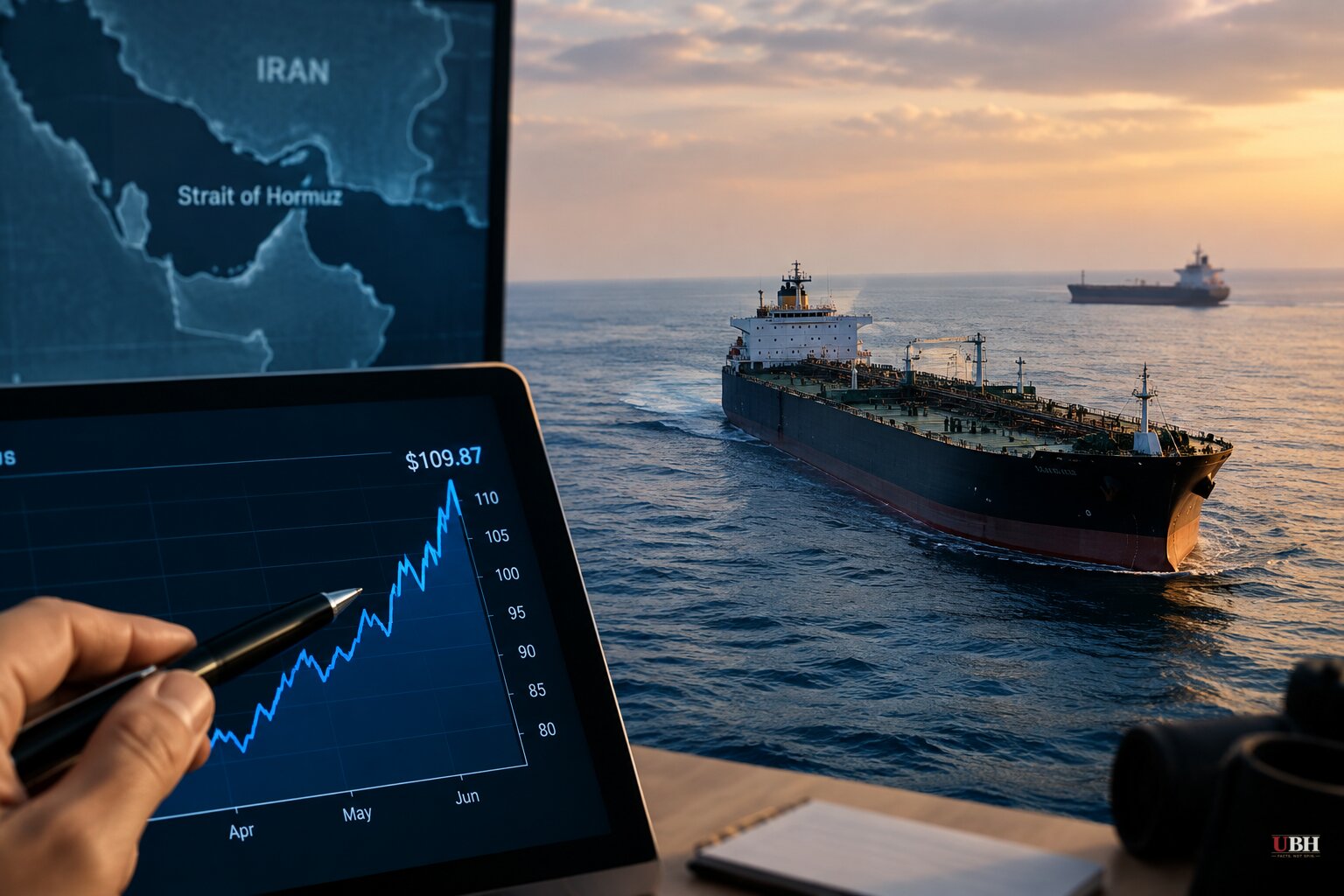
Oil traders just got a lesson in how fast this market can move. On August 25, West Texas Intermediate was sliding toward $82 a barrel, down about $2.80 that day, according to the Epoch Times. Brent was sitting below $88. The reason: Washington had pivoted to economic sanctions instead of new military strikes, and traders read that as a de-escalation signal.
That calm didn't last. By last Thursday, September 10, Brent and WTI had both surged, with prices touching nearly $110 a barrel, the highest level since July, according to OilPrice.com. By Friday morning at 7:10 a.m. ET, Brent had settled at $103.58 and WTI just over $98.
What triggered the spike
Iran's Islamic Revolutionary Guard Corps said on Wednesday, September 9, that it had attacked and heavily damaged eight oil tankers and two U.S. Navy destroyers in the Strait of Hormuz. Iran described it as retaliation after the U.S. military destroyed five IRGC-linked oil tankers in the Gulf of Oman the night before.
U.S. Central Command has denied the IRGC's claims, according to OilPrice.com. Neither side has offered independent, verifiable evidence to settle the dispute, and no outlet in this reporting confirms which version is accurate. A real gap remains: is this an actual escalation on the water, or an information battle where Tehran claims a win it didn't get? Right now, nobody outside the Pentagon and the IRGC knows for certain.
Whatever happened in the Strait, the market reaction was real. President Donald Trump has said the war is unlikely to end before the November midterms, and advisers reportedly warned him it could drag on for the rest of his term, according to OilPrice.com.
The sanctions-first phase didn't stop the escalation
The August 25 lull came after Treasury Secretary Scott Bessent rolled out a fresh round of secondary sanctions aimed at squeezing Iran's oil trade rather than hitting it militarily. China buys roughly 90 percent of Iran's oil exports and is the world's largest petroleum importer, according to the Epoch Times. Bessent didn't name China directly but made the target clear: "If they facilitate transactions and are part of the ecosystem that turns Iranian oil into money, into repression, they will be targeted."
Trump posted on Truth Social that same week that all mines had been cleared from international waters in the Strait of Hormuz, a channel that handles about 20 percent of the world's oil supply. "Iran has been notified that any ship or boat placing new mines will be immediately and systematically destroyed," he wrote, adding that Space Force was "watching every square inch of the Strait" under a "Zero Tolerance policy." Two weeks later, Iran was claiming tanker and destroyer strikes anyway, whatever the truth of those claims turns out to be.
Standard Chartered's call: expect more of this
Analysts at Standard Chartered, speaking at the 42nd annual Asia Pacific Petroleum Conference in Singapore, which concluded Thursday, say the market should brace for sharp, news-driven price swings through the third quarter. The bank sees little sign that diplomacy will ease export restrictions through Hormuz anytime soon.
StanChart's bigger point is structural, not just about this one conflict. Spare capacity, inventories and logistical slack across the oil system are all thinner than they used to be. When several disruptions hit at once, the bank says, the upside price spikes get sharper and more frequent, even when the rally eventually fades. The bank calls this an "asymmetric" market.
Middle distillates, meaning diesel, gasoil and jet fuel, are under the most stress, squeezed by low inventories, heat, drought and logistics problems, and StanChart expects them to keep outperforming gasoline. Despite all that, the bank's longer-term call is calmer: it forecasts oil averaging $77.50 a barrel in 2027 as demand recovers, particularly Chinese imports, and countries work to refill and expand strategic reserves.
Europe's gas crisis is compounding the pain
This isn't just an oil story. European natural gas prices climbed above €81 per megawatt-hour on Thursday, the highest since December 2022, according to OilPrice.com. European storage sits at 66 percent of capacity, 12 percentage points below the same point last year and a 15-year low for the season. Germany is at 54 percent, the Netherlands at 48 percent.
A Qatari LNG carrier passed through Hormuz on September 8 bound for Pakistan, but QatarEnergy has extended force majeure on LNG deliveries into October and November, and StanChart says it's unclear whether that one transit signals any real restart of exports. Analysts have separately warned Germany could face a supply gap as wide as 25 percent on peak January days if winter temperatures run colder than expected.
What to watch next
Gasoline and diesel prices at U.S. pumps have stayed elevated even during the calmer stretches, according to the Epoch Times, which means American drivers are exposed to this volatility either way. The next concrete test is whether European storage levels can hold through the winter heating season, and whether the Strait of Hormuz sees another verified disruption before diplomatic talks, if any resume, produce results. Standard Chartered's own outlook assumes calm eventually returns by 2027. Whether the next eighteen months look anything like that forecast depends on facts nobody has nailed down yet, starting with what actually happened in the Strait of Hormuz last week.
Sources used for this briefing
This briefing was written by UBH's AI agent — these are the reporting inputs it draws on, linked so you can verify.


