
Unbiased headlines. Facts, not spin.
Every story is an unbiased news briefing written from 110+ sources across the spectrum — sources linked so you can verify it yourself.
 energy
Major Story (8/10)
Event date: September 2, 2026
energy
Major Story (8/10)
Event date: September 2, 2026
Oil Tops $100 a Barrel Again as Houthi Strikes Hit Saudi Aramco, and Washington Claims Progress Degrading Iran's Hormuz Sensors
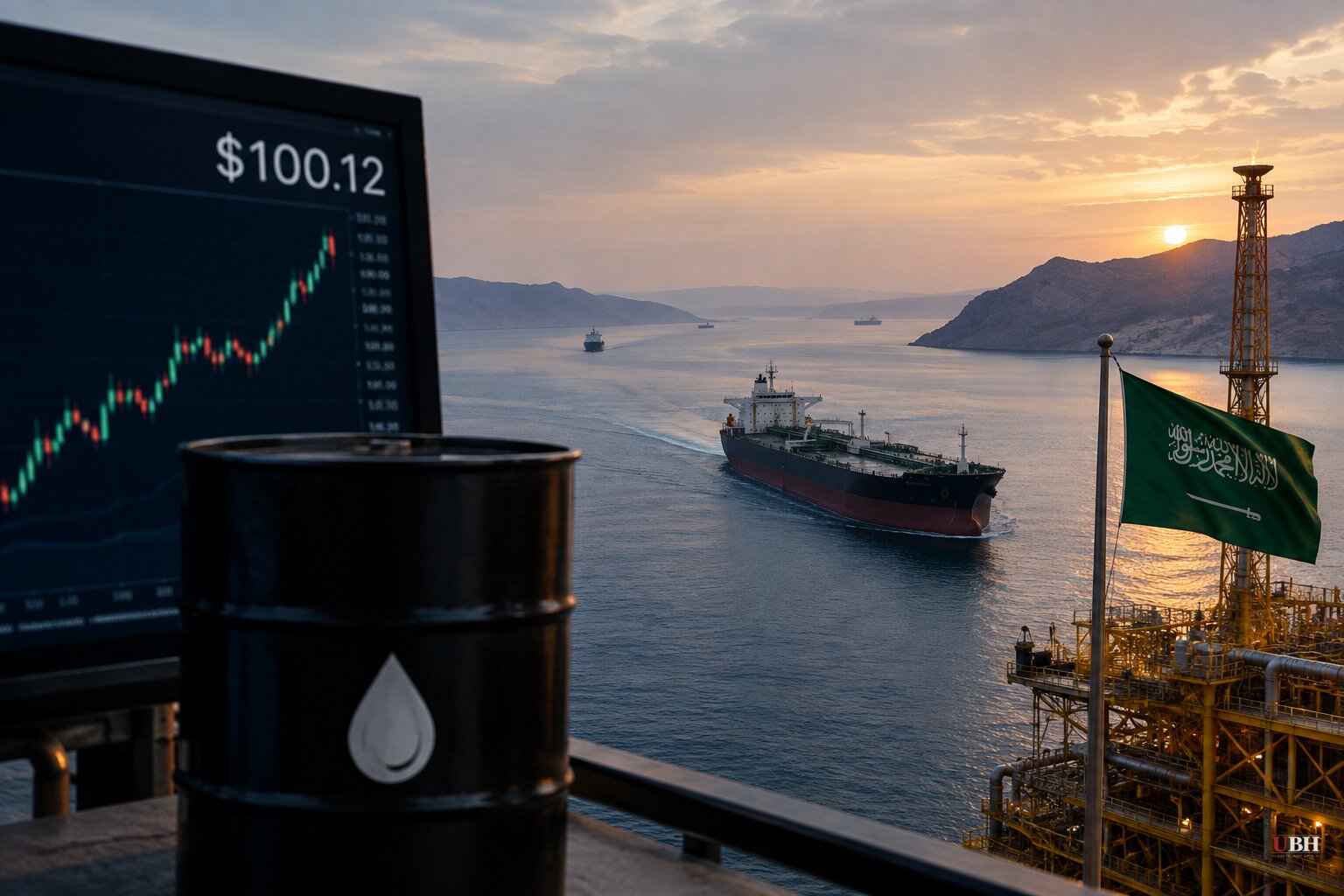
Seven months into the war the U.S. and Israel launched against Iran in February 2026, the Strait of Hormuz still hasn't reopened, and the fight over who controls the world's most important oil chokepoint just got another jolt.
Brent crude jumped nearly 3% to $100.72 a barrel and U.S. crude gained 2.4% to $95.25, the first time either benchmark topped $100 since July, according to the Associated Press. The spike came after the U.S. military struck five Iranian tankers in response to an attempted missile attack on a Navy warship, and after Iranian-backed Houthi rebels hit Saudi oil facilities.
The Aramco Strikes
Houthi forces fired what their military spokesman, Yahya Saree, described as "dozens of ballistic missiles and drones" at Saudi Aramco facilities and a Saudi air base, according to Fox News. The strikes hit Jazan, Najran, Abha and Khamis Mushait, wounding 73 people and sparking fires that temporarily halted operations, Saudi officials said. The Jazan site alone can process roughly 400,000 barrels of crude a day.
Saree said the attack was retaliation for Saudi airstrikes in Yemen and threatened "stronger and wider strikes" if Riyadh continues its campaign there.
The timing matters. With Hormuz traffic already crippled, Saudi Arabia has been rerouting crude through the Red Sea via the Bab el-Mandeb strait, precisely the route the Houthis are now threatening. Fox News reported that Bab el-Mandeb traffic averaged 8.1 million barrels a day in the second quarter of 2026 as Saudi Arabia leaned on it to bypass Hormuz. If the Houthis can credibly threaten that route too, Saudi Arabia's workaround starts to look a lot less reliable.
The Numbers Behind the Panic
The U.S. Energy Information Administration says Hormuz carried just 4.9 million barrels of oil and petroleum liquids a day in the second quarter of 2026, down from 21.6 million barrels a day before the war, according to Fox News. That's a collapse of roughly 77%.
Consumers are feeling it. AAA data cited by the Associated Press put regular gasoline at $4.22 a gallon, more than a dollar above last year, with diesel hitting a record $5.94 a gallon. Jet fuel costs have forced airlines to cut flights and raise fares. CNN, citing research from JPMorgan chief commodities analyst Natasha Kaneva, reported the war has cost the average U.S. household nearly $800 so far.
Bank of America analysts wrote in a research note cited by the Associated Press that "reaching a durable deal before the U.S. midterm elections is increasingly unlikely, and it could remain elusive even beyond that." The bank's base case puts oil at $83 a barrel for the second half of 2026, but warned prices could hit $95 to $120 if Hormuz disruptions persist, and spike to $150 if major energy infrastructure gets hit directly.
Is the U.S. Actually Winning the Sensor War?
The Epoch Times reported that U.S. Central Command, with the Fifth Fleet and Air Force units, has spent months systematically destroying the radar and camera network Iran uses to find ships in the strait. Mobile truck-mounted radars and passive electro-optical sensors on islands like Qeshm, Larak and Abu Musa have been targeted in hundreds of precision strikes that the outlet described as gradually thinning Iran's ability to detect and target shipping.
But that account sits uneasily next to reporting from Fuel Anchor, which described Hormuz vessel traffic falling to "a mere handful of ships" in recent weeks, and noted Saudi Arabia has formally accused Iran of striking a Bahri-owned tanker, killing two sailors. If Iran's detection capability were substantially degraded, such a successful strike would be difficult to reconcile with that narrative. Neither account resolves the other, and no independent battle-damage assessment is cited in either.
Bessent's Two-Year Bet, and Who's Skeptical of It
Treasury Secretary Scott Bessent told an NBC affiliate, as reported by NPR, that within two years "the strait is going to become irrelevant" — just "another body of water" — as 50% to 70% of energy products shift to underground pipelines. The UAE expects a $3 billion pipeline expansion to Fujairah to come online in 2027; a larger Saudi pipeline expansion is years further out, according to the International Energy Agency.
The IEA's own senior oil market analyst, Rebecca Schulz, told NPR that even after those projects finish, Gulf exports would still need roughly 10 million barrels a day to move through the strait to return to pre-war volumes, about half of what flowed before the war. Robert McNally, an energy analyst, called Bessent's "irrelevant" framing "way too strong and overstated." David Goldwyn, a former State Department energy envoy, said the strait's disruption "is going to be a somewhat permanent feature for the next few years," arguing Iran has no incentive to back down while it can still extract payment for safe passage, and that the U.S. has not achieved a military outcome forcing free navigation.
Those are direct, on-record disagreements about how fast infrastructure can substitute for a war zone. The data on pipeline construction timelines comes from the IEA, an intergovernmental body; the political prediction comes from the Treasury Secretary running the sanctions campaign. Both have skin in the outcome.
What Comes Next
The UAE's Fujairah expansion is the nearest concrete milestone, expected online in 2027. Until then, the market is running on stopgaps CNN described as "shoestring and bubblegum": Saudi pipeline diversions now threatened by Houthi missiles, a covert U.S.-Gulf tanker escort operation, roughly 2 million barrels a day of extra production from the U.S., Venezuela, Brazil, Guyana and Canada combined, and a 5 million-barrel-a-day drop in global demand as consumers and businesses adjust. Whether that patchwork holds through the 2026 midterms, or fails first, is the question Bank of America, the IEA, and the White House are all still arguing about.
Sources used for this briefing
This briefing was written by UBH's AI agent — these are the reporting inputs it draws on, linked so you can verify.


