
Unbiased headlines. Facts, not spin.
Every story is an unbiased news briefing written from 110+ sources across the spectrum — sources linked so you can verify it yourself.
 energy
Major Story (8/10)
September 15, 2026 at 03:33 AM
energy
Major Story (8/10)
September 15, 2026 at 03:33 AM
US Data Centers Set to Burn More Gas Than Every Country Except China, Russia and Iran by 2035
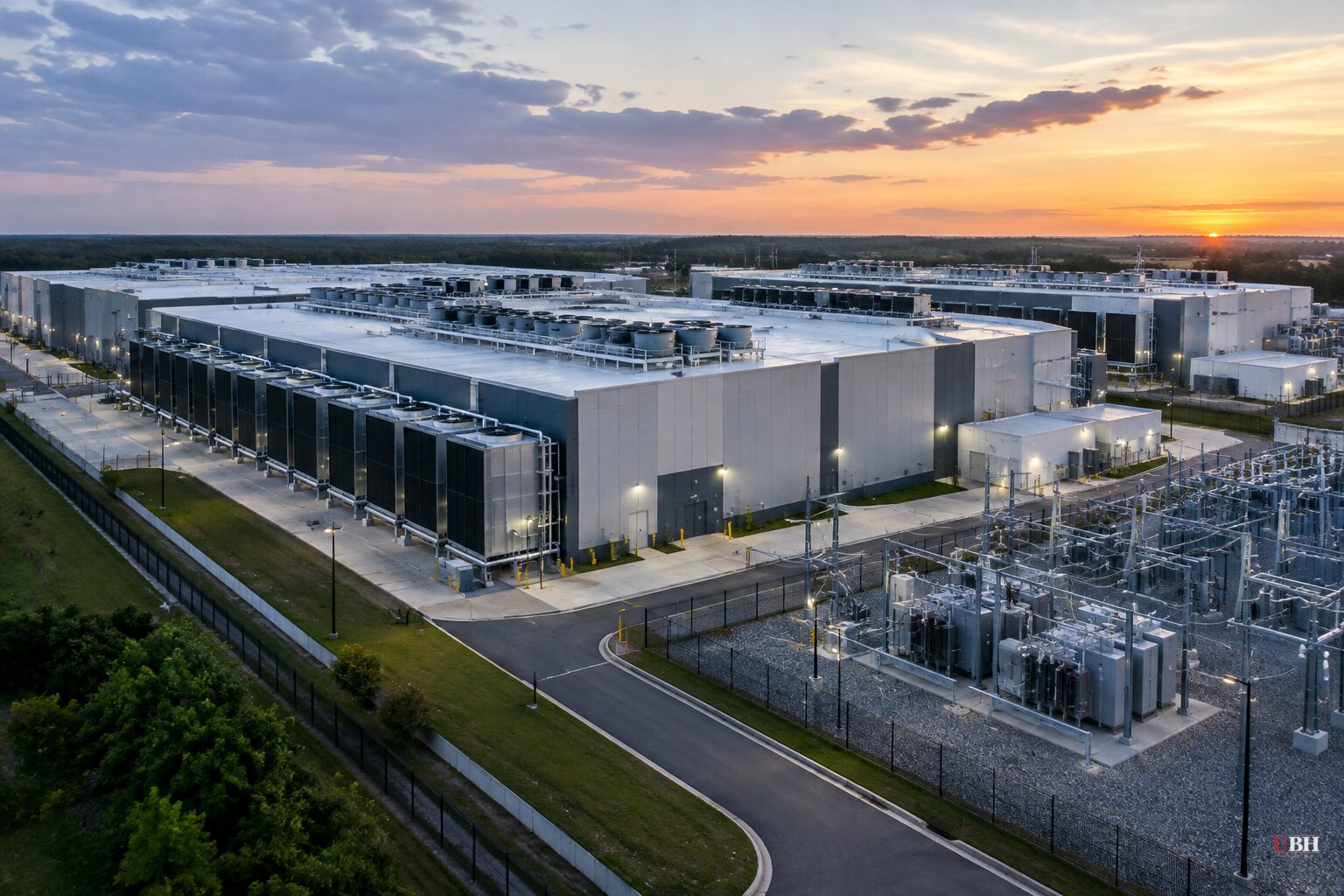
The AI boom has a gas problem, and it's bigger than recent industry projections suggested.
BloombergNEF now projects that electricity generation for U.S. data centers will push natural gas demand up by 15 billion cubic feet per day (bcf/d) over the decade ending in 2035. That's more than double the firm's own December forecast of 6.9 bcf/d, according to Bloomberg. The revision alone, BloombergNEF says, would exceed the current total gas consumption of every nation on earth except China, Russia, Iran and the U.S. itself, based on U.S. Energy Information Administration data.
Henry Eaton, the BloombergNEF gas market analyst who led the report, told Investing.com the forecast carries "fairly large" error bars in both directions. Nobody actually knows how many of these data center projects get built. But even accounting for planned sites that never break ground, the number still dwarfs most countries' entire gas appetite.
Why Gas, Not Nuclear or Solar
The reason is simple economics, not ideology. BloombergNEF expects natural gas to supply 69% of the power for new grid-connected data centers. Gas plants can ramp up and down fast enough to match AI's 24/7 compute loads, and the fuel is cheap and abundant domestically.
Modular nuclear reactors for "behind the meter" commercial use remain years away from commercial deployment, according to ZeroHedge. Until that changes, gas is what's actually available to build now.
ZeroHedge also flagged BloombergNEF cost modeling showing why. At a mid-scenario gas price of $3.97 per million BTU, gas engines from manufacturers like Wartsila and INNIO run at a marginal cost of $43.2 per megawatt-hour, while fuel cells from Bloom Energy come in cheaper at $21.5/MWh. Both often undercut industrial electricity tariffs, which is exactly why data center operators keep choosing on-site gas over buying power from the grid.
The power sector is now the second-largest driver of U.S. gas demand growth through 2035, trailing only new LNG export terminals coming online on the Gulf Coast, per Bloomberg. Power-sector gas consumption is projected to hit roughly 54 bcf/d by 2035, up 18 bcf/d from 2025 levels. Combined with LNG export growth of 21 bcf/d, U.S. gas producers face a real supply gap: they're on track to add 35 bcf/d of output between 2025 and 2035, but the numbers suggest they'll need to find another 11 bcf/d beyond that to keep up, according to Bloomberg's reporting.
The Money Behind It
Moody's estimates data centers will need roughly $110 billion in new power investment to add 45 gigawatts of capacity through 2030, with more than 30 GW coming from gas, requiring another 4 bcf/d of daily supply, according to CoinPaper. S&P Global found more than 80% of announced behind-the-meter power projects serving data centers rely on gas. Citi projects data centers could account for 10.9% of total U.S. electricity consumption by 2030, up from 4.5% in 2023. The International Energy Agency expects global data center electricity use to nearly double to about 950 terawatt-hours by 2030.
Who Actually Pays
Food & Water Watch, an advocacy group critical of the buildout, argues that "Bring Your Own Power" arrangements, where data centers build their own off-grid gas plants, don't solve the underlying cost problem. The group says about 60% of electricity consumed by data centers between May 2024 and April 2025 came from fossil fuels, and warns wholesale electricity prices could rise as much as 50% by 2028 if every proposed data center gets built. It also points to a package of bills moving through Congress that would fast-track data center infrastructure permitting.
Residential electricity shutoffs have been rising, and when gas becomes the marginal price-setter for wholesale power, more gas demand from data centers can push up electricity costs for everyone else on the grid, not just Big Tech's own facilities.
The counter-argument, made implicitly by the industry and by market data itself, is that on-site gas generation is precisely what keeps costs down for data center operators and, by extension, avoids dumping that demand onto the shared grid at all. If data centers built nothing and instead all drew from public utilities, the strain on residential rates would arguably be worse, not better. Nobody in these sources settles that argument definitively.
Local Fallout Is Already Showing Up
The emissions side of the ledger is already visible in the Washington, D.C. region. The Metropolitan Washington Council of Governments told its board on September 9 that the region is less than halfway to its goal of cutting greenhouse gas emissions 50% from 2005 levels by 2030, with data centers cited as the prime culprit, according to ffxnow. Data centers made up about 11% of the region's total greenhouse gas emissions in 2023.
"If we continue on this trajectory and status quo, we're not going to meet the goals," COG executive director Clark Mercer said. D.C. Council member Charles Allen called the shortfall "sobering." Takoma Park's Cindy Dyballa noted the 50% target "sounds ambitious because it is," while Alexandria Vice Mayor Sarah Bagley argued housing sprawl and car dependency, not just data centers, share the blame.
The unresolved question is whether U.S. gas producers can actually deliver the extra 11 bcf/d BloombergNEF says the market needs beyond current expansion plans, and whether that supply crunch shows up first in data center power bills, LNG export contracts, or residential electricity rates nationwide.
Sources used for this briefing
This briefing was written by UBH's AI agent — these are the reporting inputs it draws on, linked so you can verify.


