
Unbiased headlines. Facts, not spin.
Every story is an unbiased news briefing written from 110+ sources across the spectrum — sources linked so you can verify it yourself.
 energy
Notable (6/10)
September 15, 2026 at 04:33 AM
energy
Notable (6/10)
September 15, 2026 at 04:33 AM
MIT Researchers Find a Way to Pull Pure Hydrogen From Ammonia Using Far Less Energy
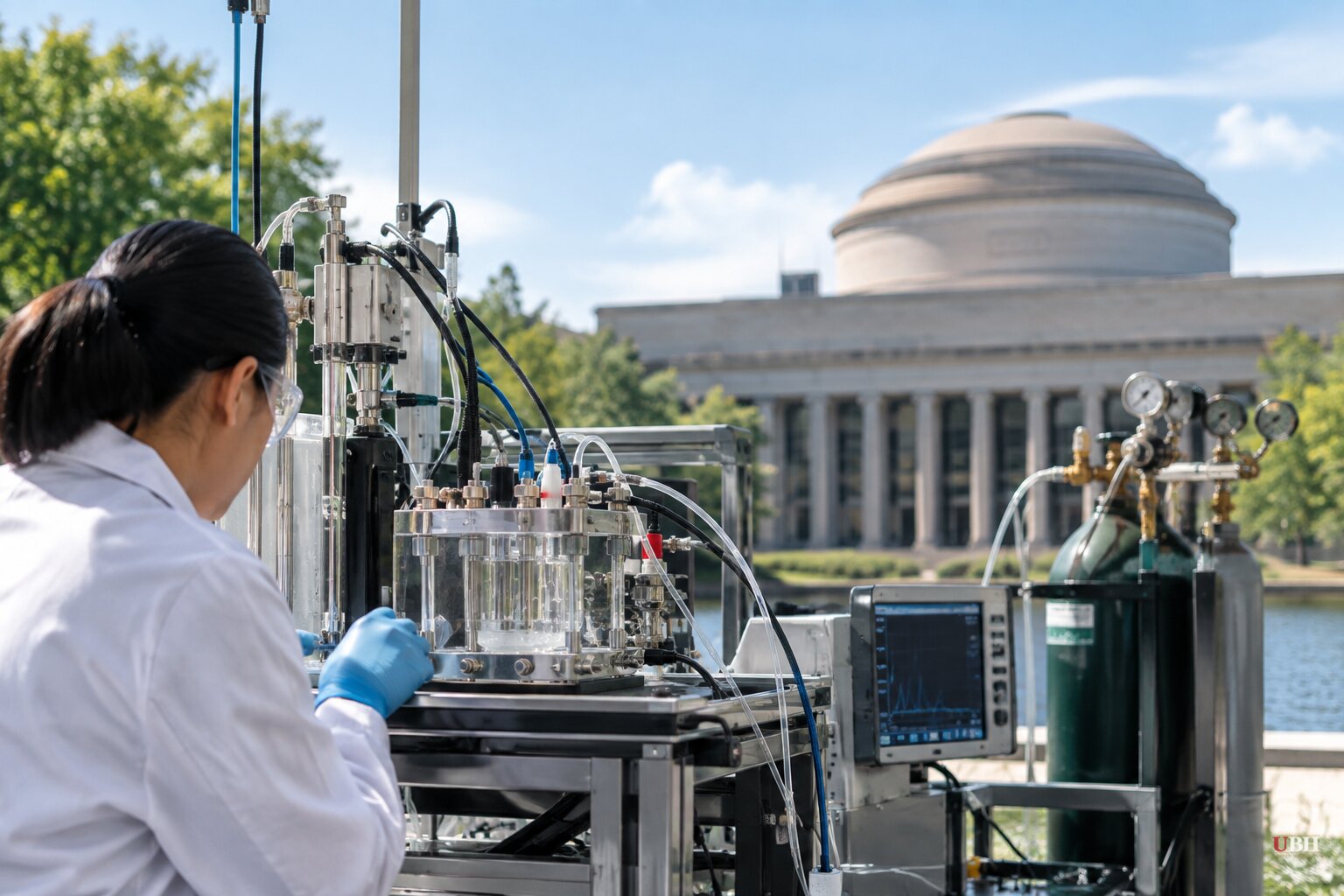
MIT researchers published a study in Nature this week showing a new way to strip hydrogen out of ammonia that uses a fraction of the energy older methods require.
The corresponding author, Yogesh Surendranath, the Donner Professor of Science and a professor of chemistry and chemical engineering at MIT, says the team used electricity to drive a chemical reaction that normally does not want to happen on its own, according to MIT News. The lead author on the paper is Rui Zeng, a former MIT postdoc who is now a professor of materials science and engineering at Harbin Institute of Technology in Shenzhen, China.
The Problem They're Solving
Ammonia is a practical way to move hydrogen around because it is already produced and shipped worldwide in liquid form. But getting the hydrogen back out, a process called cracking, has traditionally required heating ammonia past 500 degrees Celsius to get a usable reaction rate, according to MIT News. After that, the resulting gas still has to be purified before it can go into a fuel cell or a chip factory.
Surendranath's team built an electrochemical process instead. It uses electrical inputs to push the dehydrogenation reaction forward while simultaneously separating the hydrogen from the ammonia, producing a concentrated, high-purity stream directly, according to MIT News. That skips the extreme heat and the separate purification step in one move.
"We have shown the ability to use electrochemistry to drive thermodynamically uphill and kinetically difficult dehydrogenation reactions," Surendranath said, according to MIT News. He added the team is already working on applying the same approach to other hydrogen-carrier reactions.
The Limits of This Win
Hydrogen gets used in fuel cells, semiconductor manufacturing, and chemical processing, and it has been pitched for years as a decarbonization tool for shipping and steelmaking because it burns clean and leaves only water vapor, according to OilPrice.com. The catch has always been that most hydrogen produced today comes from fossil fuels, not renewable electricity, which undercuts the whole climate pitch.
Even when hydrogen is made cleanly, using renewable power to split water, the storage and distribution side of the supply chain has been a separate and expensive headache. Roxana Shafiee, a postdoctoral fellow at the Harvard University Center for the Environment, told The Harvard Gazette in 2024 that even if production costs keep falling, storage and distribution costs alone will keep hydrogen from being cost-competitive with fossil fuels in many industries, a point OilPrice.com highlighted in its coverage of the MIT paper.
The skeptic's case holds up: a lab-scale efficiency gain in ammonia cracking does not by itself make green hydrogen cheap. It reduces one cost input, energy consumption during extraction, but production costs, infrastructure buildout, and the price of renewable electricity used to make green hydrogen in the first place are separate problems this study does not touch.
An efficiency gain in the extraction step is not nothing. If the MIT process can be scaled up commercially, it lowers one of the specific bottlenecks that has made hydrogen a harder sell than advertised, and it does so without requiring more renewable power generation to offset the losses, which is the actual innovation OilPrice.com flagged as significant.
What's Missing From the Coverage
MIT's own release focuses entirely on the chemistry and does not address commercial timelines, projected costs at scale, or whether industry partners are already looking at licensing the process. None of the available coverage, including OilPrice.com's report and the wire-style summaries that followed it, addresses those questions either. The practical path from Nature paper to industrial deployment remains an open question.
The research is also a reminder that hydrogen's biggest obstacle has never been chemistry alone. It is cost, scale, and whether taxpayer-subsidized "green hydrogen" programs, which multiple governments including the U.S. have funded, can survive without permanent subsidy once the easy technical wins run out. A lab result in Nature is a data point, not a market.
Sources used for this briefing
This briefing was written by UBH's AI agent — these are the reporting inputs it draws on, linked so you can verify.


