
Unbiased headlines. Facts, not spin.
Every story is an unbiased news briefing written from 110+ sources across the spectrum — sources linked so you can verify it yourself.
 energy
Notable (6/10)
September 15, 2026 at 04:10 AM
energy
Notable (6/10)
September 15, 2026 at 04:10 AM
European Parliament Wants Faster Energy Permits, Battles Brewing With EU Capitals Over How Fast
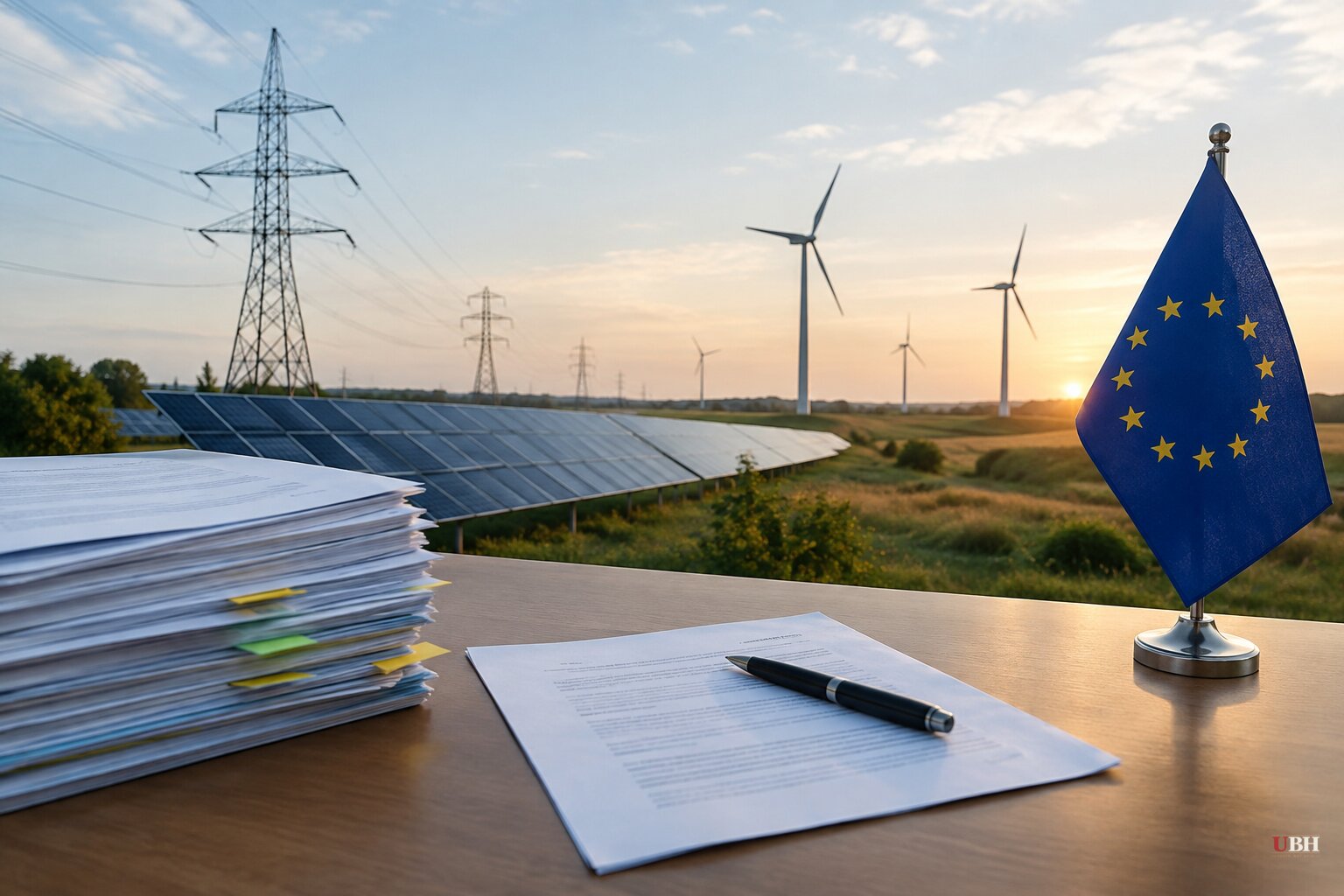
The European Parliament wants Brussels to force faster permitting timelines on energy infrastructure across the bloc, and EU governments are pushing back on how much control they'd lose over their own approval systems.
An internal document seen by Euronews, reported September 14, shows Parliament's negotiating position is tougher than both the European Commission's original proposal and the Council's mandate, particularly on electricity grids. The fight is over the TEN-E regulation, the rulebook governing trans-European energy infrastructure like pipelines, cables, and grid connections.
The Numbers
The Commission proposed a two-year maximum authorization period for both transmission and distribution infrastructure. Parliament wants it split: distribution projects approved within one year, transmission projects within two. The Council wants to keep a flat two-year ceiling for both, with extensions allowed in what it calls "extraordinary circumstances."
The sharper fight is over what happens when governments blow those deadlines. Parliament backs stronger "tacit approval" rules, meaning certain permitting steps count as approved automatically if authorities don't respond in time. The Council wants that limited to intermediary administrative steps only, explicitly carving out environmental decisions and grid-connection permits from automatic approval.
Niels Fuglsang, the Danish S&D lawmaker leading the file for Parliament, told Euronews his chamber's approach "delivers faster permitting without compromising legal certainty or public confidence," adding he doesn't think weakening tacit approval rules is the right call.
The Committee Vote
Parliament's Industry, Research and Energy Committee (ITRE) adopted its negotiating position on September 10 by a vote of 56 in favor, 10 against, and 9 abstentions, according to Informat.ro. The report also sets a standard 12-month deadline for the legal permitting stage once an application is deemed complete, with room for a preparatory stage and extensions.
That vote doesn't open formal talks with the Council yet. Informat.ro reported the negotiating mandate still needs confirmation in a full Parliament plenary session before trilogue negotiations can begin.
Cost-Sharing and Planning
The committee's position would also require countries receiving at least 10% of a cross-border project's estimated benefits to help pay for it, and it directs authorities to weigh whether recovering project costs through consumer tariffs could create affordability problems, according to Informat.ro.
On planning, the European Commission would lead development of a common strategic scenario for grid needs running through 2050, with an alternative scenario reflecting actual national policy progress. The EU's energy regulator agency, ACER, would get a stronger role verifying operator data and scrutinizing infrastructure assessments.
Who Decides What Counts as "Overriding Public Interest"
The two sides also disagree on how much weight energy projects should get when they collide with other interests, like cultural heritage or environmental protection. Parliament wants to broaden the presumption that renewable energy and related infrastructure count as "overriding public interest," which limits how much wiggle room member states have to carve out exceptions, according to Euronews and Europe Says.
The Council wants to keep that broader presumption too, but with more explicit exceptions, including protection of cultural heritage sites and projects with environmental effects that can't be mitigated or offset.
Governments that want to protect a historic site or a wetland from a transmission line still need a legal off-ramp. Parliament's version narrows that off-ramp in the name of speed. Critics of that approach, represented by the Council's more cautious mandate, would say environmental and cultural safeguards shouldn't be steamrolled just because a project is labeled clean energy. Supporters, like Fuglsang, argue that a decade of delays on grid buildout is itself a public-interest failure that's keeping bills higher than they need to be.
The Price Promise Isn't a Guarantee
Rapporteur Tsvetelina Penkova, a Bulgarian S&D MEP, said in a statement carried by europeansting that the reform should "help reduce the electricity price disparities among member states" and ensure "fairer access to affordable energy." Europeansting's write-up, published in association with the European Parliament itself, presents that price framing without qualification.
Informat.ro's coverage of the same vote was more careful, noting explicitly that "lower bills remain an objective, with no guaranteed outcome" and that the vote "does not establish a reduction in bills or a timetable for it." Faster permitting might speed up grid construction. Whether that construction actually shows up as a lower number on anyone's electricity bill is a separate claim nobody in these documents has proven.
The next concrete step is a Parliament plenary vote to confirm the negotiating mandate. Only after that can formal trilogue talks with the Council begin, where the gap between a one-year and two-year deadline, and between broad and narrow tacit approval, will actually get negotiated line by line.
Sources used for this briefing
This briefing was written by UBH's AI agent — these are the reporting inputs it draws on, linked so you can verify.


