
Unbiased headlines. Facts, not spin.
Unbiased Headlines is an independently owned news organization. We bring you the facts, not opinions, written fresh from 110+ named sources. Sources linked so you can verify it yourself.
 economy
Notable (6/10)
Event date: November 5, 2026 ·
Oil Falls 13% in Election Week, Shrinking Alaska's Iran-War Revenue Windfall Before a New Governor Takes Over
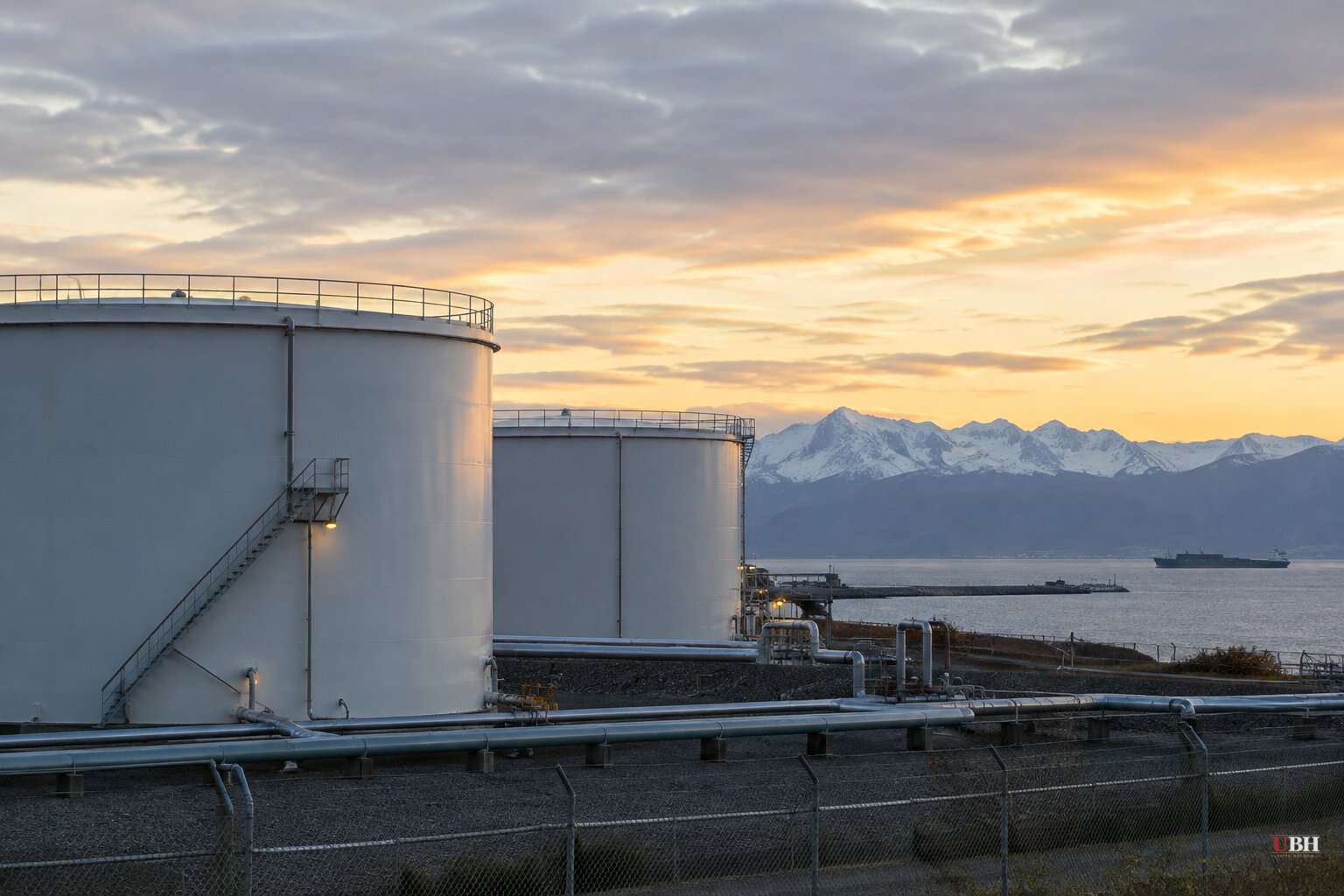
Since the U.S.-Israeli strikes on Iran began more than eight months ago, Alaska has been one of the few places where the war's oil shock showed up as a budget gain rather than just a pump-price pain. This week the gain got smaller.
Brent crude settled Friday, Nov. 6, at $98.32 a barrel. West Texas Intermediate closed at $90.83. Both finished roughly 13% lower for the week, according to The Wall Street Journal's closing report. Oil fell about 8% on Wednesday alone, the day after Democrats took control of Congress.
Alaska North Slope crude, the state's benchmark, tracks most closely to Brent.
The windfall so far
In October, North Slope crude averaged $122.21 a barrel, the fifth-highest monthly average in nominal dollars on record, according to the Alaska Department of Revenue. Its premium over Brent averaged $13.91.
The department's spring forecast assumed North Slope crude would average just $75 a barrel in fiscal year 2027, which began July 1 and ends June 30, 2027. Even after this week's slide, the major benchmarks sit above that line.
That means Alaska could still collect more petroleum revenue than it projected. Bloomberg's Wall Street Week framed the state as a possible "quiet winner" of the conflict, noting that part of the extra revenue flows back to residents through the state's sovereign wealth fund.
The cushion is thinner than it was a week ago.
Why prices dropped, and why they could jump back
The retreat has come alongside expectations that the midterm results will increase pressure to end the U.S.-Iran conflict. That is an expectation, not an outcome. Continued threats to Middle East shipping leave prices vulnerable to a reversal.
Much of the fighting has centered on restoring normal traffic through the Strait of Hormuz, a key route for oil, natural gas and fertilizer. Iranian forces began attacking shipping there after U.S. and Israeli forces opened their campaign.
The politics of how the war ends are not settled inside the Republican camp. Vice President JD Vance wrote on X after the election, "The reason we lost is the war." Former White House press secretary Ari Fleischer answered that the problem "was not the Iran War. It was the cease fire," arguing the war "should have been over six months ago, with the Strait of Hormuz wide open and oil flowing."
Trump said Wednesday that Vance's claim was "largely true" because the war "drove the gasoline up a little bit short term."
Democratic strategist Mally Smith told The Epoch Times that gas was around $2.50 a gallon before the war and is now over $4, with diesel at a record high. Alaska's revenue gain is the other side of that same price move.
Oil is no longer the whole budget
Higher crude does not fund most of Alaska's government anymore. The spring forecast projected about $6.7 billion in FY2027 unrestricted general fund revenue. That includes a $4 billion transfer from the Permanent Fund, about 60% of the total.
Oil production is the other variable. The spring forecast assumed North Slope output would average 518,500 barrels per day this fiscal year.
The Department of Revenue's fall forecast will update the price, production and revenue assumptions. It typically comes out in early December. Last year it was released by Dec. 11.
A short runway for the next governor
The governor's race is still being counted. Jonathan Kreiss-Tomkins is described as a very possible winner of the Nov. 3 contest and has already assembled a team to dig into the numbers. A ballot measure to repeal Alaska's open primaries and ranked-choice general elections was also too early to call in the latest count.
The calendar is tight:
- Nov. 18: ranked-choice tabulation is scheduled.
- Nov. 25: certification is targeted.
- Dec. 7: inauguration.
- Dec. 15: the governor's proposed budget is due.
That leaves the incoming administration eight days in office before its first budget deadline. The proposal will cover FY2028, which begins July 1, 2027.
The current slide affects FY2027 collections. What oil does after next summer will shape the new budget, and that depends on whether the Strait of Hormuz stays contested. The fall forecast is the next hard number on how much of the October spike the state can count on.
Sources used for this briefing
7 links from 6 independent newsrooms (syndicated copies of the same report count once)
These are the sources it draws on, linked so you can verify.


