
Original briefings. Zero spin.
Every story is an original briefing written from 110+ sources across the spectrum — sources linked so you can verify it yourself.
 defense
Major Story (8/10)
September 13, 2026 at 10:51 PM
defense
Major Story (8/10)
September 13, 2026 at 10:51 PM
NYT Report: Ex-Spymaster Hossein Taeb Ordered Hormuz Ship Attacks After June Iran Peace Deal Collapsed
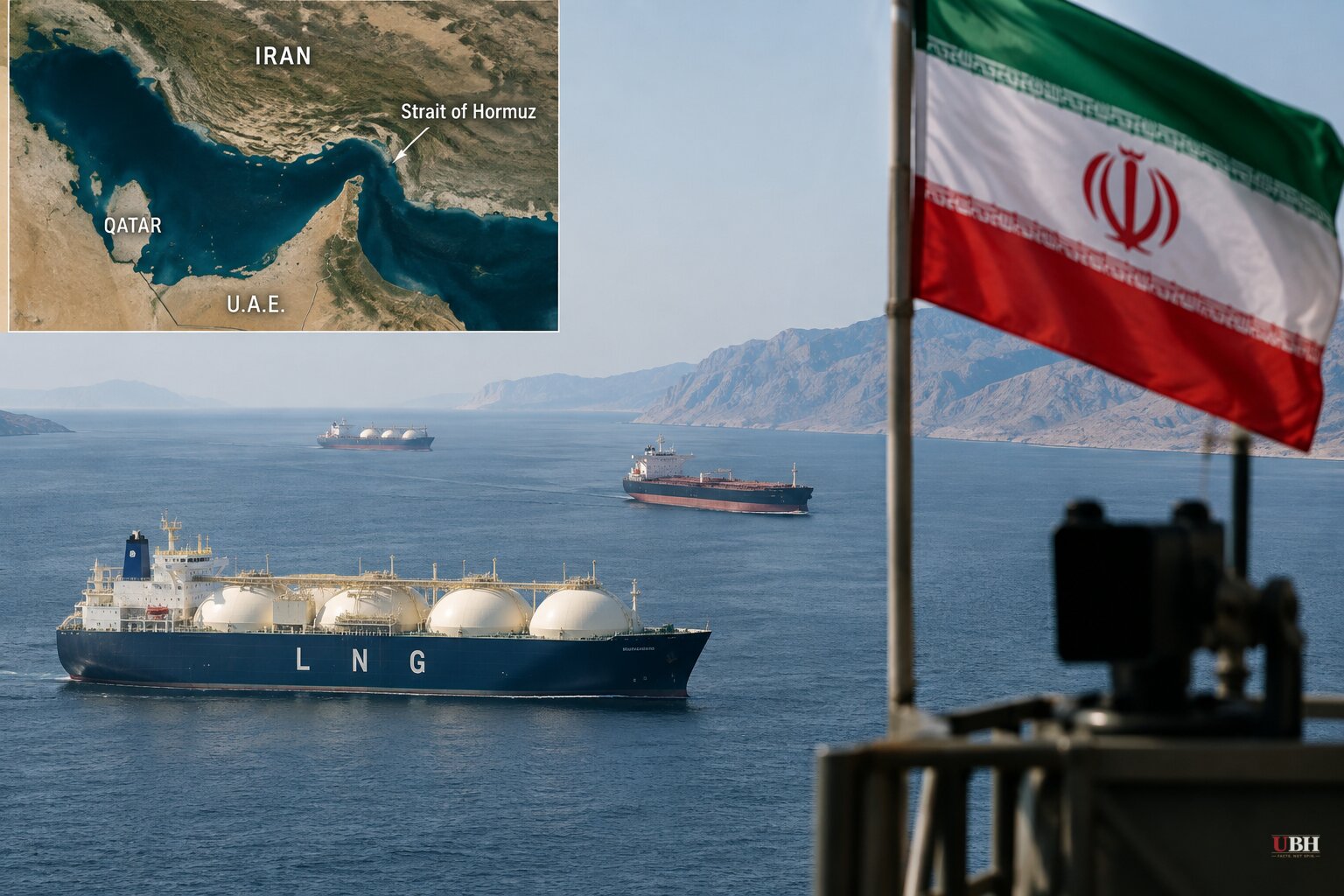
Since the June memorandum of understanding collapsed after Iranian forces opened fire on three commercial vessels in the Strait of Hormuz on the night of July 6-7, the internal story of who actually gave that order has stayed murky. A New York Times investigation, based on interviews with five Iranian officials and two members of the Islamic Revolutionary Guard Corps, now lays out who did it and why.
The attacks, which set a Qatari LNG tanker ablaze and damaged two other ships, were ordered by Hossein Taeb, according to the Times. Taeb ran the IRGC's intelligence organization for more than two decades before he was removed in 2022 over alleged Israeli infiltration of his network. He now heads the Basij militia, the paramilitary force that carried out January's deadly crackdown on protesters, and was appointed to that post by Iran's new Supreme Leader, Mojtaba Khamenei.
President Masoud Pezeshkian, who had staked his presidency on the June ceasefire, was in Iraq attending mourning ceremonies for the late Ayatollah Ali Khamenei when the attacks happened. According to the Times, he immediately called IRGC commander-in-chief Ahmad Vahidi demanding answers. Vahidi said he had neither authorized nor known about the operation. Iran's Supreme National Security Council, the body that normally signs off on operations of that scale, was reportedly in the dark too.
By the next morning, the United States had resumed airstrikes and reimposed sanctions, restarting the cycle of tit-for-tat retaliation that has now stretched the war past six months. Iranian expert Alireza Namvar Haghighi told the Times the strikes were designed to do exactly that: "blow up the memorandum of understanding with Trump and kill the prospects of any future negotiations and deal."
When Pezeshkian pushed for accountability, he was reportedly told the strike came from an existing order empowering field commanders to fire on any vessel violating Iran's claimed control of the Strait without waiting for central approval. When he pressed further, officials told him the order ultimately traced back to Khamenei himself. Pezeshkian does not believe that, according to the Times.
Khamenei's whereabouts and condition remain unknown. He was severely injured in the war's opening strikes, and what limited communication exists from him comes through readouts, not public appearances. Pezeshkian has previously acknowledged that the man he met in a secret meeting last month may not have been Khamenei at all. The Times' reporting suggests Taeb and allied hardliners used that vacuum to attribute the strike order to the top of the chain of command without anyone able to verify it.
The IRGC's Khatam al-Anbiya headquarters did not claim responsibility for the July 7 strikes, a break from its usual pattern of publicly touting attacks on shipping.
Iran's public posture has hardened since. Ebrahim Azizi, head of Iran's parliamentary National Security Committee, said on September 12 there will be "no negotiations as long as the United States does not accept all of Iran's conditions." Speaking in New Delhi around the same time, Pezeshkian said Iran has "successfully stood against Israel and the U.S." and would not yield to pressure, while adding Tehran remains open to talks if Washington ends sanctions and hostile action.
Iran's insistence on controlling the Strait of Hormuz as leverage is not an unreasonable negotiating position on its face. A country facing a six-month bombing campaign has an obvious interest in retaining whatever cards it holds before making concessions, and Tehran has framed keeping the waterway open, rather than closing it, as proof of restraint. The Times reporting indicates the July attack wasn't a calculated leverage play by Iran's actual government. It was a unilateral move by a faction that bypassed the president, the IRGC's own commander, and the national security council entirely.
A Gulf diplomatic meeting involving Oman, Iraq and GCC states is scheduled for Monday, September 14, to discuss safe shipping routes through the Strait, according to Iranian officials. A senior Iranian official cautioned the gathering will only exchange views, not finalize any navigation agreement, citing unresolved disputes over sovereignty and fees. Bahrain has announced it will not attend any group meeting that includes Iran until full diplomatic relations between Manama and Tehran are restored.
Meanwhile the conflict has spread. Iran-backed Houthi forces have captured the Yemeni port city of Mocha and the island of Perim in the Bab al-Mandeb strait, a chokepoint through which roughly 12% of global seaborne oil trade and 30% of container traffic passes, according to Firstpost.
President Trump, asked about the war's endgame while traveling in Doonbeg, Ireland, told reporters the conflict will "end after the midterm" elections and floated the U.S. staying in Iran to "keep the oil," comparing it to Washington's arrangement with Venezuela, where the U.S. buys 20% of output from North American Blue Energy Partners at cost of production, according to The Hill. He said Iran "wants to make a deal so badly, and is calling constantly," a claim that sits awkwardly next to Azizi's public refusal to negotiate on anything but Tehran's terms.
The Washington Post noted that six months after Trump predicted the war would last four to five weeks, his options have narrowed as Iran has shown it can grind down U.S. military pressure with mines and drones rather than conventional force. Some coverage of the Times' Hormuz report, tracked by outlets comparing 17 versions of the story, found CNN and India Today framed the deal's collapse around renewed sanctions talk rather than the internal sabotage angle the Times emphasized, a gap that leaves out who actually pulled the trigger on the ceasefire.
Whether Pezeshkian's faction can rein in Taeb and the hardliners before Monday's Oman meeting produces anything remains unclear. Tehran's negotiating position may remain hostage to a leadership structure nobody, including its own president, can fully verify.
Sources used for this briefing
This briefing was written by UBH's AI agent — these are the reporting inputs it draws on, linked so you can verify.


