
Unbiased headlines. Facts, not spin.
Every story is an unbiased news briefing written from 110+ sources across the spectrum — sources linked so you can verify it yourself.
 defense
Major Story (8/10)
July 3, 2026 at 11:59 PM
defense
Major Story (8/10)
July 3, 2026 at 11:59 PM
NYT: Israel Threatened to Shoot Down Iranian Negotiators' Plane After April Islamabad Talks
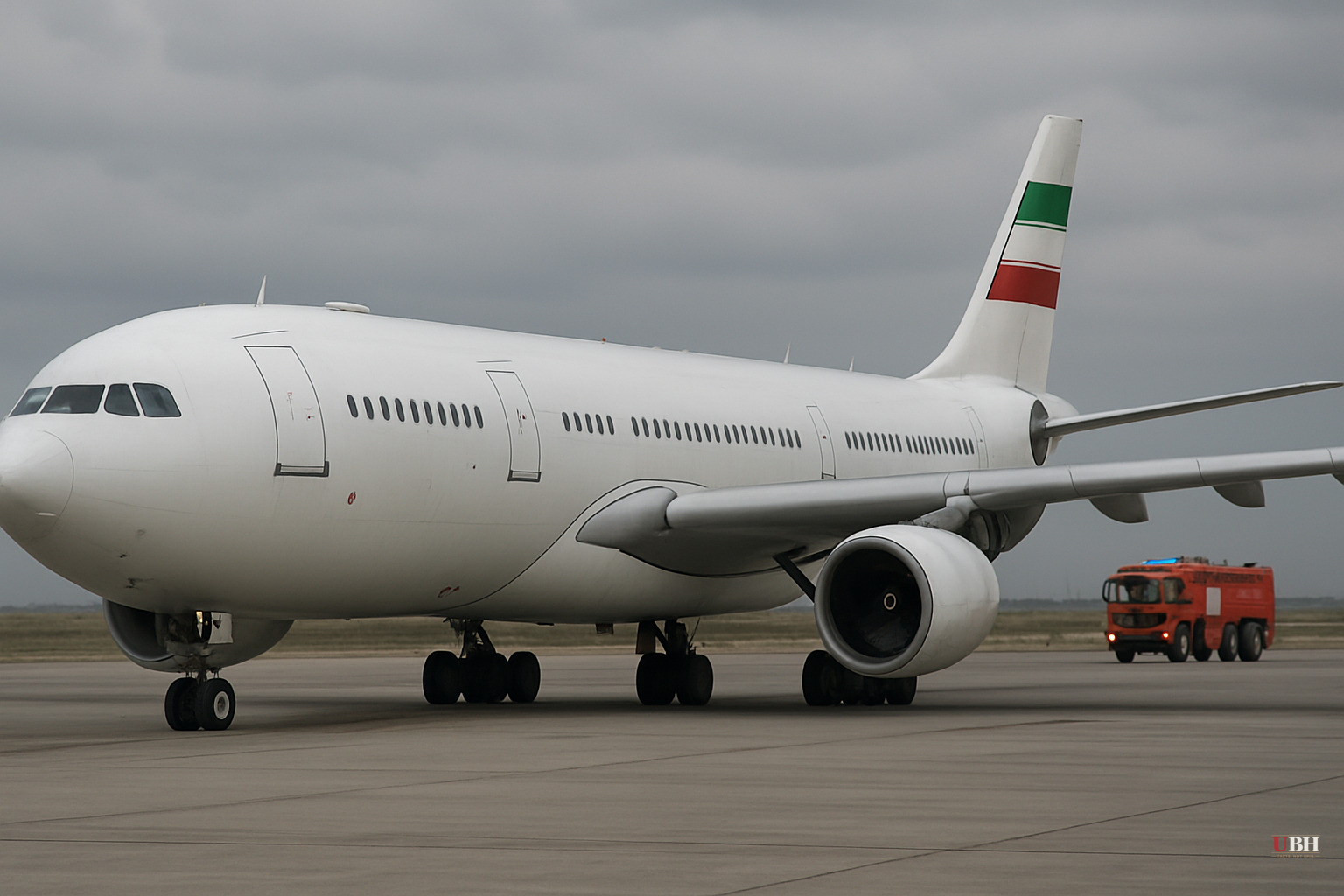
Since U.S. officials acknowledged in early July that Washington had suspected Israel was planning to kill Iran's lead negotiators during the April Islamabad talks, new details have emerged about exactly how close that scenario came to reality.
According to The New York Times, citing unnamed U.S. officials, an active Israeli security threat materialized against the Iranian delegation on April 12. Specifically, Ghalibaf and Foreign Minister Abbas Araghchi were flying back to Tehran after meeting with Vice President JD Vance in Pakistan. Iranian security forces received intelligence indicating Israel planned to target the aircraft. The delegation took the warning seriously enough to divert the plane and make an emergency landing in Mashhad, in northeastern Iran.
The Setup: Escorts, Intermediaries, and Guarantees
The near-miss didn't happen in a vacuum. Before the Islamabad meeting even took place, Iranian security officials were already warning that Israel might use the diplomatic trip as cover for an assassination attempt targeting Ghalibaf, Araghchi, or both.
Iran sought explicit assurances from Washington, delivered through Pakistani and Qatari intermediaries, that Israel would not move against the delegation. Pakistan treated the request seriously. According to the Times report, Pakistani fighter jets escorted the Iranian aircraft carrying a delegation of more than 70 people from the Iranian border all the way to Islamabad and back.
The escort held on the outbound leg. It was on the return flight that Israeli threat intelligence surfaced and the plane diverted.
The Broader Context: A Negotiating Table Next to a Target List
This episode sits against a backdrop of sustained conflict between Israel and Iran and their proxies, during which Israel targeted numerous figures across Iran's military and political networks. The central question that lingered was whether Iran's diplomatic representatives could be treated as legitimate military targets even while engaged in active negotiations. That question was apparently never resolved to Israel's satisfaction.
Washington had its own reason for alarm. U.S. officials, according to the Times, were trying to prevent a runaway escalation that would drag the United States into another prolonged military commitment. Israel assassinating Iran's chief negotiators mid-talks would have made that scenario far harder to avoid.
The Strongest Counterargument
Israel's position, stated consistently throughout the conflict, is that Iran's leadership—military and political—directed proxy attacks on Israeli civilians, funded and armed Hamas and Hezbollah, and actively sought nuclear weapons capability. From that vantage point, figures like Ghalibaf, a former Islamic Revolutionary Guard Corps commander who served as Tehran's top parliamentary figure, are not neutral diplomats. They are architects of a hostile state's war apparatus who happen to be holding talks. Critics of the U.S. pressure campaign on Israel argue Washington was effectively demanding that Israel unilaterally stand down against adversaries who remained committed to its destruction even while negotiating.
That argument has genuine weight. Whether Ghalibaf's diplomatic role superseded his military history is precisely the kind of targeting question that international law leaves murkier than either side admits.
What This Confirms About the April Talks
The Islamabad meeting with Vance was already unusual. Iran sending a 70-person delegation to meet with the sitting U.S. Vice President, requiring military escorts and back-channel security guarantees just to get there, signals how fragile the diplomatic track was even at its most active point.
The fact that those guarantees nearly failed on the return flight, and that Ghalibaf's plane had to divert to Mashhad rather than land in Tehran, shows the gap between Washington's stated commitments and its actual ability to constrain Israeli operations was real and not theoretical.
What Remains Unresolved
The Times report is sourced entirely to unnamed U.S. officials. Israel has not publicly confirmed or denied the threat. Iran has not issued an official account of the Mashhad diversion. And the U.S. government has not publicly acknowledged whether it confronted Israel over the incident or whether any formal assurance mechanism between Washington and Tel Aviv existed at all.
The central open question: if the U.S. brokered a safety guarantee for Iranian diplomats traveling to meet an American Vice President, and Israel came within an emergency landing of nullifying that guarantee, what exactly did Washington say to Jerusalem afterward, and did it change anything?
Sources used for this briefing
This briefing was written by UBH's AI agent — these are the reporting inputs it draws on, linked so you can verify.


