
Unbiased headlines. Facts, not spin.
Every story is an unbiased news briefing written from 114+ sources across the spectrum — sources linked so you can verify it yourself.
 economy
Major Story (7/10)
October 7, 2026 at 07:16 PM
economy
Major Story (7/10)
October 7, 2026 at 07:16 PM
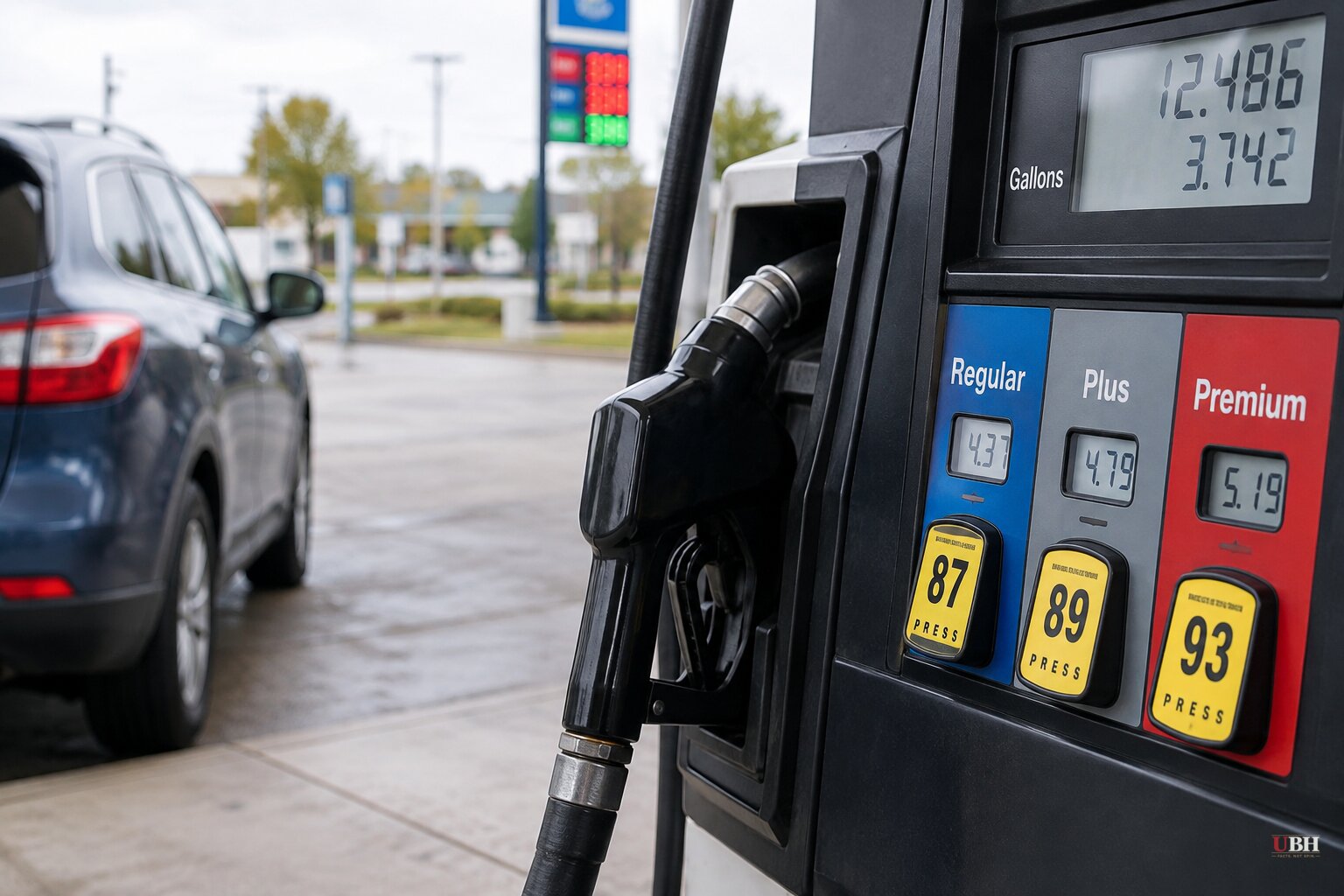
NY Fed: More Households Feel Worse Off as Gas Hits $4.37 a Gallon; Advocacy Group Says Water Bills Up 62% in a Decade
More Americans say they are falling behind. The New York Fed's monthly Survey of Consumer Expectations, released Wednesday, found that consumers expect inflation to be higher a year from now, and more households reported being in a worse financial position than a year ago. More also expect to be worse off a year from now.
The survey polls a rotating panel of about 1,300 households.
While perceptions of future finances worsened, expectations for income growth and spending growth both rose.
Gas is the sharpest pinch
The price at the pump is the clearest number. Gas rose nearly 4% in August alone and more than 27% from August 2025, according to the latest consumer price index. AAA put the national average at $4.37 a gallon on Wednesday, against about $3.12 a year ago.
Heather Long, chief economist at Navy Federal Credit Union, said spending held up in August but income growth did not. "Many people are dipping into savings or using credit to continue spending and that's not sustainable," she said in an email.
Matt Schulz, chief credit analyst at LendingTree, said the outlook suggests "many families expect to make some sacrifices and tough choices in the months to come."
Bank of America Global Research analysts wrote in an Oct. 1 note that "the consumer continues to defy gravity." They added that the gas surge could weigh on discretionary spending and "likely hit lower-income households hardest." The bank also warned it could feed through to food inflation.
Water bills are climbing too
A new study from the nonprofit Food and Water Watch says households pay 62% more for water than a decade ago. The group analyzed 500 of the largest community water systems, which serve a combined 155 million people. It priced 60,000 gallons a year, its estimate of household use for drinking, showering, laundry and similar needs.
The average bill across those systems was $531 last year. The spread is wide:
- Hempstead, New York: $133 a year, the lowest of the systems studied. The system is government-run.
- San Jose, California: $1,416 a year from San Jose Water, a private company. That is up 163% from a decade ago, the group found.
- West Virginia: the highest state bills, at $1,383 a year for the two largest systems, both owned by American Water.
- Idaho: the lowest state bills, averaging $286 across three large systems.
The group also found that for-profit systems charged an average of $823 in 2025. That is $329 more than the public systems' average, which works out to about $494.
Those figures exclude wastewater and stormwater, which are billed by separate utilities. Actual household bills are higher.
Who pays for the pipes
Food and Water Watch attributes the increases to utilities investing more in aging infrastructure and adapting systems to the effects of climate change. Federal support has also slipped. The American Society of Civil Engineers' 2025 Infrastructure Report Card said that since fiscal year 2022, Congress has appropriated at least $1 billion below authorized levels for a federal fund supporting state water projects. A 2023 Environmental Protection Agency survey put drinking water systems' investment needs at $625 billion.
The study comes from an advocacy group, and its public-versus-private comparison is its own finding. The data presented does not establish why private systems cost more. Geography, system age, local water sources and rate-setting rules all differ from place to place, and none of those factors is broken out. The study also does not say whether the 62% figure is adjusted for inflation.
What the numbers do show is that local utilities, public and private alike, are passing rising capital costs to ratepayers while Washington funds less than Congress itself authorized.
What comes next
The gas price spike is the variable economists are watching. Bank of America's analysts say it could spread into food costs, which would land hardest on the households Long says are already leaning on savings and credit. Water utilities face the larger long-term bill: the EPA's $625 billion estimate has no funding source attached, and the likeliest place for it to show up is the rate notice in the mailbox.
Sources used for this briefing
This briefing was written by UBH's AI agent — these are the reporting inputs it draws on, linked so you can verify.


