
Unbiased headlines. Facts, not spin.
Unbiased Headlines is an independently owned news organization. We bring you the facts, not opinions, written fresh from 110+ named sources. Sources linked so you can verify it yourself.
 tech
Major Story (8/10)
Nvidia Tells Server Partners to Halt Shipments to Malaysia, Singapore, Thailand and Indonesia, FT Reports
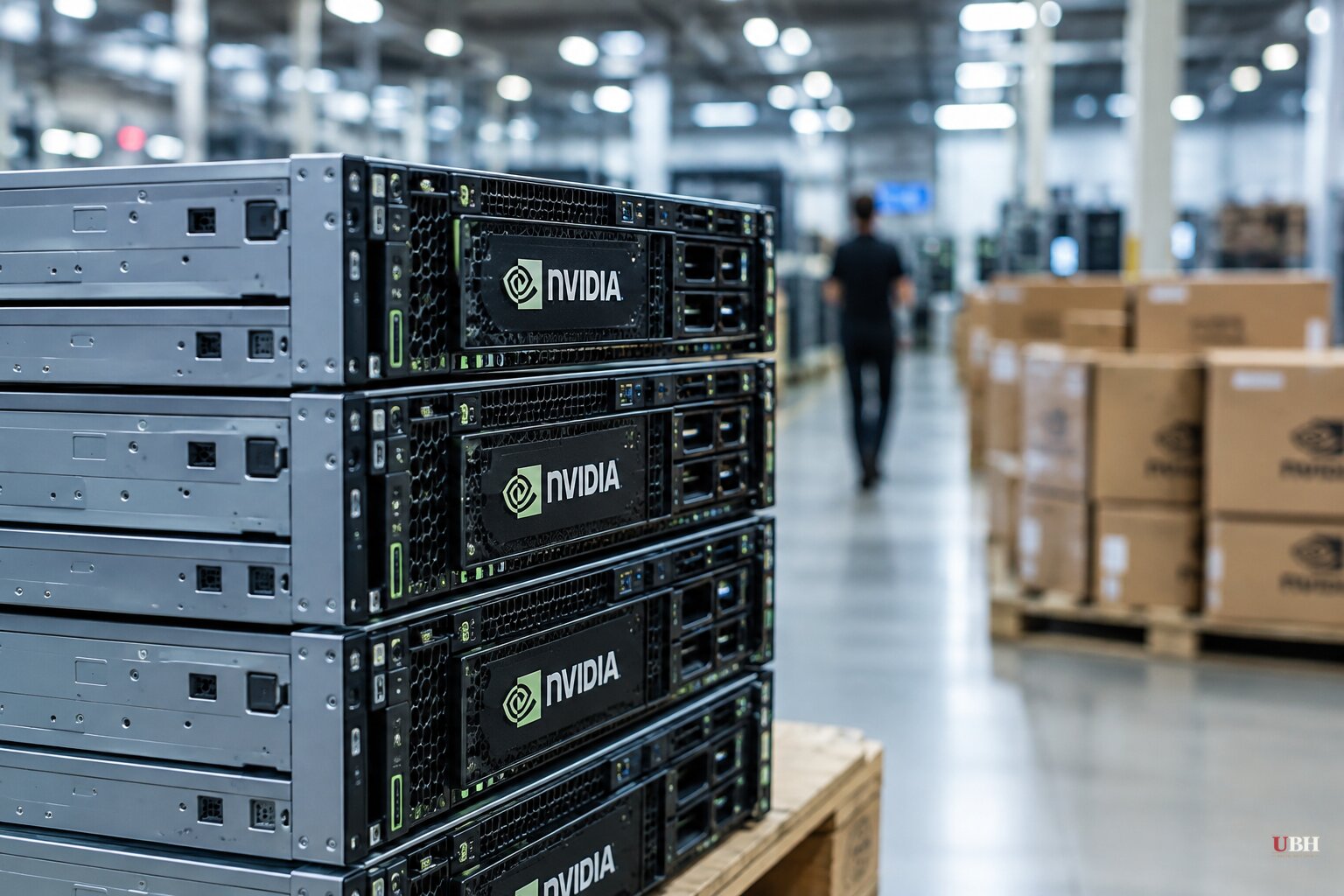
Since the Commerce Department unveiled new export curbs on Nov. 16, and since CEO Jensen Huang's resignation and Nov. 23 reinstatement, the fallout has moved from Washington to the supply chain. The latest piece: Nvidia has told its manufacturing partners to stop shipping servers containing its chips to Malaysia, Singapore, Thailand and Indonesia, the Financial Times reported Thursday, Nov. 26, citing three people familiar with the matter.
Dell and Supermicro, which package Nvidia chips into servers, have told buyers in those four countries that Nvidia will not allow their orders to ship, according to the FT. Pending orders cannot go out for now.
Nvidia, Dell and Supermicro did not immediately respond to requests for comment outside regular business hours. It is unclear whether the halt is temporary while Nvidia and its partners work through the compliance requirements, the FT's sources said.
What the new rule requires
The Commerce rule puts the four countries, plus Brazil, under a licensing requirement. It rates all five as posing a "higher-than-normal" risk of diversion.
Cloud providers that could rent computing power to Chinese companies have 90 days to obtain a license. They must show their end users do not include restricted entities.
The mechanics are murky. "No one knows how to apply for this licence while the 90-day clock is ticking," a cloud provider executive told the FT.
The target is a workaround that has operated in the open. Nvidia has practically stopped selling AI chips directly to China. Huang put the company's China market share at zero percent this spring. Chinese firms instead rented capacity in third countries, which was legal until now. The FT reported last year that Alibaba and ByteDance trained their Qwen and Doubao models at least partly on Nvidia chips in Singapore and Malaysia data centers.
The Megaspeed backdrop
The rule followed scrutiny of Megaspeed, a Singapore-based cloud company and Nvidia partner that rents computing power from its data centers. Megaspeed is understood to have bought more than $4.8 billion of Nvidia chips since 2024. It is suspected of using them to supply computing power to Chinese companies, and it has come under scrutiny over possible illegal diversion of advanced chips to China. Megaspeed denies this.
Huang resigned in mid-November after reports of an affair with Alice Huang, a former Megaspeed executive described in those reports as a suspected Chinese spy. The board reinstated him Nov. 23. The Commerce Department published the new rule days after his resignation, but no source in this reporting links the shipment halt to Huang's personal situation. The rule and the halt both trace to the chip-diversion concerns.
Prosecutors in Taiwan have already pursued diversion cases. Earlier this year they indicted nine people, including one Nvidia employee and two Supermicro employees. Supermicro said five workers at its Taiwan unit have been arrested so far.
Money at stake
Nvidia booked $104 billion in revenue through its Singapore subsidiary in 2025, up 72% from the prior year, according to company accounts seen by the FT. That unit also books some Taiwan and China revenue, so the figure does not map neatly onto Singapore demand alone.
Malaysia has visible exposure. The country approved MYR 123.5 billion in data center and cloud investment in the first nine months of 2026, or 35.2% of total approved investment, according to the Malaysian Investment Development Authority, as cited by The Straits Times.
The secondary effects are already showing:
- CNBC, citing sources, reported an unusually large volume of Nvidia GPUs put up for sale since Nov. 16, including thousands of B300 units meant for data centers where Chinese companies would rent compute.
- Bloomberg reported that lenders suspended work on a $480 million loan sought by Singapore-based Aolani Cloud to buy Nvidia GPUs for a Malaysian data center, where ByteDance was set to access computing power remotely. Aolani said it is working with regulators and financing partners to make sure the project complies with the new rules.
Huang's own record on export policy
The halt lands awkwardly for an executive who spent more than a year lobbying Washington. Huang pushed for permission to sell H200 chips to China again, arguing that U.S. export policy had largely backfired. The U.S. did allow H200 exports. Government data show approvals for nearly 900,000 advanced AI chips from Nvidia and AMD to Chinese companies between December 2025 and May 2026.
Huang also organized an open letter defending Chinese open-weight AI models after OpenAI and Anthropic reportedly pushed the government to ban them. Hugging Face CEO Clément Delangue, whose company Nvidia is acquiring for $12.9 billion, called Huang's resignation a "really sad day." Researcher Nathan Lambert wrote that an Nvidia without Huang would be "very, very bad" for open models in the United States.
The halt cuts off a source of computing power that Chinese open-weight labs have relied on. That is the outcome Washington says it wants and the opposite of what Huang argued for.
What comes next
No one has said whether Nvidia will resume shipments once its partners finish compliance work, or how long license approvals will take. The 90-day window is running for cloud providers across the five named countries.
Huang is set to appear next Tuesday before three committees of the U.S. House of Representatives, according to U.S. media reports, partly to answer questions about chip exports and possible security breaches. Lawmakers will have the chance to ask him directly about diversion through Megaspeed and why the shipments are stopping now.
Sources used for this briefing
6 links from 6 independent newsrooms (syndicated copies of the same report count once)
These are the sources it draws on, linked so you can verify.
More coverage: Nvidia


