
Unbiased headlines. Facts, not spin.
Unbiased Headlines is an independently owned news organization. We bring you the facts, not opinions, written fresh from 110+ named sources. Sources linked so you can verify it yourself.
 tech
Notable (6/10)
Event date: November 25, 2026 ·
FIFA Confirms Hackers Accessed Personal and Business Data; Group Claims 12 GB Stolen
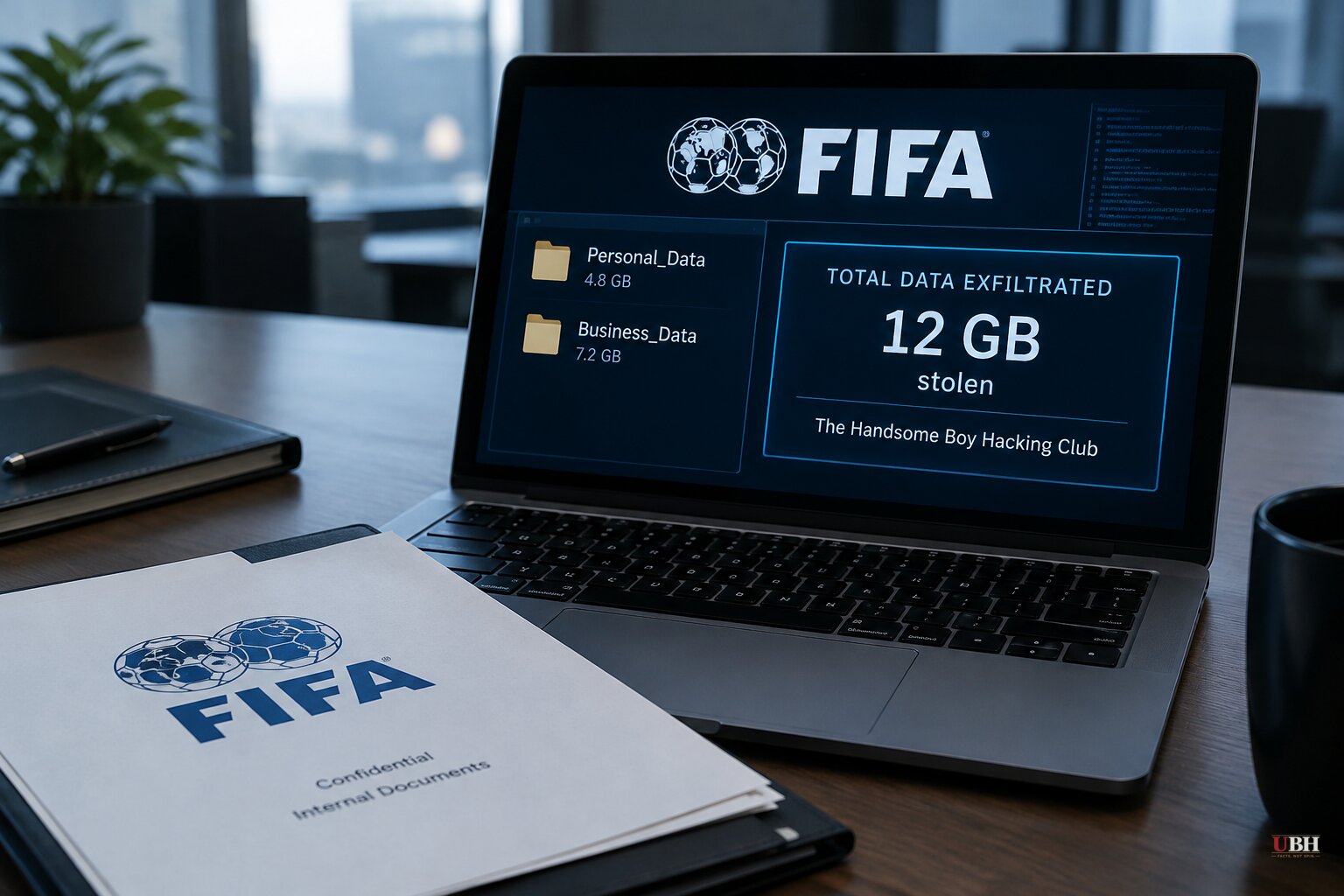
FIFA has confirmed that its systems were breached and that internal data was stolen.
The Zurich-based governing body of world soccer said hackers gained "unauthorised access to a limited set of personal and business information." A spokesperson said FIFA is "working closely with the relevant authorities, including law enforcement."
That is the extent of what FIFA has put on the record.
What the hackers claim
A group calling itself the Handsome Boy Hacking Club, or HBHC, says it did far more than FIFA's wording suggests. The group claimed last week that it stole more than 12 GB of data and tried to extort FIFA. It says the extortion failed.
The group then published the material on a cybercriminal forum. It says it got in through FIFA's Microsoft environment.
The alleged haul includes identity and immigration documents, financial records, legal documents and governance information. Those details come from the hackers. FIFA has not confirmed the 12 GB figure, the document types or the Microsoft claim.
Little is known about HBHC. The group surfaced only last week, and nothing public identifies its members or any affiliations.
FIFA's position
FIFA's spokesperson said the organization "condemns in the strongest possible terms the unlawful acquisition and publication of information, particularly personal data."
The statement called the incident "a serious and unacceptable violation of privacy" that "can have significant consequences for the individuals concerned."
FIFA's framing is that the breach was limited in scope. The hackers' framing is that it was large and sensitive. Both can be true in part. Twelve gigabytes can hold a great many scanned documents, but it is also a small slice of what an organization of FIFA's size stores. FIFA has about 700 employees and runs the World Cup, which was held this summer.
FIFA has not answered follow-up questions about the nature of the incident. It has not said how the attackers got in, which systems were affected, or whether the published files match what the group says it took.
A run of attacks on soccer
The FIFA breach follows other hits on European soccer organizations.
Spain's top league, LaLiga, said on Monday, Nov. 23, that hackers stole personal information belonging to fans. The attack affected LaLiga's digital services and those of several Spanish clubs.
In May, Dutch police arrested a 35-year-old man suspected of hacking the computer systems of Ajax, one of the Netherlands' best-known clubs. The French Football Federation disclosed its own cyberattack in 2025.
No source has tied these incidents to one another or to HBHC. They share a victim type, not a known culprit.
Why the details matter
Identity and immigration documents, if the group's description is accurate, are the kind of material that fuels identity theft and fraud. Whoever's records are in that dump has no way to pull them back from a criminal forum.
That is why FIFA's own warning about "significant consequences for the individuals concerned" carries practical weight. The people affected could be employees, officials, players or business contacts. FIFA has not said which.
The organization also has not said whether it has notified those individuals, or whether it will publish an account of what was taken. The group says the extortion attempt failed, which means FIFA apparently did not pay. FIFA has not commented on that.
What comes next
Law enforcement involvement is confirmed, but no arrests, charges or named investigating agency have been announced. HBHC's identity remains unknown.
The open question is the gap between "limited" and 12 GB. Until FIFA says whose data was exposed and how many people are affected, the only inventory of what leaked is the one written by the criminals who published it.
Sources used for this briefing
7 links from 7 independent newsrooms (syndicated copies of the same report count once)
These are the sources it draws on, linked so you can verify.


