
Unbiased headlines. Facts, not spin.
Unbiased Headlines is an independently owned news organization. We bring you the facts, not opinions, written fresh from 110+ named sources. Sources linked so you can verify it yourself.
 tech
Major Story (8/10)
Nvidia GPU Sellers Hunt Buyers After Remote-Access Rule as CBS Flags Chinese-Owned U.S. Partners
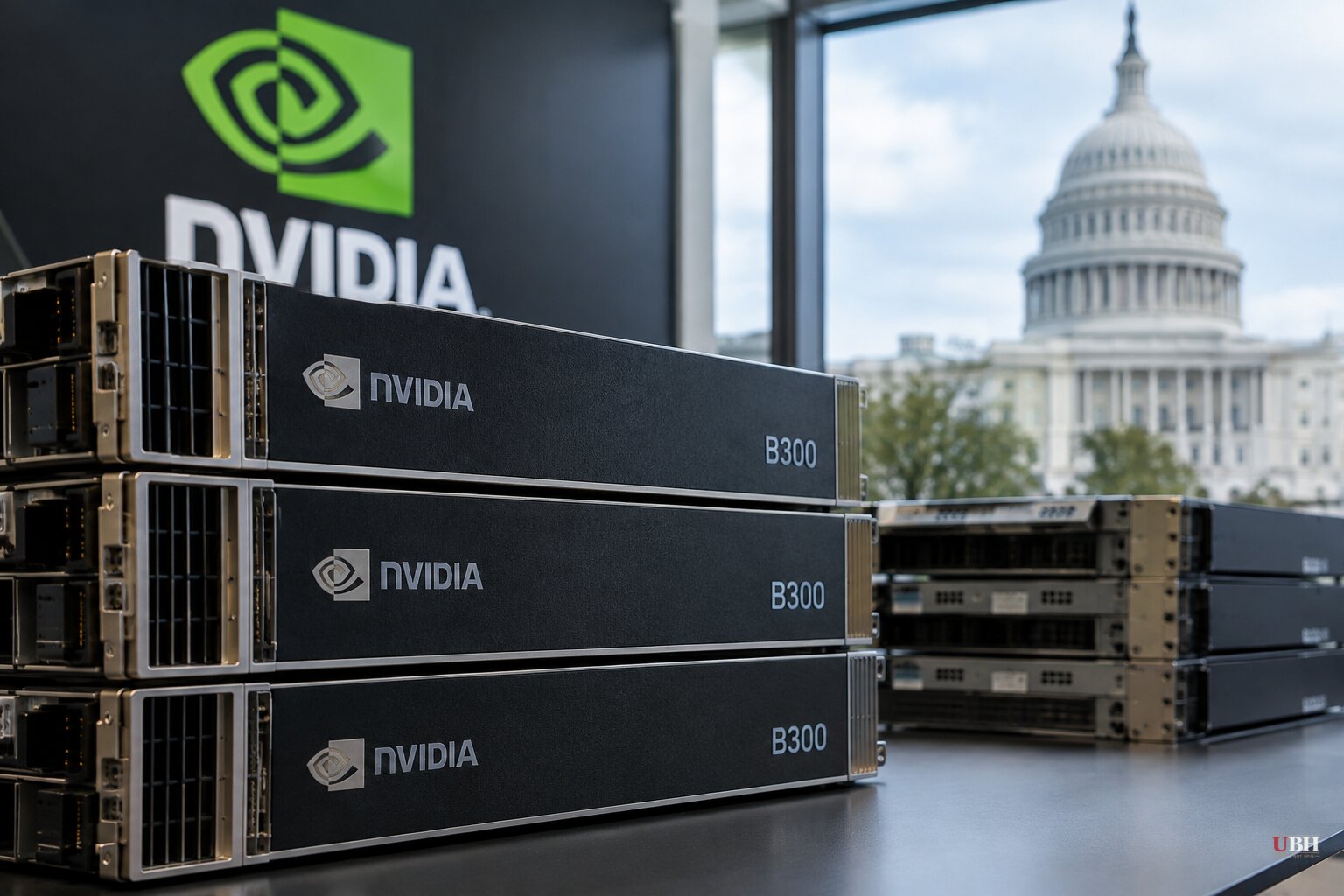
Since the Commerce Department announced its interim final rule on Nov. 16, and since it took effect Nov. 19, the fallout has moved from shipping delays to the resale market and to the question of who actually holds Nvidia's top chips.
Resale market floods with GPUs
Nvidia chip sellers are looking for new buyers, three people told CNBC. They say an unusually high volume of graphics processing units has hit the market since the rule was announced.
Jack Duhamel, president of the AI infrastructure marketplace GPU Mart, said the surge is directly attributable to the rule. He said one company trying to sell Nvidia chips told GPU Mart the sale was related to it. Two other people familiar with the matter agreed. They asked not to be named because the information is private.
Deals to find buyers for thousands of B300 GPUs, among Nvidia's most advanced offerings, have been floated since the announcement, according to Duhamel and one of the other sources. The two anonymous sources said the sellers appear to be offloading chips originally meant for data centers where Chinese companies would rent access.
Nvidia declined to comment. The Bureau of Industry and Security, the Commerce arm that wrote the rule, did not immediately respond to a request for comment.
The rule targets a workaround. Direct sales of the top Nvidia chips to China are effectively banned, but Chinese firms could rent the same hardware in data centers abroad. U.S. Trade Representative Jamieson Greer told CNBC's "Squawk Box" the rules were meant to "close off indirect access, either smuggling through places like Southeast Asia or remote access from data centers in third countries."
The government has already pointed to cases it considers examples. In July, the U.S. accused the Chinese AI lab Moonshot AI of reaching Nvidia chips through a facility in Thailand. CNBC reported Nov. 5 that the company had sought access through data centers in Europe.
CBS finds Chinese-owned firms among Nvidia's U.S. partners
A CBS News investigation, built on corporate filings, court records and ownership analysis by the nonprofit C4ADS, reports that Nvidia is selling its most advanced chips to at least two U.S.-based companies controlled by Chinese-owned parents.
One is RiCloud AI of San Jose, California, listed as a Nvidia preferred partner. Corporate records show its parent, Yuxing InfoTech Investment Holdings, is headquartered in Shenzhen. Yuxing's chief executive and co-owner, Cong Yu, holds a degree from the People's Liberation Army Command College, a Chinese military university, per those records. The U.S. government has not accused RiCloud AI or Yuxing of wrongdoing.
The other is Aivres, a California-based Nvidia elite computing partner formerly known as Inspur, the name it shared with its Chinese parent. It changed its name after Chinese Inspur entities were put on a U.S. government blacklist in March 2023. Aivres itself is not on that list.
Trade records cited by CBS show Aivres exported at least $5.6 billion of advanced technology to Southeast Asia between April 2024 and February 2026. About $3 billion of that involved computers with Blackwell chips, which cannot be exported to China. CBS reports some of the equipment later reached Malaysian cloud companies serving Alibaba and ByteDance.
Southeast Asia is not a banned destination, and none of the sources says any shipment itself broke U.S. law. The open question is what happens to the hardware after it lands.
"It is a wake-up call for accountability, for properly resourcing the enforcement bodies, and for every leading private-sector tech company to map where it is exposed," said Mishel Kondi, a senior analyst at C4ADS. Experts told CBS that layered chains of custody make it hard to count how many of the most sensitive chips China is getting.
CBS also cites the Justice Department's investigation of Megaspeed, a Singapore cloud company accused of circumventing export bans to obtain chips for use by China. Beijing denies that the company's founder is a spy, and the Justice Department has said it has not reached a conclusion.
Nvidia's position and Washington's reaction
Nvidia reported nearly $20 billion in sales to China last year, though many lower-powered products can legally be sold there without special licenses. On the company's Nov. 17 earnings call, Colette Kress said Nvidia was still studying the new restrictions. She said she expected performance to stay strong because demand for its chips significantly exceeds supply.
In Congress, Sen. Elizabeth Warren, a senior Democrat on the Senate Banking Committee, said this week: "Mr. Huang, NVIDIA executives, and the company's board still owe Congress answers about the company's compliance with U.S. export controls."
Senate Democratic Leader Chuck Schumer has accused CEO Jensen Huang of violating U.S. export laws by shipping advanced chips to China, according to a Crypto Briefing report. No formal charges or government findings against Huang or Nvidia have been reported.
A separate bill would go further than the rule. The Remote Access Security Act has passed the House but not the Senate. Nvidia has warned customers it would give Washington broader authority over cloud access and could expose both sides of a deal to "legal action," sources previously told CNBC.
No hearing date or subpoena for Huang has been announced. The Senate has not scheduled a vote on the Remote Access Security Act. Where the offloaded B300s end up will show whether the rule is moving the hardware out of Chinese-linked data centers or just moving it to a different set of buyers.
Sources used for this briefing
8 links from 7 independent newsrooms (syndicated copies of the same report count once)
These are the sources it draws on, linked so you can verify.


