
Unbiased headlines. Facts, not spin.
Unbiased Headlines is an independently owned news organization. We bring you the facts, not opinions, written fresh from 110+ named sources. Sources linked so you can verify it yourself.
 tech
Major Story (8/10)
Z.AI Misses November Target for 3-Trillion-Parameter GLM-5.5, Sources Say; Moonshot Warns Release Cycle Could Double
Since the Commerce Department's overseas data center licensing rule took effect on Nov. 19, the fallout has moved from lenders and chip stocks to the labs that actually build Chinese AI models. The first concrete delays are now surfacing.
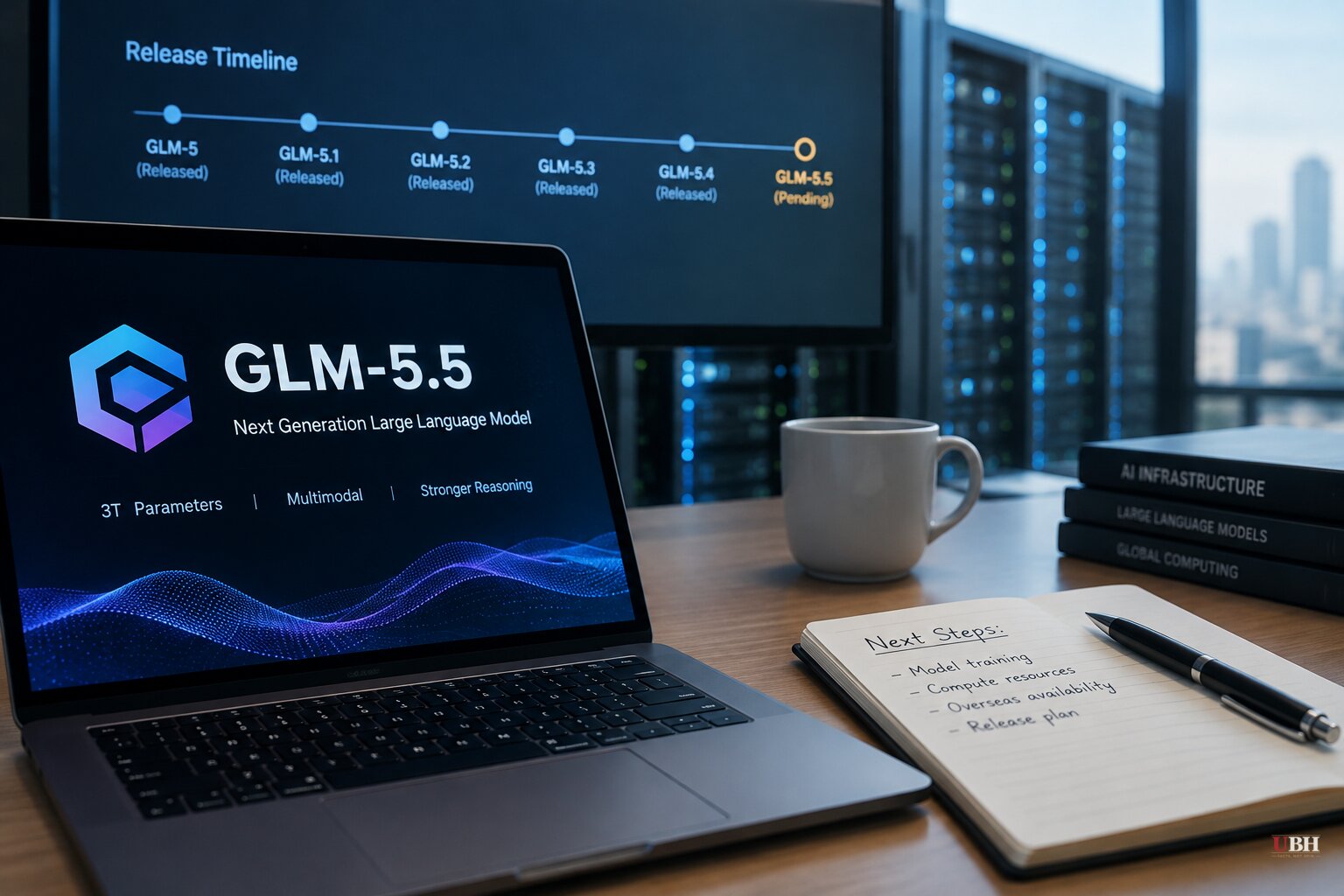
Z.AI, also known as Zhipu AI, had planned to release its next flagship model, GLM-5.5, this month. It has not, two people familiar with the matter told Reuters on condition of anonymity. Z.AI did not immediately respond to a request for comment.
A flagship model slips
GLM-5.5 is designed with roughly 3 trillion parameters, a measure of a model's size. One of the people said it has been held up partly by increasingly effective safeguards against distillation, the technique of training a model on answers generated by a more capable one.
Z.AI had hoped to finish training and release the model by year-end. The new US computing restrictions could push the launch into the first quarter of 2027 or later, the same person said.
Z.AI did ship something on Monday, Nov. 23: GLM-5.4, built on an existing 750-billion-parameter model. The company says a new design lets it match the performance of models with 2 trillion to 3 trillion parameters. That is Z.AI's own claim.
Z.AI trades in Hong Kong under the ticker 2513.HK, so its release schedule is a matter for shareholders as well as customers.
Moonshot's exposure
Beijing-based Moonshot AI is the more exposed of the two, according to a person with knowledge of its operations. The company rents computing power to train its models and prioritizes overseas providers.
Moonshot internally expects its usual six-month gap between major releases could stretch to 12 months or longer if it loses access to overseas computing power entirely, that person said. Its next flagship, Kimi K4, could slip to mid-2027. The person added that domestic Chinese computing capacity would not be enough to make up the loss.
The News International reported that Moonshot recently canceled a $150 million deal to access Nvidia's Blackwell processors through an Indonesian data center. It also reported that DeepSeek researchers internally estimated their lag behind top US models could grow from roughly 3 to 6 months to about 9 months if distillation access were fully cut off. Neither company has publicly confirmed those figures.
What the rule does
The Commerce Department rule imposes licensing requirements on Chinese companies' access to large amounts of computing power from advanced US chips in overseas data centers. It targets a workaround: renting Nvidia hardware abroad instead of importing restricted chips. The News International put the threshold at clusters roughly equal to 750 or more Nvidia H100 chips. Crypto Briefing reported that existing overseas operators get a 90-day grace period.
Chinese labs had long relied on that route because direct export bans kept the chips out of China.
The distillation fight
The other pressure comes from American labs. Anthropic said in September it had observed nearly 200 million exchanges with its Claude models linked to suspected distillation campaigns. It attributed them to Chinese developers including Alibaba, Moonshot and Z.AI. OpenAI has made similar accusations against individuals associated with Moonshot.
Both companies say they have deployed detection and blocking measures against unauthorized distillation.
Moonshot disputes the premise. It told China's National Business Daily in July that the performance gains in its Kimi K3 model came from original changes to its underlying architecture, not distillation. Alibaba, Moonshot and Z.AI have not been charged with anything. The accusations come from the AI companies themselves and are unproven in any legal forum.
With distillation blocked, Chinese labs have to generate more of their own training data, which takes more compute, according to Crypto Briefing.
What is at stake
The sources describe the cost advantage as the key edge that has let Chinese labs compete with American rivals despite years of export controls: competitive models at substantially lower cost. Both measures go after that advantage, one by cutting off the cheaper shortcut and the other by cutting off the rented hardware.
The evidence so far is thin and mostly anonymous. A single delayed model and one company's internal expectations do not prove a lasting gap. Z.AI's GLM-5.4 claim, that smarter design can substitute for raw scale, is also untested here.
The next marker is Z.AI. It has set no public date for GLM-5.5, and one source puts the launch in the first quarter of 2027 or later. Moonshot's Kimi K4 timeline, possibly mid-2027, depends on whether its overseas compute access survives the licensing regime.
Sources used for this briefing
7 links from 6 independent newsrooms (syndicated copies of the same report count once)
These are the sources it draws on, linked so you can verify.


