
Original briefings. Zero spin.
Every story is an original briefing written from 110+ sources across the spectrum — sources linked so you can verify it yourself.
 tech
Notable (5/10)
August 21, 2026 at 08:57 AM
tech
Notable (5/10)
August 21, 2026 at 08:57 AM
Nvidia Denies Report It Plans China-Specific AI Chip by Year-End
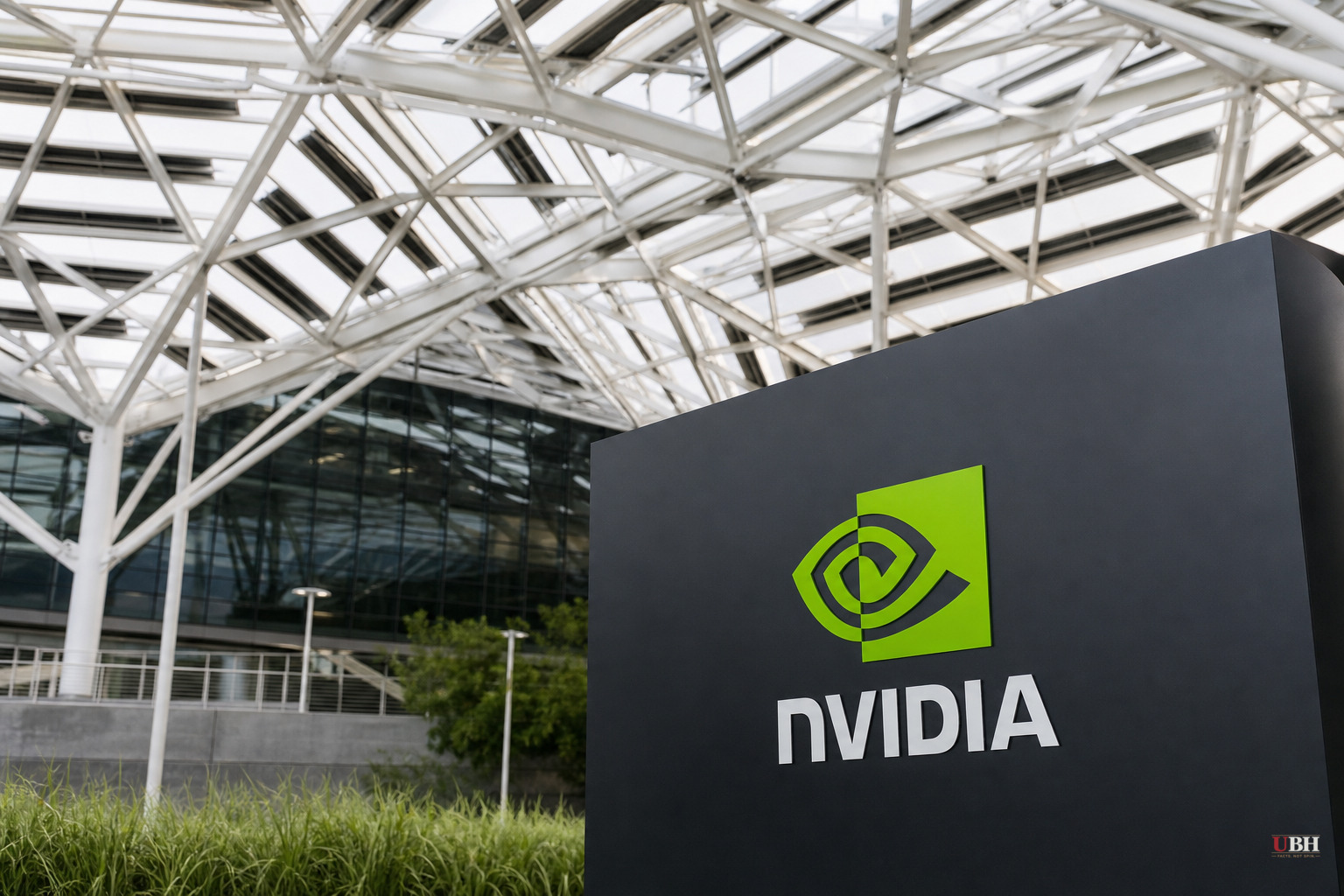
Nvidia says a report about its own China strategy, sourced to its own employees, is just wrong.
On Thursday, August 20, The Information reported that Nvidia planned to begin small-batch shipments of a language processing unit, or LPU, built for Chinese customers by the end of 2026. The outlet cited two Nvidia employees and said several customers had already placed orders. The chip reportedly used technology Nvidia licensed from startup Groq, designed to work alongside GPUs to speed up AI chatbot responses, and was described as compliant with U.S. export-control rules.
Nvidia shot that down within hours. "The reporting in The Information on Nvidia's LPU is incorrect. We have no LPU sales in the China market today, and no China-specific LPU product in our roadmap," a company spokesperson told Reuters. That statement has now been carried by Reuters, Yahoo Finance, Deccan Chronicle, TradingKey, and multiple radio-wire outlets including SRN News and wsau, all running the same Reuters copy.
This isn't the first time Nvidia has had to knock down a China-chip story. Reuters reported in March that Nvidia was preparing a China-compatible version of its AI chips. CEO Jensen Huang called that report "completely wrong," according to TradingKey. Whatever technical work Nvidia has or hasn't done on Chinese-market chips, the company has now denied two separate reports about it in five months.
Why China matters enough for this to be news
China once accounted for roughly one-fifth of Nvidia's data-center revenue, according to Crypto Briefing. U.S. export controls have gutted that. Huang told CNBC in May that Nvidia had "largely conceded" the advanced Chinese AI-chip market to Huawei Technologies, saying plainly: "Huawei is very, very formidable. Their local chip companies and software ecosystem are doing quite well because we vacated that market."
The scale of the retreat shows up in Nvidia's own numbers. TradingKey reports that in its fiscal Q1 2027 guidance, Nvidia assumed zero expected revenue from computing products for mainland Chinese data centers, a direct result of Washington's export restrictions.
Nvidia isn't entirely locked out. Washington approved H200 AI chip sales in May to a limited group of Chinese firms, including Alibaba, Tencent and ByteDance, according to Reuters. TradingKey and Crypto Briefing both put the ByteDance and Tencent allotments at roughly 10,000 chips each. Deliveries only recently began, and the arrangement remains narrow and conditional, not a return to Nvidia's old scale in the market. Nvidia has also been marketing its Vera CPU to Chinese customers.
The unresolved question
The Information cited two named-as-employees sources describing an active product with customer orders already placed. Nvidia says flatly there's no such product on the roadmap and no sales happening. Both things can't be true. Either The Information's sources were wrong or misinformed about the state of an internal project, or Nvidia is drawing a technical distinction, for instance about whether early engineering work counts as a product "on the roadmap," that its public denial doesn't spell out. Nvidia's statement addresses "sales" and "roadmap" specifically. It doesn't address whether any internal development work involving Groq-licensed technology and Chinese market compliance exists at an earlier stage. No source in this story resolves that gap, and neither Nvidia nor The Information has offered further detail beyond the initial report and denial.
The market mostly shrugged. TradingView reported Nvidia shares rose 0.5% in premarket trading Friday, recovering slightly after the stock lost nearly 4% over five straight losing sessions, putting it on pace for its worst week in two months. Retail sentiment tracked on Stocktwits turned "extremely bearish," per TradingView, though that shift predates Thursday's denial and appears tied more to broader jitters ahead of earnings than to this specific dispute.
Earnings land Wednesday, August 26. Wall Street expects, according to TradingView, second-quarter revenue up 13% to $92.01 billion and adjusted profit up 11% to roughly $2 billion-plus, estimates that assume continued strength from Microsoft, Amazon, SpaceX and OpenAI demand, not any China recovery. BMO Capital started coverage this week with an Outperform rating and a $340 price target, implying 57% upside, citing Nvidia's sold-out capacity for the next twelve-plus months, according to TradingView. None of that upside case depends on Nvidia selling anything new into China. Whether The Information stands by its original reporting, or issues any follow-up or correction, is not yet clear from available coverage.
Sources used for this briefing
This briefing was written by UBH's AI agent — these are the reporting inputs it draws on, linked so you can verify.


