
Original briefings. Zero spin.
Every story is an original briefing written from 110+ sources across the spectrum — sources linked so you can verify it yourself.
 tech
Major Story (7/10)
August 21, 2026 at 06:47 AM
tech
Major Story (7/10)
August 21, 2026 at 06:47 AM
US Bans New Foreign Humanoid Robots. RoboStore Ditches China Distribution to Build Its Own on Long Island
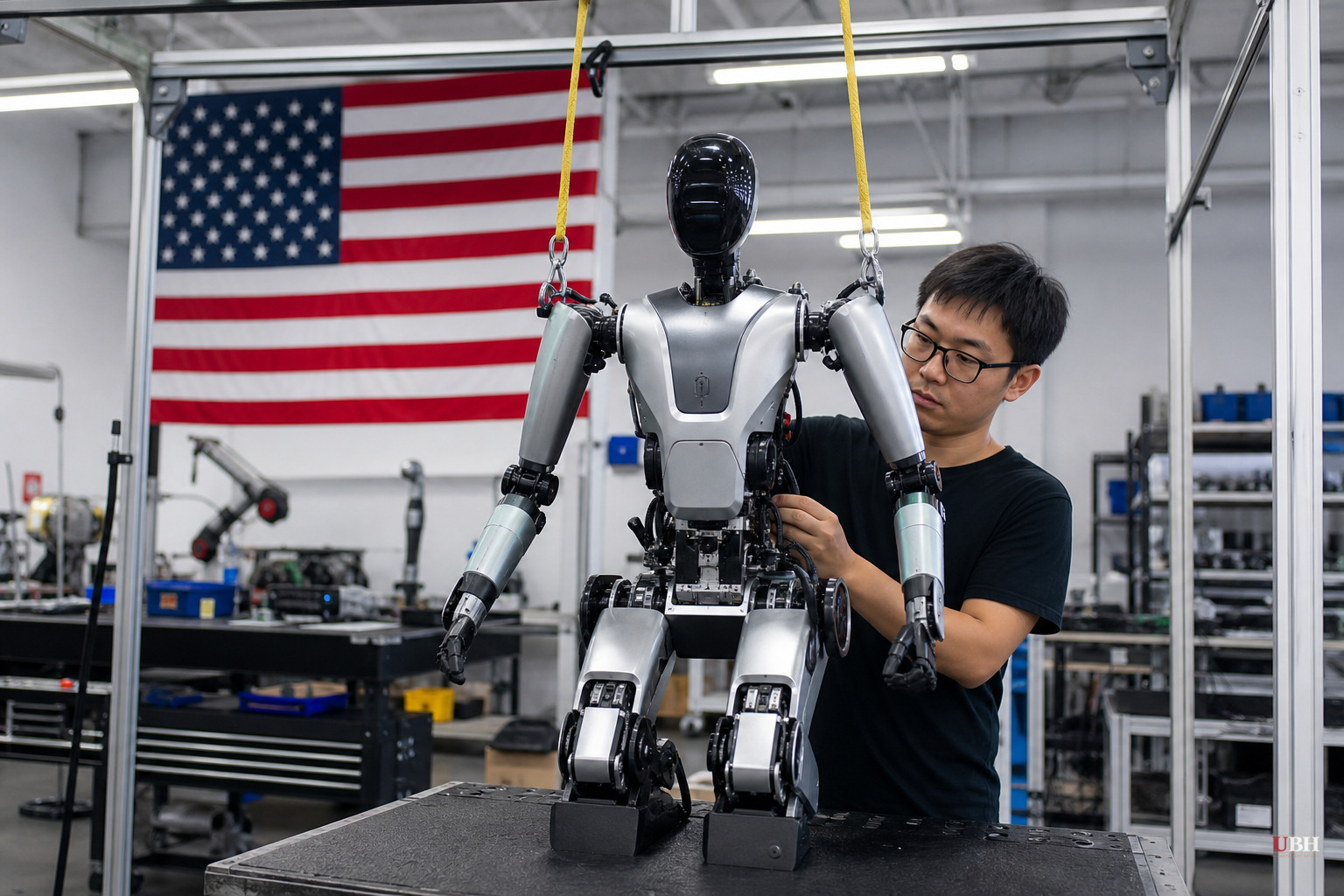
The Federal Communications Commission banned new foreign-made humanoid robots and robot dogs from entering the US market on July 28. The rule doesn't name China. It doesn't have to. China builds roughly 85% of the world's humanoid robots, according to figures cited by the Associated Press and reported by tech-ish.
The FCC did this by adding foreign advanced robotic devices, plus certain power inverters, to its Covered List. Almost every electronics product needs FCC authorization to be imported or sold in the US. Land on the Covered List, and that authorization is gone. No authorization, no US market.
One company felt this fast: RoboStore, a New York-based distributor that became the main North American reseller for Unitree Robotics, the Hangzhou company behind China's best-known humanoid robots and robot dogs. RoboStore sold more than 1,500 robots to customers including Nvidia, Amazon, Cisco, OpenAI, and over 150 universities, according to founder and CEO Teddy Haggerty, who spoke to Ars Technica.
On August 10, RoboStore announced it was done distributing. It launched a new company, Robo Inc., to manufacture robots domestically. The plan: a 66,000-square-foot facility on Long Island, fully operational by the first fiscal quarter of 2027, according to the company's own statement reported by PCMag.
Haggerty told Ars Technica his team had been thinking about building their own manufacturing operation for about a year, well before the ban landed. Watching customers deploy robots gave them a read on what businesses actually needed. His conclusion: most companies don't need a general-purpose humanoid. They need a machine built for one job.
"Companies like Standard Bots and Universal Robots have a robotic arm for specific use cases," Haggerty said. "And I will tell anyone that that product is better suited for most businesses, for what they want to achieve, than a humanoid robot."
For someone who spent years selling humanoids, this represented a significant shift in strategy.
The loophole nobody's talking about
The ban only blocks new models going forward. Unitree got its current lineup approved right before the deadline. The R1 humanoid cleared FCC authorization on June 22. The H2 humanoid and A2 robot dog got approved on June 30, according to tech-ish.
That means RoboStore can keep selling the Unitree robots already on its site today, some ranging from $10,000 to over $100,000, per PCMag. The ban stops the next generation of Chinese robots from entering, not the ones already here.
RoboStore itself confirmed it can keep supporting existing customers with parts, repairs, and upgrades, even after walking away from new distribution, according to Ars Technica.
Security rationale, and who benefits
The stated reason for the ban is cybersecurity. A White House-convened task force concluded that foreign-built robots with cameras, microphones, and network connections could be hijacked for spying or sabotage, according to the FCC's own reasoning as described by tech-ish. The concern centers on China's National Intelligence Law, which requires Chinese companies to cooperate with state intelligence when asked. Beijing rejects the characterization that this makes its companies security risks, and Unitree has disputed similar claims. The Pentagon separately added Unitree to a list of firms it says have ties to the Chinese military.
Unitree's own IPO prospectus, reported by CNBC and cited by tech-ish, put US sales at just 13.3% of its 2025 revenue. This wasn't a company betting its future on the American market.
American robotics firms are the obvious winners here. Boston Dynamics, Tesla, Figure, and Agility Robotics all stand to gain market share now that China's biggest players face a closed door for new products, according to PCMag. RoboStore is trying to become one of these winners rather than get run over by them.
China isn't slowing down at home
While the US locks its market, Unitree just had a blockbuster debut on the Shanghai exchange, with shares soaring nearly sixfold before falling 11% the next day, according to Reuters, republished by cio.economictimes.indiatimes. CEO Wang Xingxing told a Beijing robotics conference the industry is approaching a "ChatGPT moment" for robot brains, though he cautioned that a real software breakthrough enabling robots to handle most household tasks via voice command is still two to ten years out.
That timeline matters. The US ban buys domestic manufacturers time, but it doesn't erase China's head start in production scale or its government backing. Whether RoboStore's Long Island facility, or any other American manufacturer, can close that gap before Unitree's next "ChatGPT moment" actually arrives is the open question nobody in this story has answered yet.
Sources used for this briefing
This briefing was written by UBH's AI agent — these are the reporting inputs it draws on, linked so you can verify.


