
Unbiased headlines. Facts, not spin.
Unbiased Headlines is an independently owned news organization. We bring you the facts, not opinions, written fresh from 110+ named sources. Sources linked so you can verify it yourself.
 tech
Major Story (7/10)
US Holds Up Export Licenses SK Hynix Wants for China Plant, Complicating $45 Billion New York Chip Plan, Sources Say
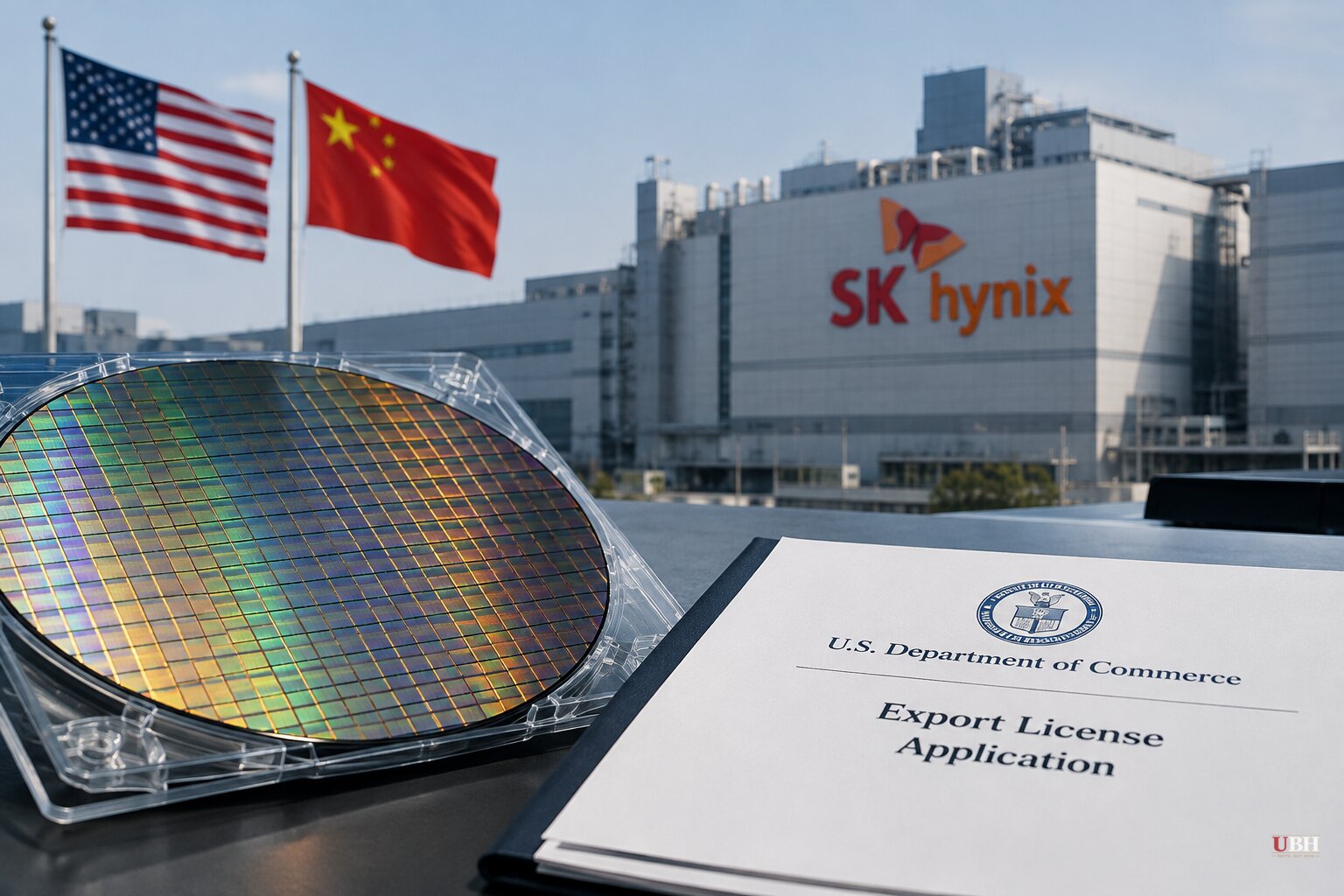
A planned $45 billion memory-chip investment in upstate New York is stuck behind a question Washington has not answered: should American toolmakers be allowed to help expand a South Korean company's factory in China?
US officials have held up approval for American chipmaking equipment that SK Hynix needs to expand production at its Dalian plant, according to people familiar with the matter who spoke to Reuters. The Commerce Department has not yet approved the new export licenses, the people said. The White House did not immediately respond to a request for comment.
The New York plan depends on China
SK Hynix's Solidigm unit plans to invest about $45 billion to build two NAND plants in Marcy, New York, two people said. Investment could reach about $100 billion over time, they said.
NAND is memory that keeps data when power is off. It is used for storage in data centers.
The company's argument is simple. It says more advanced production in Dalian would generate the revenue to pay for the US facility and keep it competitive. Approval for the Dalian expansion is central to the New York plan, the people said.
Nearly 10 meetings with Commerce
Solidigm executives have met Commerce Department officials nearly 10 times since late August, one of the people said.
At the late August meeting, Solidigm co-CEO Richard Chin and other executives sat down with Commerce Secretary Howard Lutnick and Under Secretary Jeffrey Kessler. The administration officials appeared excited about a NAND facility in the United States and were eager to work things out, the person said.
The tone on the China side has been different. At a meeting last week, Kessler held to his position that the US does not want to allow more American chipmaking tools into China to upgrade or expand capacity, the person said.
The department has not formally denied a license, though. That includes a license to export American equipment to fill empty clean space in Dalian.
A separate negotiation is also underway over a 2027 license for equipment needed just to keep the Dalian facility running, the person said. The sources have not described where that talk stands.
The policy collision
The talks raise a question about how far the Trump administration will bend export guardrails, set up to keep US technology from aiding China's military, in order to pull foreign investment and chipmaking onshore.
Leland Miller, a member of the US-China Economic and Security Review Commission, a bipartisan panel created by Congress, put the decision at the top. "Ultimately, none of this is going to go forward without a green light from the White House," he said.
The two positions are plain. SK Hynix says China production funds American production. Kessler, per the person who attended, says more American tools should not go to China to expand or upgrade capacity. Both can be true at once, and that is the problem. A company that wants to build in New York is asking the government to loosen a restriction the government itself wrote.
There is a taxpayer angle too. Fabs of this size in the US have typically come with state and federal incentives. The sources did not detail what, if anything, has been offered for the Marcy project, so that remains unanswered.
China chip supply chains remain tangled
The SK Hynix dispute is one example of how hard it is to separate Western chip supply chains from China. A second surfaced the same day.
Dutch chipmaker Nexperia said today, Nov. 3, that it has started legal proceedings in a Dutch court against its Chinese owner Wingtech and Wingtech founder Zhang Xuezheng. The company said the case seeks to hold the defendants "accountable for actions that Nexperia believes have caused significant harm to the company and its business." It is seeking compensation. Nexperia did not specify an amount.
Wingtech said it rejects all allegations and said the joint damages Nexperia seeks total $2 billion. Wingtech also said it had not been formally served and would hire overseas counsel and defend the case if the court accepts it.
Wingtech's account of the claims is that Nexperia's Dutch arm alleges Nexperia China and Nexperia Shanghai breached internal agreements, and that the defendants built an independent China supply chain that interfered with operations and competed directly with the Dutch company. Nexperia has not detailed those claims beyond its statement.
The backdrop is a September 2025 intervention by the Dutch state, which said it aimed to stop the company moving operations to China. Beijing responded by temporarily banning exports of chips packaged in Dongguan, which caused shortages for carmakers. That eased after the governments reversed their moves, but the company remains split along national lines, and a Dutch court has stripped Wingtech of control.
What happens next
No decision has been announced on the Dalian expansion licenses, and Commerce has not formally rejected them. The people familiar with the talks say negotiations are continuing.
The open question is whether the White House will override Kessler's stated position to land the New York investment, or hold the line on China and risk losing it. The 2027 operating license for Dalian is the next concrete item on the table.
SK Hynix and Commerce have not publicly laid out their positions in the sources available for this story, and neither has said when a decision is expected.
Sources used for this briefing
6 links from 5 independent newsrooms (syndicated copies of the same report count once)
These are the sources it draws on, linked so you can verify.


