
Unbiased headlines. Facts, not spin.
Unbiased Headlines is an independently owned news organization. We bring you the facts, not opinions, written fresh from 110+ named sources. Sources linked so you can verify it yourself.
 tech
Major Story (7/10)
Event date: October 27, 2026 ·
Meta Markets Up to $25 Billion in Bonds at Spreads Wider Than April, Orders Reported at $58 Billion
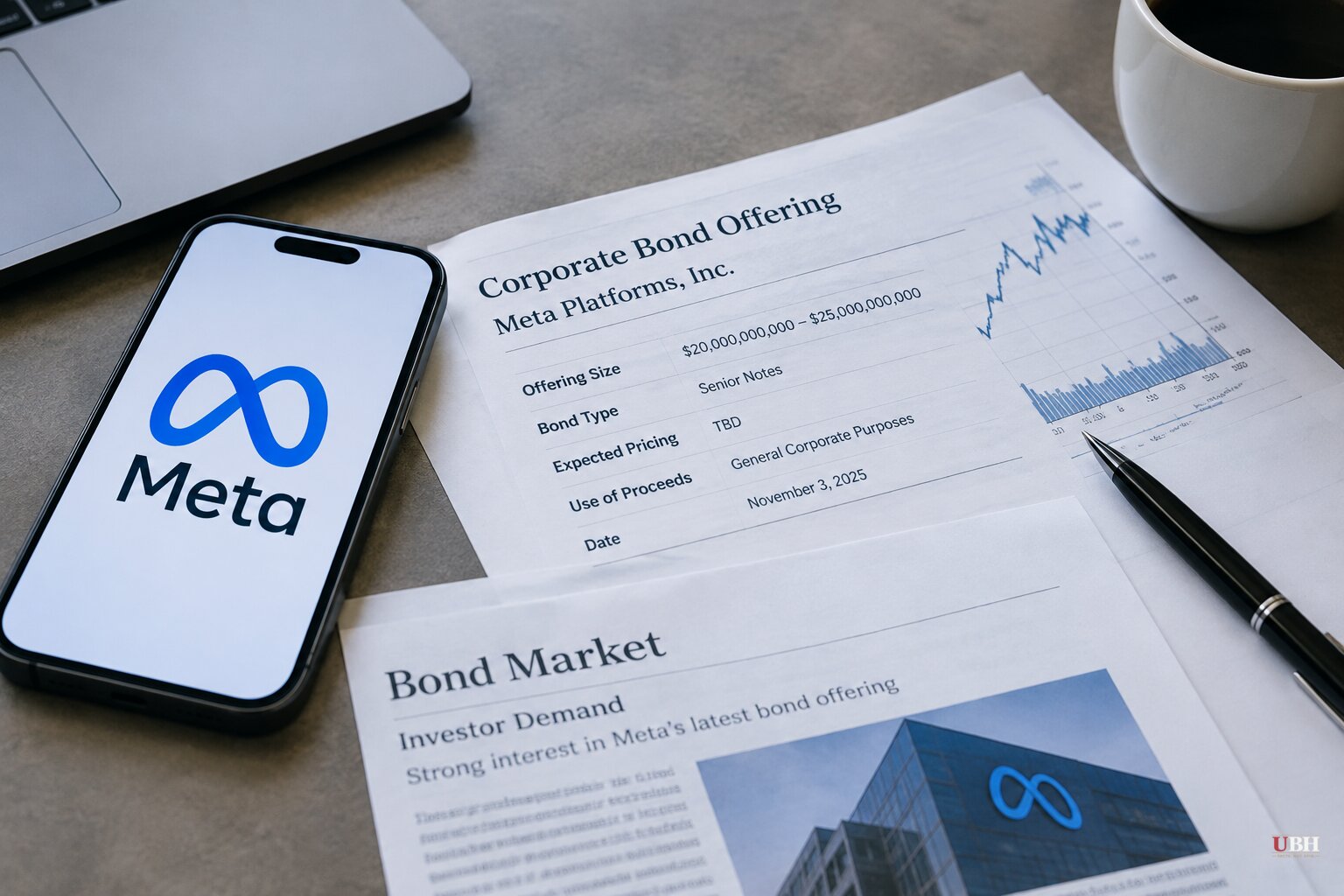
Since S&P Global Ratings cut Meta's outlook to negative on Friday, Oct. 30, the company has gone straight back to the bond market. Meta is seeking between $20 billion and $25 billion today, Nov. 3, according to people familiar with the deal. Final pricing is expected this afternoon.
The sources say about two-thirds of the sale will be in U.S. dollars and one-third in euros. Meta declined to comment. Bloomberg News first reported the plans.
Demand is there, but it costs more
Bloomberg, citing people familiar with the matter, reports that investors placed orders of up to $58 billion for the dollar portion, which is expected to raise at least $15 billion. That is roughly four times the size of the offering. Bloomberg puts the average peak order-book ratio for major dollar tech bond deals this year at 3.8 times.
The price of that demand is higher than it was in April. The longest-dated dollar notes, due in 2056, tightened from initial talk to a premium of 2.2 percentage points over U.S. Treasuries. That is still almost 0.9 points wider than a comparable Meta bond sold in April, when the company raised $25 billion on peak orders of $96 billion.
Initial marketing for the 30-year bonds was about 2.5 points over Treasuries. The dollar bonds span five tranches with maturities from five to 30 years.
Bloomberg also reports that the euro portion, Meta's first euro-denominated bond, could begin as soon as Wednesday.
The numbers behind the borrowing
In its third-quarter report last month, Meta said full-year capital spending will land between $135 billion and $145 billion. That raised the low end of its prior guidance by $5 billion. The company posted negative free cash flow of $2.12 billion for the quarter, joining Alphabet and Amazon in reporting a negative figure.
S&P kept Meta's AA- rating but moved the outlook from stable to negative. It cited uncertainty around the heavy capital spending and negative free cash flow.
This bond sale is not the whole plan. Meta said last week it intends to raise $95 billion for its AI initiatives. That includes $35 billion through underwritten public equity offerings and another $60 billion through an at-the-market program.
Meta shares were up 2.7% today after falling in 12 of the previous 14 trading sessions. October was the stock's worst month in four years.
Skeptics and defenders of the spending
Not everyone wants the paper. Ross Pamphilon of Impax Asset Management said, "We see no need to chase it in the new issue market," and expects heavy spending to continue until at least 2027. Bloomberg data cited in reports on the deal show Big Tech's high-grade bonds now trade at the widest gap over other high-grade debt since 2003.
The other side of the argument comes from Bill Ackman. His firm, Pershing Square, argues that Big Tech's AI data center spending, which rose from $140 billion in 2023 to $740 billion in 2026, is a strong growth investment even though it pressures free cash flow.
The order-book math gives that view some support. A four-times-covered deal is not a market shutting its doors.
Meta's own track record on returns is thin, though. After the April earnings call, Zuckerberg said Meta does not have "a very precise plan" for how each AI product will be cultivated, according to Mercury News. He has said Meta will spend hundreds of billions of dollars on AI infrastructure by the end of the decade.
A crowded borrowing calendar
Meta is not alone. Alphabet, Meta, Oracle and Amazon have issued nearly $90 billion in bonds since September, and Microsoft recently raised $25 billion. This is the first Meta bond sale in six months.
The company that long funded its buildout from cash is now borrowing at a premium, and it has told the market more capital raising is coming.
What remains open is where the dollar tranches finally price this afternoon, how the euro leg is received, and how the market absorbs the $35 billion in underwritten equity offerings that follow.
Sources used for this briefing
7 links from 6 independent newsrooms (syndicated copies of the same report count once)
These are the sources it draws on, linked so you can verify.


