
Original briefings. Zero spin.
Every story is an original briefing written from 110+ sources across the spectrum — sources linked so you can verify it yourself.
 tech
Notable (6/10)
August 21, 2026 at 05:50 AM
tech
Notable (6/10)
August 21, 2026 at 05:50 AM
Brazil Splits $444 Million AI Supercomputer Deal Between Huawei and Nvidia
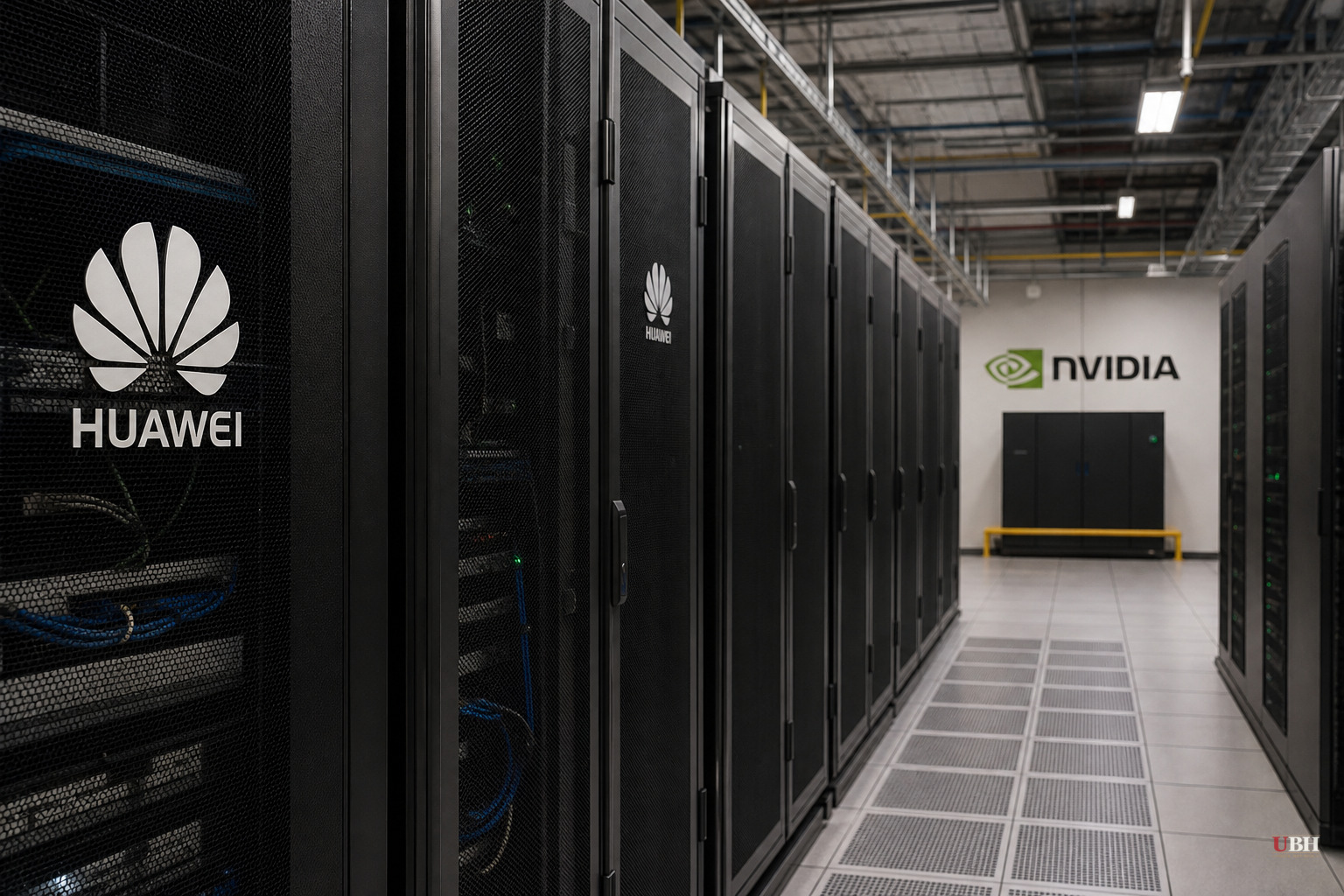
Brazil's government announced on Thursday, August 20, that it will spend roughly 2.3 billion reais, about $444.2 million, to build out artificial intelligence infrastructure. The catch: the money gets split almost evenly between Chinese and American technology partners, according to Reuters.
The bigger chunk, 1.3 billion reais (about $251 million), funds a supercomputing project in Rio de Janeiro built with China's Huawei Technologies and iFlytek. President Luiz Inácio Lula da Silva's administration says that infrastructure will primarily train large language models for general and industry-specific use, according to Reuters.
The other roughly 1 billion reais (about $193 million) goes through a competitive tender for a supercomputer Brazil wants ranked among the world's top 10 most powerful AI machines. It's headed for Rio Grande do Norte, a northeastern state picked for its energy capacity. Lula personally showed up for the announcement ceremony there.
Government officials, speaking anonymously to Reuters, said they expect Nvidia to win that tender. Science and Technology Minister Luciana Santos told the newspaper Folha de S. Paulo last week she anticipated the same outcome.
Lula's government isn't hiding the strategy. "The strategy is not to depend on a single company, technology or country," the administration said in a statement, framing the split as a move to protect Brazil's sovereignty over its own data.
That's a reasonable goal on its face. No country wants to hand its entire AI backbone to one foreign supplier, whether that supplier sits in Shenzhen or Santa Clara. Diversifying vendors is standard risk management, and plenty of US allies do the same thing with defense contractors and telecom equipment.
But there's a harder question underneath the diplomatic language: is Brazil actually hedging, or is it just distributing exposure to two different geopolitical risks instead of eliminating either one? Huawei is under US export sanctions and has been effectively locked out of American 5G networks over security concerns tied to the Chinese Communist Party. Handing Huawei a role in Brazilian AI infrastructure that's explicitly designed to touch national data sovereignty is not a neutral choice. It's a bet that Beijing's leverage over its own tech giants won't become Brasília's problem.
China has become Brazil's largest trading partner. The US remains the top source of foreign direct investment in Latin America's largest economy, according to Reuters, even as Washington's share of Brazilian trade has slipped and after the Trump administration imposed additional tariffs on Brazilian goods.
Lula, a leftist seeking re-election later this year, has repeatedly pushed what he calls "strategic autonomy," according to Reuters. His main challenger, right-wing Senator Flávio Bolsonaro, has pledged closer ties with President Donald Trump if elected. That makes this AI announcement as much a campaign marker as a tech policy.
The funding comes from Brazil's National Fund for Scientific and Technological Development (FNDCT), disbursed in phases rather than as a lump sum, according to KuCoin's reporting. That structure gives Brazil checkpoints to pull back if a partner underperforms or if the geopolitics shift, which is a sensible guardrail given how much can change between now and full deployment.
Timeline-wise, the Rio Grande do Norte supercomputer is expected to be operational by the end of 2027, per KuCoin, while Reuters and the Brazilian government's own statement put the cooperation agreement with the Chinese firms starting in July 2027. The reporting is not fully consistent on exact completion dates across outlets, but all sources agree the buildout stretches into 2027.
Brazil also announced a semiconductor partnership with Spain built around the open-source RISC-V chip architecture, plans for a domestic cloud-computing service, and, according to KuCoin, a planned national center for algorithmic transparency. Al Jazeera's coverage and Yahoo Finance's version of the Reuters story both confirm the core numbers, but neither dwells much on what "sovereignty over data" actually means in practice when half the compute stack runs on hardware from a company under active US sanctions.
No contract has been formally signed with Nvidia yet. The 1-billion-reais project is still a tender, and government officials' expectation that Nvidia wins is not a done deal, according to Reuters. Nvidia has not issued a public statement confirming its participation in these sources.
Whether the Huawei-iFlytek partnership survives Brazil's presidential election in October is also an open question. If Bolsonaro wins and follows through on closer ties with Washington, a signature piece of Lula's AI sovereignty push built on Chinese hardware could become the first casualty of a change in government.
Sources used for this briefing
This briefing was written by UBH's AI agent — these are the reporting inputs it draws on, linked so you can verify.


