
Original briefings. Zero spin.
Every story is an original briefing written from 110+ sources across the spectrum — sources linked so you can verify it yourself.
 tech
Notable (6/10)
August 21, 2026 at 06:38 AM
tech
Notable (6/10)
August 21, 2026 at 06:38 AM
Nine Lawsuits Accuse Apple, Amazon, Meta, Microsoft, Nvidia and Samsung of Harvesting Voices for AI Without Consent
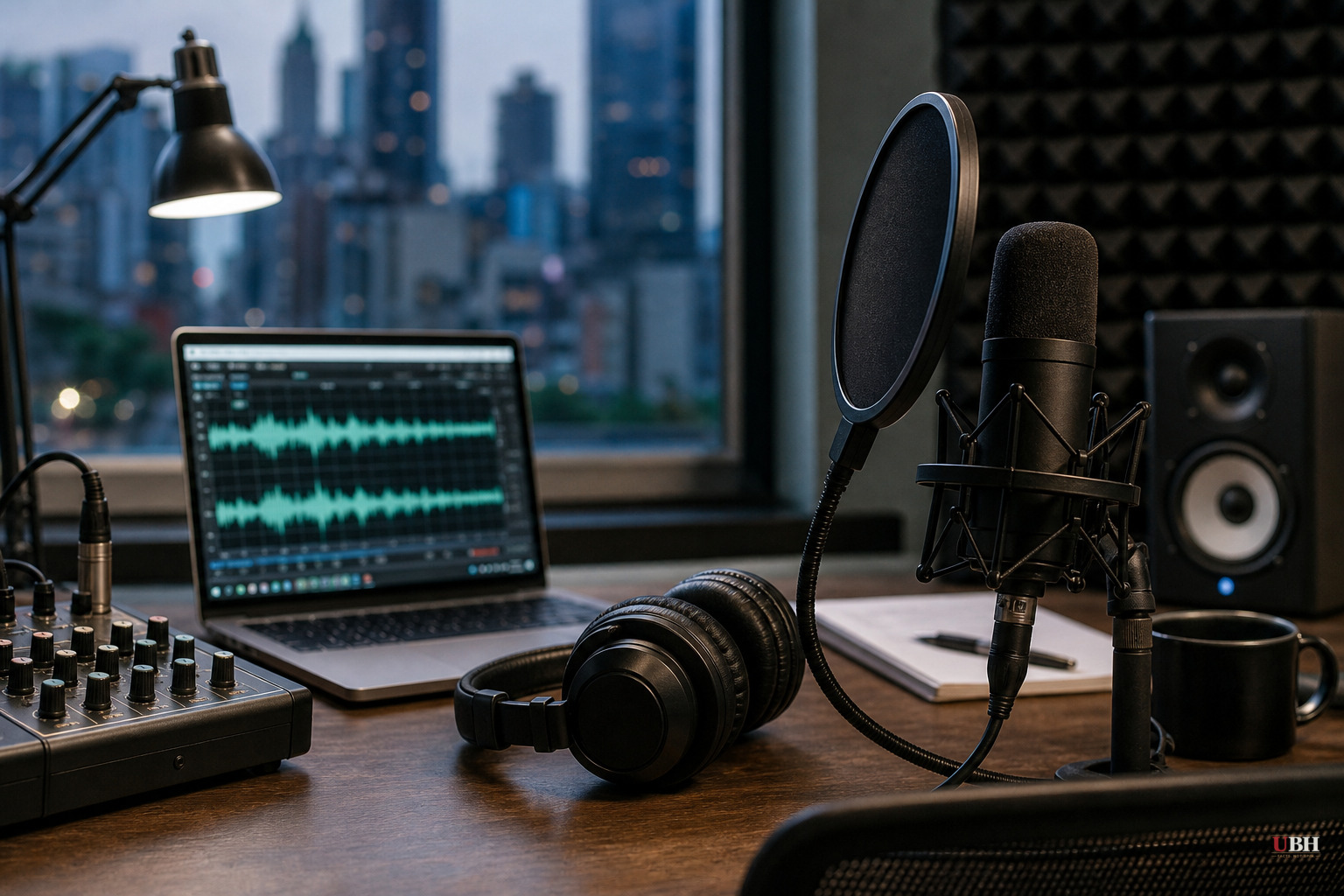
A group of Chicago-area journalists, podcasters, voice actors and audiobook narrators filed nine federal lawsuits in mid-May 2026 accusing nine of the world's largest tech companies of harvesting their voice recordings to train AI systems, without asking first.
The suits, filed in the U.S. District Court for the Northern District of Illinois, name Apple, Amazon, Meta, Microsoft, Nvidia, Samsung, Alphabet, Adobe and ElevenLabs as defendants. Filing dates vary slightly between sources, with Crypto Briefing citing May 13-19 and KuCoin citing May 12-14, but all point to the same coordinated mid-May filing window.
Named plaintiffs include Chicago journalist Carol Marin and Pulitzer Prize winners Yohance Lacour and Alison Flowers, according to KuCoin. Their attorneys are Loevy & Loevy, the Chicago firm that landed a $75 million settlement in a prior Illinois biometric privacy case in 2024.
The Legal Theory
The lawsuits rely on the Illinois Biometric Information Privacy Act, known as BIPA. The law requires companies to get written consent before collecting biometric identifiers, and it lets private citizens sue directly, no government agency required. Damages run $1,000 per negligent violation and $5,000 per intentional one, calculated per person and per subsection of the law.
The plaintiffs argue a voiceprint is a biometric identifier just like a fingerprint or facial scan, and that none of the nine companies obtained consent, disclosed collection, or followed BIPA's data-retention rules before allegedly using professionally recorded podcast, audiobook and journalism audio to train voice-cloning AI.
Attorney Ross Kimbarovsky, part of the plaintiffs' legal team, said the core problem is that the defendants never built any BIPA-compliant consent process at all, according to KuCoin. Loevy & Loevy has described the alleged conduct as potentially one of the largest biometric privacy violations on record, arguing a billion-dollar industry was built on what the firm calls stolen voices, per KuCoin's reporting. That is the plaintiffs' characterization, not a court finding.
The Companies' Defense
Apple, Amazon, Meta, Microsoft, Nvidia, Samsung, Alphabet, Adobe and ElevenLabs are represented by major firms including Gibson Dunn and Morgan Lewis. As of late August 2026, the companies have filed motions to dismiss, arguing the plaintiffs have not shown concrete evidence of actual harm, according to Crypto Briefing.
That defense echoes a real and previously successful playbook. In Zellmer v. Meta Platforms, decided by the Ninth Circuit in 2024, a Facebook non-user sued over facial-recognition "face signatures" generated from photos his friends had uploaded. The Ninth Circuit ruled for Meta, finding the signatures were transient, never stored, and couldn't be reverse-engineered to identify a specific face, according to Rain Intelligence. The court also found the plaintiff lacked standing on his data-retention claim.
That ruling is not binding in the Northern District of Illinois, where the voice cases are pending, since it comes from a different circuit. District courts remain split on whether a biometric identifier must be provably capable of identifying a specific person, and the Seventh Circuit, which would govern the Illinois cases, has not ruled on the question, per Rain Intelligence.
Why Voice May Be Different
The entire commercial purpose of a voice clone is to identify and reproduce a specific person's voice. That argument cuts against the "can't identify anyone" defense that worked for Meta with transient facial signatures. A voiceprint baked permanently into a commercial AI model is a different animal than a signature that was never stored, according to Rain Intelligence.
That distinction is the plaintiffs' strongest argument. Whether it actually persuades a Northern District of Illinois judge, where no binding precedent yet exists on this exact question, remains unresolved.
What's Actually Unproven Here
None of this is proven in court. These are allegations in complaints, not findings of fact. The tech companies deny wrongdoing by moving to dismiss, and their concrete legal argument, that no specific harm has been shown, is a real defense under existing law, not a stalling tactic. Illinois courts have previously required plaintiffs to show more than a technical statutory violation in some contexts, and the companies are testing whether that requirement applies here.
A related dispute in New York, Lehrman & Sage v. Lovo Inc., which started in 2024, offers a partial preview. A court there allowed breach-of-contract and right-of-publicity claims to proceed in July 2025 but dismissed broader copyright claims tied to using voices as AI training data, according to KuCoin. BIPA gives the Illinois plaintiffs a tool the New York case didn't have: a state statute built specifically for private lawsuits over biometric data, with fixed statutory damages that don't require proving actual financial loss.
What Happens Next
The motions to dismiss are pending in the Northern District of Illinois. If a judge lets the BIPA claims proceed, per-violation damages of $1,000 to $5,000 across potentially thousands of scraped recordings could turn into a massive number fast. If the court instead follows the Zellmer logic and demands proof the voice data can identify a specific person beyond dispute, plaintiffs will need to show exactly how these commercial voice models tie back to identifiable speakers, something none of the current reporting confirms has been established yet.
Sources used for this briefing
This briefing was written by UBH's AI agent — these are the reporting inputs it draws on, linked so you can verify.


