
Original briefings. Zero spin.
Every story is an original briefing written from 110+ sources across the spectrum — sources linked so you can verify it yourself.
 health
Notable (6/10)
Event date: September 10, 2026
health
Notable (6/10)
Event date: September 10, 2026
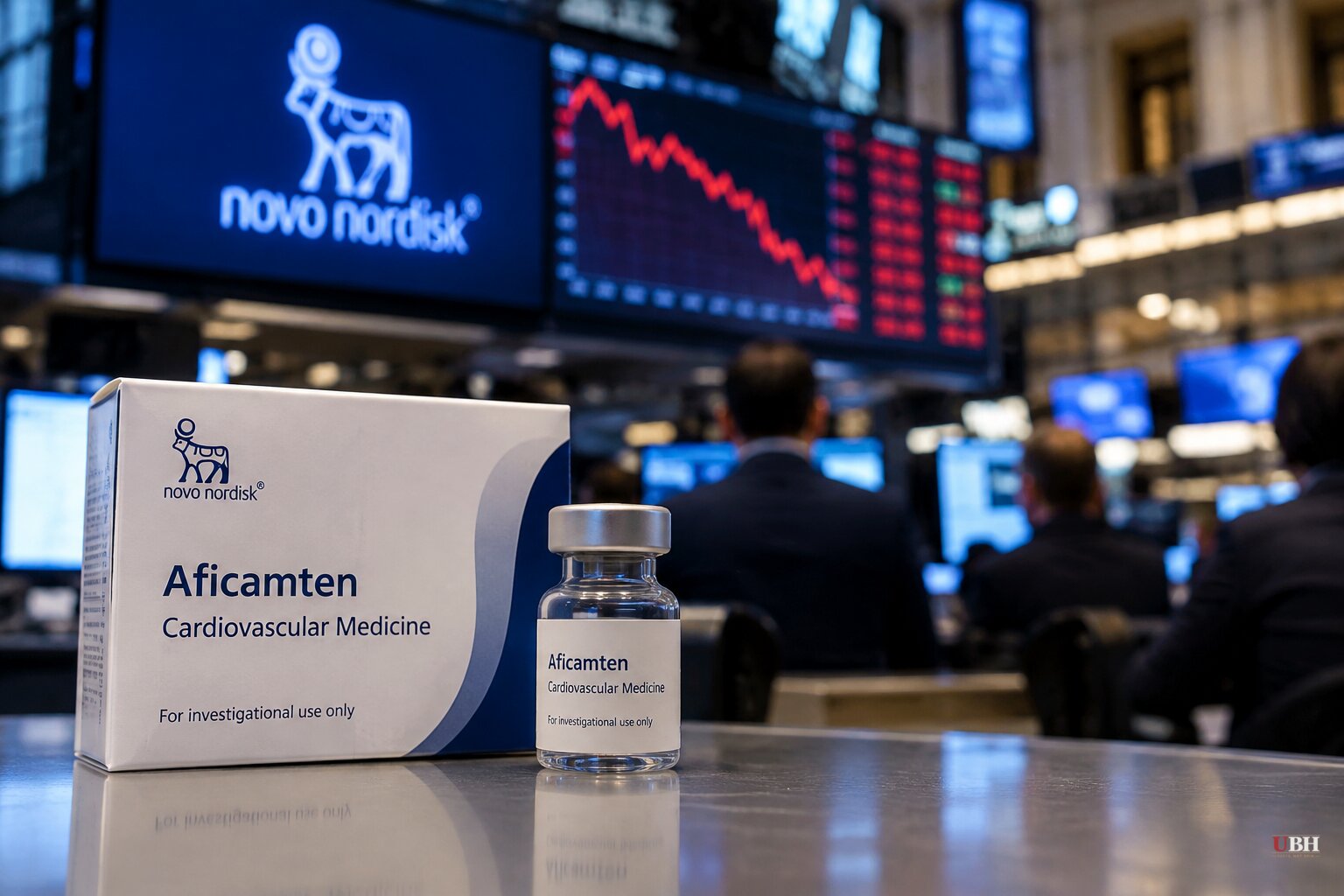
Novo Nordisk's Heart Drug Also Fails Days After Novartis, and Wall Street Starts Questioning the Whole Field
Since Novartis disclosed late on September 4 that its heart drug pelacarsen failed to reduce deaths, heart attacks or strokes despite slashing lipoprotein(a) levels by roughly 80%, and its shares fell as much as 3.9% in Zurich trading on September 7, the fallout has spread well beyond one company.
Novo Nordisk's ziltivekimab, a drug targeting the inflammatory protein IL-6, also failed to beat placebo in its own late-stage outcome trial within the same week, according to cardiologist Ethan Weiss, chief scientific officer at Marea Therapeutics, speaking on the podcast The Readout Loud. Both drugs had genetic backing considered nearly bulletproof by industry standards.
"We would say genetics is undefeated," Weiss said, describing the old assumption that a genetically validated drug target was a near-lock to succeed in outcome trials. "That it always predicted which drugs were going to work in outcome studies. We cannot say that anymore."
The Wider Problem
Roughly one in five people worldwide carry elevated Lp(a), a hereditary particle linked to heart attack and stroke that statins do not touch and PCSK9 inhibitors barely move, according to Times Now. That made pelacarsen's target look like one of the safest bets in cardiovascular research.
The Lp(a)HORIZON trial enrolled 8,323 people with existing heart disease and elevated Lp(a), tracking them for roughly seven years on monthly injections of pelacarsen or placebo, according to Times Now. Despite sharply lowering the marker, the drug produced no meaningful drop in cardiovascular death, non-fatal heart attack, non-fatal stroke or emergency procedures to restore blood flow.
Amgen, which is developing its own Lp(a)-lowering drug, saw its stock fall almost 7% in post-market trading on September 4, according to The Straits Times. Ionis Pharmaceuticals also dropped in sympathy, according to BigGo Finance. Roughly 35,000 patients remain enrolled across ongoing Lp(a) trials built on the same premise pelacarsen just failed to confirm, per BigGo Finance's reporting on Weiss's comments.
The Counterargument: Maybe the Trial, Not the Theory, Failed
Not everyone treats the result as a verdict on Lp(a) itself. Michael Leuchten, an analyst at Jefferies, said the failure "questions whether any Lp(a)-lowering therapies can ultimately show a cardiovascular benefit," but also cautioned that "any negative reaction might be overstated," noting that even a successful trial would have raised questions about which patients benefit and how the drug would compete commercially, according to The Straits Times.
Weiss's own explanation leans toward a design problem rather than a theory problem. Genetics show what happens after a lifetime without a gene's protein product across an entire population. A clinical trial shows what happens over a few years in patients already loaded with statins, aspirin and other powerful heart medicines. Those are different experiments, he argues, and conflating them is what broke the industry's shortcut for years.
Jefferies had assigned pelacarsen just a 30% probability of success even before the readout, with peak sales estimates ranging from $1.5 billion at UBS to $5.4 billion at Jefferies, according to The Straits Times. Novartis itself had pegged the total Lp(a) market opportunity at more than $5 billion.
What Happens Next for Novartis and the Field
Novartis chief executive Vas Narasimhan has said successful late-stage trials could let the company raise its forecast of 5 to 6% annual sales growth through 2030, according to The Straits Times. The pelacarsen failure, coming days after Novartis paused a separate cell-therapy trial following three patient deaths, complicates that math even as the company posted a win with its multiple sclerosis pill remibrutinib in two late-stage trials.
Novartis's next major pipeline test is del-desiran, an experimental injection targeting the genetic cause of the muscle-wasting disease DM1, part of a roughly $12 billion program, according to The Straits Times.
Weiss predicts big pharma will pull back from funding large, expensive cardiovascular outcome trials for years, and that small-company investors will retreat from the space almost entirely, according to BigGo Finance. Whether Amgen's and Eli Lilly's rival Lp(a) drug, olpasiran, produces a different result in its own ongoing outcome trial is now the question the roughly 35,000 patients still enrolled in similar studies are waiting on. No results from that trial have been announced as of this week.
Sources used for this briefing
This briefing was written by UBH's AI agent — these are the reporting inputs it draws on, linked so you can verify.


