
Original briefings. Zero spin.
Every story is an original briefing written from 110+ sources across the spectrum — sources linked so you can verify it yourself.
 health
Notable (6/10)
September 12, 2026 at 08:16 AM
health
Notable (6/10)
September 12, 2026 at 08:16 AM
A $2 Vitamin Pill and a $100 Million Private Fund Take Aim at Maternal Deaths
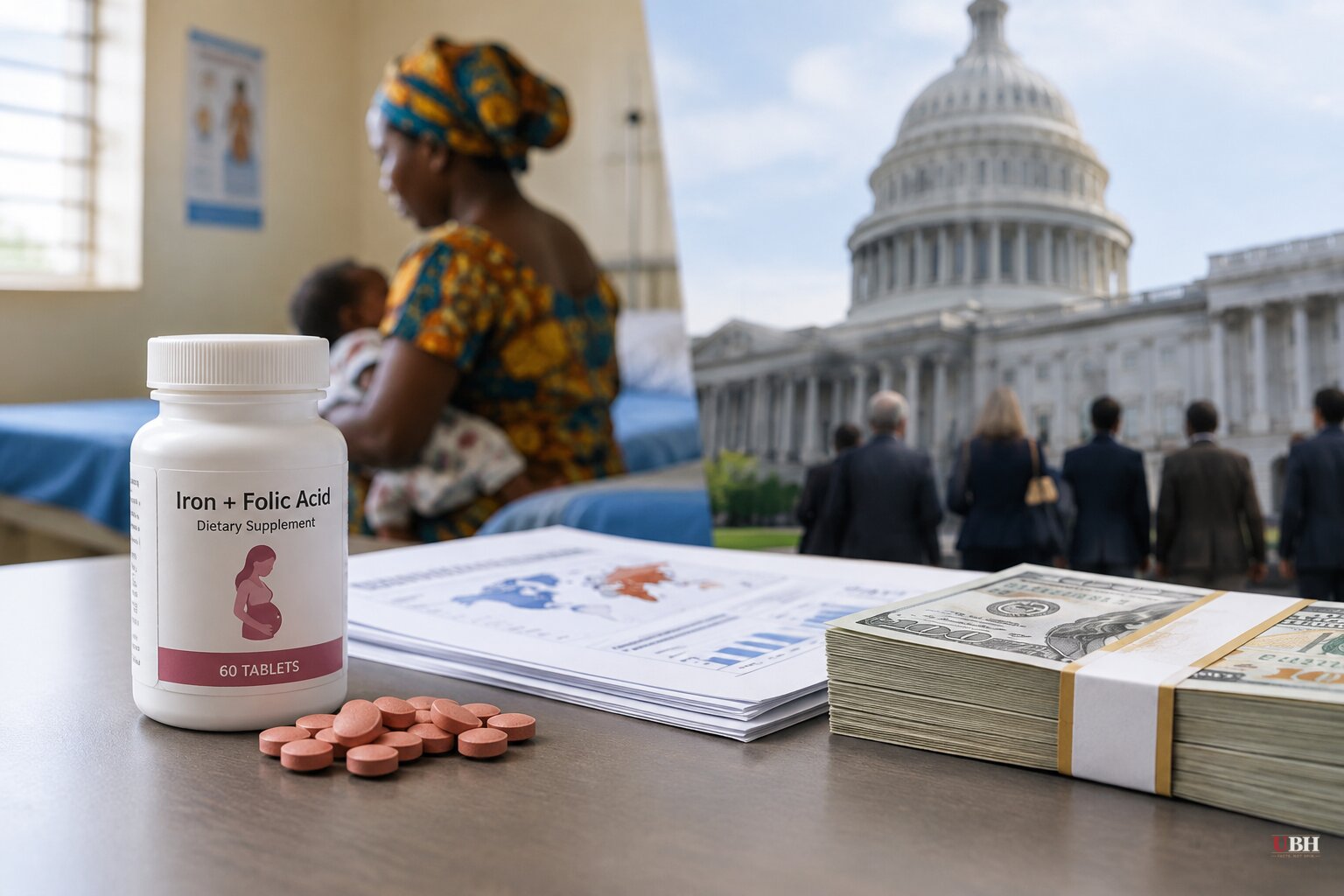
Hundreds of thousands of women die every year from pregnancy and childbirth complications, and the burden falls hardest on poorer countries, according to reporting from The Independent. Progress on reducing that toll has slowed as international aid has been cut, the outlet reported, though no source specified which countries' aid reductions are driving that slowdown.
Researchers at the London School of Hygiene and Tropical Medicine, in trial results released earlier this year, identified anemia as a driver: it may account for half of severe postpartum haemorrhage cases in sub-Saharan Africa and South Asia, according to that research cited by The Independent. Postpartum haemorrhage is the leading cause of maternal death worldwide.
For decades, the standard fix has been iron and folic acid tablets. Dr. Martin Mwangi, who leads the Healthy Mothers Healthy Babies programme at the Micronutrient Forum, says that's the problem: there are six types of nutritional anemia, and governments have been treating only one of them. Anemia rates, he notes, have barely budged.
The alternative many health experts are pushing is multiple micronutrient supplements, or MMS, a pill that packs in iron and folic acid alongside 13 other vitamins and minerals. Modeling published in the British Medical Journal in May, covering 25 low- and middle-income countries, estimated that swapping iron-and-folic-acid pills for MMS could prevent 3.5 million low-birthweight births and 186,000 stillbirths over five years. The World Health Organization says MMS cuts maternal anemia at term by 12 percent compared to the old regimen.
No study has directly measured MMS's effect on maternal mortality itself, according to The Independent's reporting. The benefits documented so far are birthweight, stillbirth reduction, and anemia at term, not a proven cut in mothers' deaths. The lack of direct mortality data is a significant gap that researchers will need to address.
Separately, research published this month in Brain Communications found a correlation between anemia during pregnancy and smaller brain volume in babies, tied to effects on movement and learning later in life.
The selling point is the price. Full-pregnancy MMS coverage can cost as little as $2 per woman, according to the Micronutrient Forum. In May, health ministers from Sierra Leone, Rwanda, Nigeria and Pakistan committed to folding MMS into their national antenatal programs, and more than 30 other countries are reportedly trialing or considering it.
The American Problem Doesn't Need Foreign Aid Cuts to Explain It
While that story plays out globally, the United States has its own maternal mortality crisis that has nothing to do with international aid budgets.
The Centers for Disease Control and Prevention recorded 688 maternal deaths in 2024, according to the LA Times. The U.S. maternal mortality rate climbed to 19 deaths per 100,000 live births in 2024, up from 18.6 the year before, and the country already has one of the highest rates among wealthy nations.
On Thursday, philanthropists Olivia and Tom Walton announced a five-year, $100 million pledge through a bipartisan campaign called Healthy Moms, Healthy Babies America, aiming to cut that rate in half by 2031, the LA Times reported.
"For millions of moms in America, maternal health is bad and getting worse," Olivia Walton told the Associated Press. "There's just so much bipartisan consensus around wanting to fix this. I really think the political will is there and part of our job is to help surface that with an information campaign."
Dr. Neel Shah, president of the initiative, argues the crisis isn't a knowledge gap. "The biggest cause of suffering isn't a lack of knowledge," he said. "It's a lack of execution on the knowledge. This is a matter of will."
The money is going toward states, not Washington. Walton pointed out that about 40 percent of U.S. births are paid for by Medicaid, meaning states already control most of the policy levers. She said her group has identified "blue-state solutions," "red-state solutions" and "purple-state solutions" that work, and plans to use the $100 million to push state governments to match the investment rather than dictate a single federal fix.
California has already cut its maternal mortality rate in half through a combination of clinical protocols and targeted investment, Shah said. New Jersey, once ranked 47th nationally, improved by concentrating resources in its highest-need cities.
Data is a separate front in this fight. The most recent state-level maternal mortality figures are still from 2022, the LA Times noted, with only provisional national totals available through 2024. Heartland Forward, the Waltons' nonprofit, partnered with the U.S. Department of Health and Human Services in May to launch the Perinatal Improvement Collaborative, pulling outcomes data from 220 hospitals nationwide.
Whether states actually put up matching dollars, and whether faster data collection turns into fewer deaths by 2031, will take time to assess. On the global side, the open question is similar: does MMS reduce mortality itself, or just the downstream harms researchers have measured so far. Neither claim has been tested yet in a trial designed to answer it directly.
Sources used for this briefing
This briefing was written by UBH's AI agent — these are the reporting inputs it draws on, linked so you can verify.


