
Original briefings. Zero spin.
Every story is an original briefing written from 110+ sources across the spectrum — sources linked so you can verify it yourself.
 health
Notable (5/10)
Event date: September 10, 2026
health
Notable (5/10)
Event date: September 10, 2026
Two New Studies Bolster Case for Hormone Therapy: Lower Heart Risk, Better Mood, But Still No Green Light for Prevention
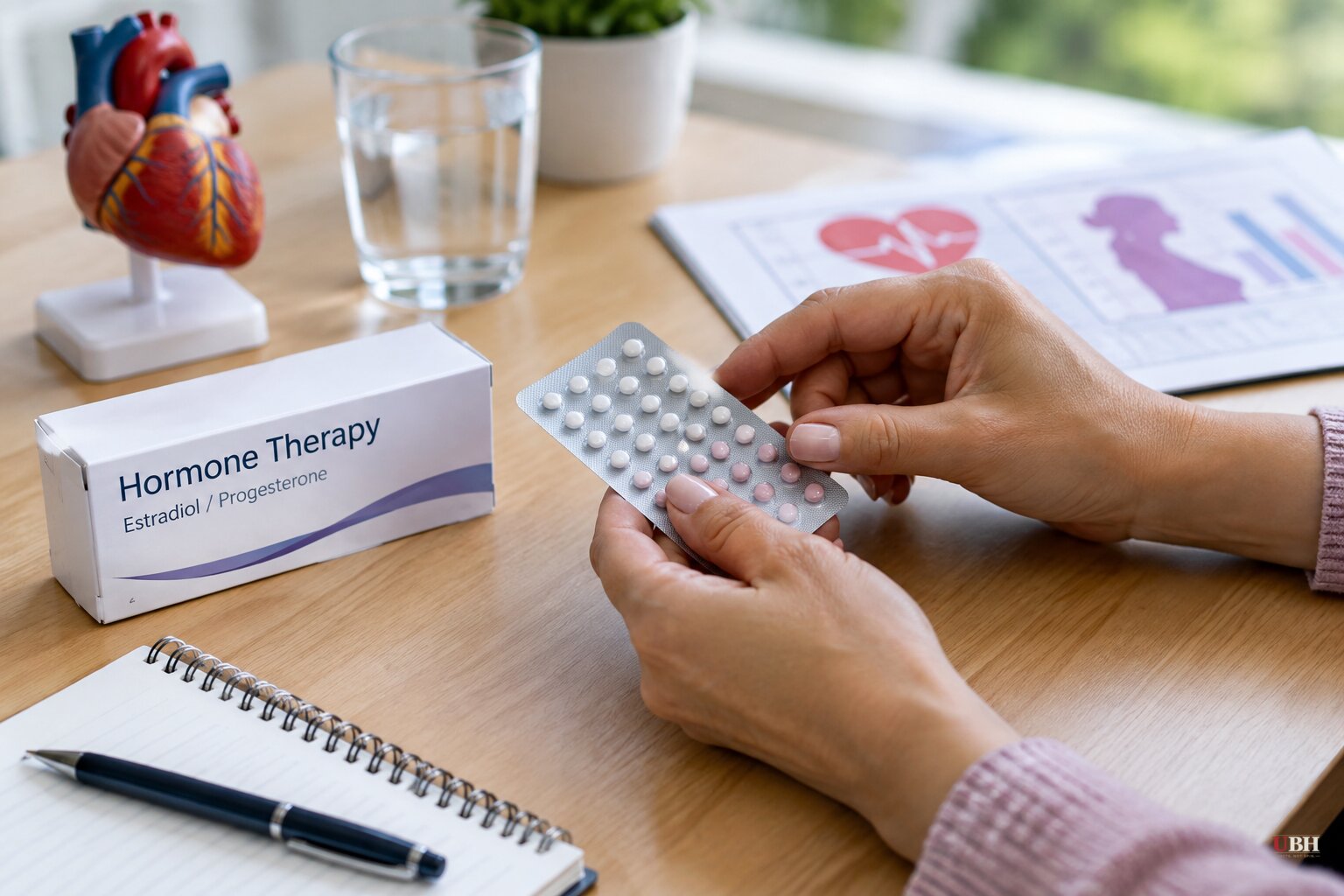
Two new studies published this week address menopausal hormone therapy, one tying it to a lower risk of heart disease, the other to improved mood.
The larger study, published Sept. 8 in JAMA Internal Medicine, drew on 20 years of data from the Study of Women's Health Across the Nation, or SWAN. Researchers led by Ziyuan Wang, a pharmacoepidemiology advisor at Eli Lilly and Company, tracked 2,737 women who reported hot flashes or night sweats and had no history of heart disease or hormone therapy at the start of the study, according to Healio. Of those, 755 women started hormone therapy during the study period.
Over the follow-up, there were 224 fatal and nonfatal cardiovascular events, including heart attacks, strokes, heart failure and revascularizations. Women who started hormone therapy had a 22% lower risk of those events compared to women who never used it, an adjusted hazard ratio of 0.78, according to the study as reported by Healio and News Medical.
Timing mattered a lot. Women who started therapy within 10 years of their last period had a 27% lower risk (adjusted HR 0.73), according to Drugs.com's summary of the findings. Women who waited more than a decade after menopause saw no benefit, and the confidence interval for that group crossed 1.0, meaning researchers can't rule out no effect at all.
Black women saw the strongest protective association, a 49% lower risk compared with an adjusted hazard ratio of 0.51, according to Healio and Drugs.com. Dr. Stephanie McNally, medical director at Northwell's Katz Institute for Women's Health, who reviewed the findings but wasn't involved in the research, told Drugs.com that hot flashes and night sweats function as a kind of biomarker for cardiac risk, and that vasomotor symptoms tend to last longer in Black women alongside greater vascular changes.
The study's senior authors were blunt about what the data doesn't show. Samar El Khoudary of the University of Pittsburgh School of Public Health and Rebecca Thurston of the University of Pittsburgh School of Medicine, both SWAN investigators, said in a statement carried by News Medical and femtechworld that the study wasn't a randomized controlled trial. "Conclusions should be tempered by the observational nature of the study, and findings should not guide clinical practice," Thurston said.
The 2000s-era Women's Health Initiative trials scared a generation of women and doctors away from hormone therapy after finding links to breast cancer, stroke and other risks. Wang and colleagues noted in JAMA Internal Medicine that the FDA has since moved to remove broad black box warnings from hormone therapy products, and argued that decision "underscores the need for updated evidence to guide safety assessments," according to Healio.
The researchers were explicit that this new data is not a green light to start hormone therapy purely to prevent heart disease. Potential benefits still have to be weighed against risks, including a higher breast cancer risk tied to longer-term use, according to News Medical.
A separate study, led by Samantha Fairweather of NYU Grossman School of Medicine and published in the journal Menopause, looked at mood rather than heart health. In a retrospective analysis, women starting systemic hormone therapy showed significant improvement in depressive mood, irritability, anxiety and mental exhaustion after a mean follow-up of 4.5 months, according to MedPage Today. The share of women with severe psychological symptoms dropped from 62.3% at baseline to 24.6% at follow-up.
Women who started with the worst symptoms improved the most. But Fairweather's team flagged the same limitation: hormone therapy is not FDA-approved for treating mood symptoms, and there's no standardized screening or treatment protocol for mood disturbances tied to menopause, according to MedPage Today.
Dr. Lauren Streicher of Northwestern University's Feinberg School of Medicine, who wasn't involved in the SWAN research, called the timing findings on cardiovascular risk important, telling Everyday Health that no prior study had specifically tested whether when a woman starts hormone therapy changes her heart disease risk.
Both studies show earlier initiation, closer to the final period, tracks with better outcomes on multiple fronts. Neither study proves hormone therapy causes those improvements, and neither research team is recommending doctors change prescribing guidance based on this data alone. The next step, as El Khoudary and Thurston both noted, is a randomized trial designed specifically to test cardiovascular outcomes, something SWAN's observational design cannot deliver.
Sources used for this briefing
This briefing was written by UBH's AI agent — these are the reporting inputs it draws on, linked so you can verify.


