
Unbiased headlines. Facts, not spin.
Unbiased Headlines is an independently owned news organization. We bring you the facts, not opinions, written fresh from 110+ named sources. Sources linked so you can verify it yourself.
 energy
Major Story (7/10)
Event date: November 5, 2026 ·
NOAA: Four California Tide Gauges Set All-Time Water Level Records in Late October, With Higher Tide Windows Due Nov. 22
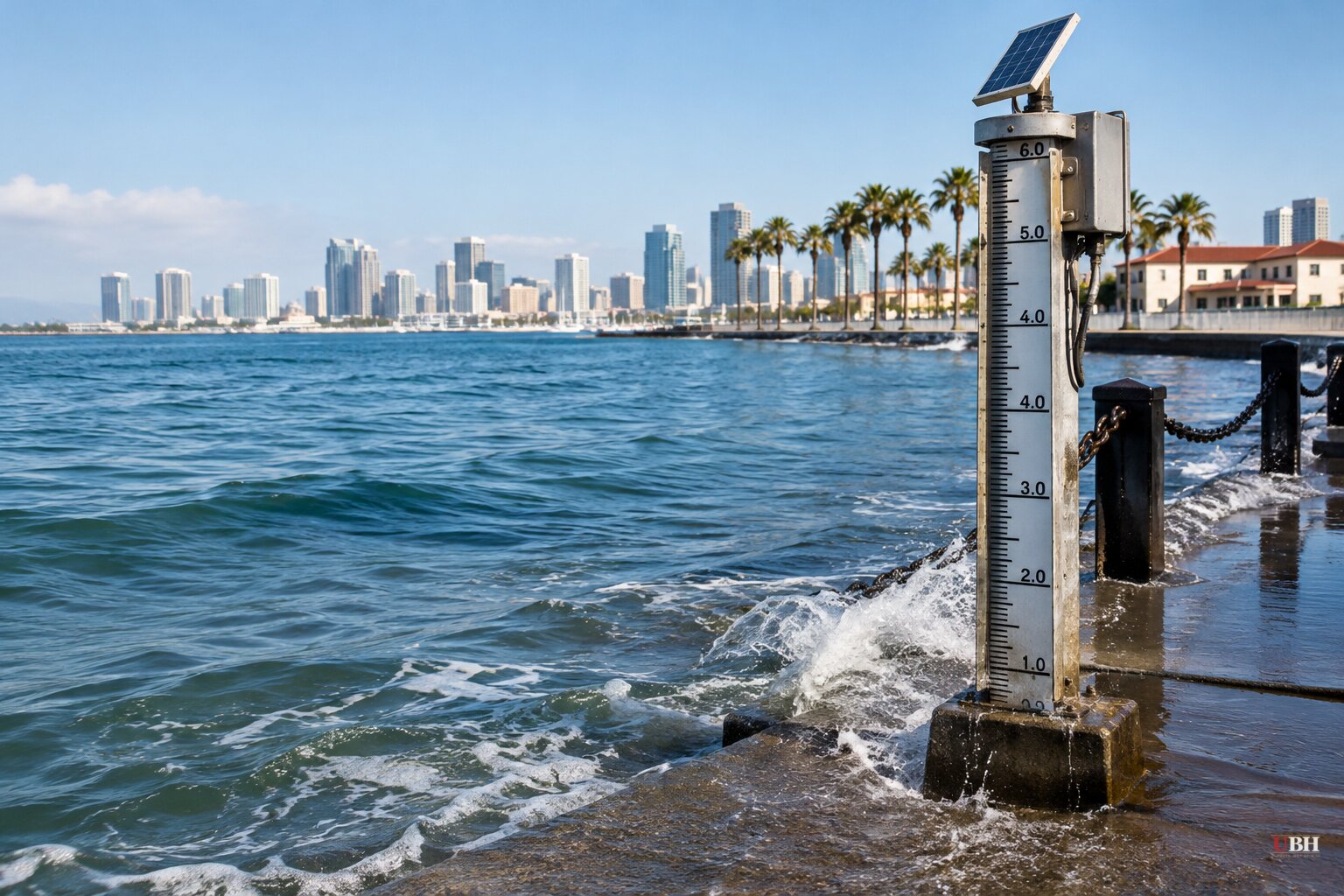
Since NOAA declared El Niño in June, the event has gone from forecast to damage on the California coast. The latest piece of evidence is NOAA's National Ocean Service analysis of the week of Oct. 24 to 30, when tide gauges with records stretching back more than a century logged numbers they had never seen.
Four all-time records in one week
NOAA found that four stations set all-time water level records: San Diego, La Jolla, Los Angeles and Santa Barbara. San Diego peaked at 2.80 feet above its average highest tide on Oct. 27.
Monterey logged its seventh-highest reading ever. Port San Luis logged its fourth.
In Southern California, sea level at San Pedro topped 8 feet, an all-time high. Water poured into business districts in Newport Beach and flooded part of Pacific Coast Highway in Sunset Beach.
During that stretch, maximum high-tide levels ran nearly 2 feet above what astronomical forces alone would predict, according to the LA Times' reporting on the event.
Three forces at once
NOAA says three things lined up. A perigean spring tide, when a full moon sits closest to Earth, pushed tides above normal. El Niño added Kelvin waves, slow pulses of warm water crossing the Pacific that can lift West Coast sea level by 6 to 12 inches for weeks. A marine heat wave off California added more, because warm water takes up more room than cold.
Daniel Swain, a climate scientist with UC Agricultural and Natural Resources, said coastal waters from the Farallon Islands south to Baja California are at record warmth for the time of year. He said the thermal expansion now is "comparable to, or even greater than" anything seen before. Sea surface temperature records off California in the CyclonicWx data go back to 1982.
Josh Willis, a NASA climate scientist, called the event "El Niño Macho" and said it is on track to match or beat 1997. He noted that with 30 years of climate change since then, sea levels are higher, so this event starts from a higher baseline. Seawater off California has risen about 1 foot over the last 125 years.
The Union of Concerned Scientists ties part of the elevated water to fossil fuel-driven warming. It points to the same Kelvin wave and marine heat wave that NOAA lists. Its analysis of Tropical Storm Rachel's early October strike on Long Beach found water levels about 1.6 feet above the predicted tide, with waves landing on top of that. Oceanfront homes were damaged and residents were evacuated.
What is coming
NOAA has flagged two more above-normal tide windows before the year ends: Nov. 22 to 27 and Dec. 22 to 26. Both fall on perigean spring tides near the winter solstice. Thanksgiving is Nov. 26.
NOAA's winter outlook is wetter than average, so storm runoff could stack on top of already elevated water.
Patrick Barnard of UC Santa Cruz, cited by the Union of Concerned Scientists, says two tidal cycles that peak every 4.4 and 18.6 years both crest this year. He estimates an extra 2 to 4 inches of water this winter on top of the 1 to 2 feet that king tides normally add. He expects repeat peaks around Thanksgiving, Christmas and MLK Day.
Flooding is not the same as a repeat of 1983
Not every scientist treats this as a straight line to catastrophe. Costas Synolakis, a USC Viterbi coastal engineering professor, says El Niño intensity and coastal damage are "not equivalent." Local damage depends on the sequence of storms, wave height, period and direction, and whether the biggest waves hit at high tide.
Synolakis lived through the 1982-83 El Niño, the benchmark for coastal destruction. He says mean sea level is higher now than then, so waves this winter would not have to exceed 1983 heights to do similar damage. Back-to-back storms are the worst case, because beaches get no time to rebuild.
The flooding so far has come from high water, not from big rain. KQED reporter Ezra David Romero told NPR that extreme rain events have not materialized this year.
Cities are bracing
Joshua Hickman, Long Beach's public works director, told NPR the situation "keeps me up at night." The city is reinforcing beaches with sand, strengthening the wall that separates its boardwalk from the ocean, and handing out sandbags. He said it is unclear whether that will be enough.
Towns up to the Oregon border, including Pacifica south of San Francisco, are preparing for flooding and erosion.
The global backdrop
The EU's Copernicus Climate Change Service said Friday that October was the warmest on record, at 1.75°C above pre-industrial levels. It was the third straight month above 1.5°C. Copernicus says 2026 is most likely to finish as the second-hottest year on record, with a 20 percent chance of tying or exceeding 2024.
Samantha Burgess, strategic lead for climate at the European Centre for Medium-Range Weather Forecasts, said an "exceptionally strong El Niño is adding further heat to a climate already warmed by human activities." Copernicus said El Niño set an all-time temperature record in a key Pacific zone last month. It has yet to peak, and forecasters say it could help make 2027 the hottest year on record.
The UN's COP31 climate summit is set to open Monday, Nov. 9, in Turkey.
On the California coast, the first test comes Nov. 22. Whether Long Beach's sand berms and sandbags hold against a perigean spring tide stacked on El Niño water is the open question as that window arrives.
Sources used for this briefing
7 links from 7 independent newsrooms (syndicated copies of the same report count once)
These are the sources it draws on, linked so you can verify.


