
Unbiased headlines. Facts, not spin.
Unbiased Headlines is an independently owned news organization. We bring you the facts, not opinions, written fresh from 110+ named sources. Sources linked so you can verify it yourself.
 energy
Major Story (7/10)
British Gas, EDF and E.ON Forecast UK Energy Bills Up More Than 25% in January
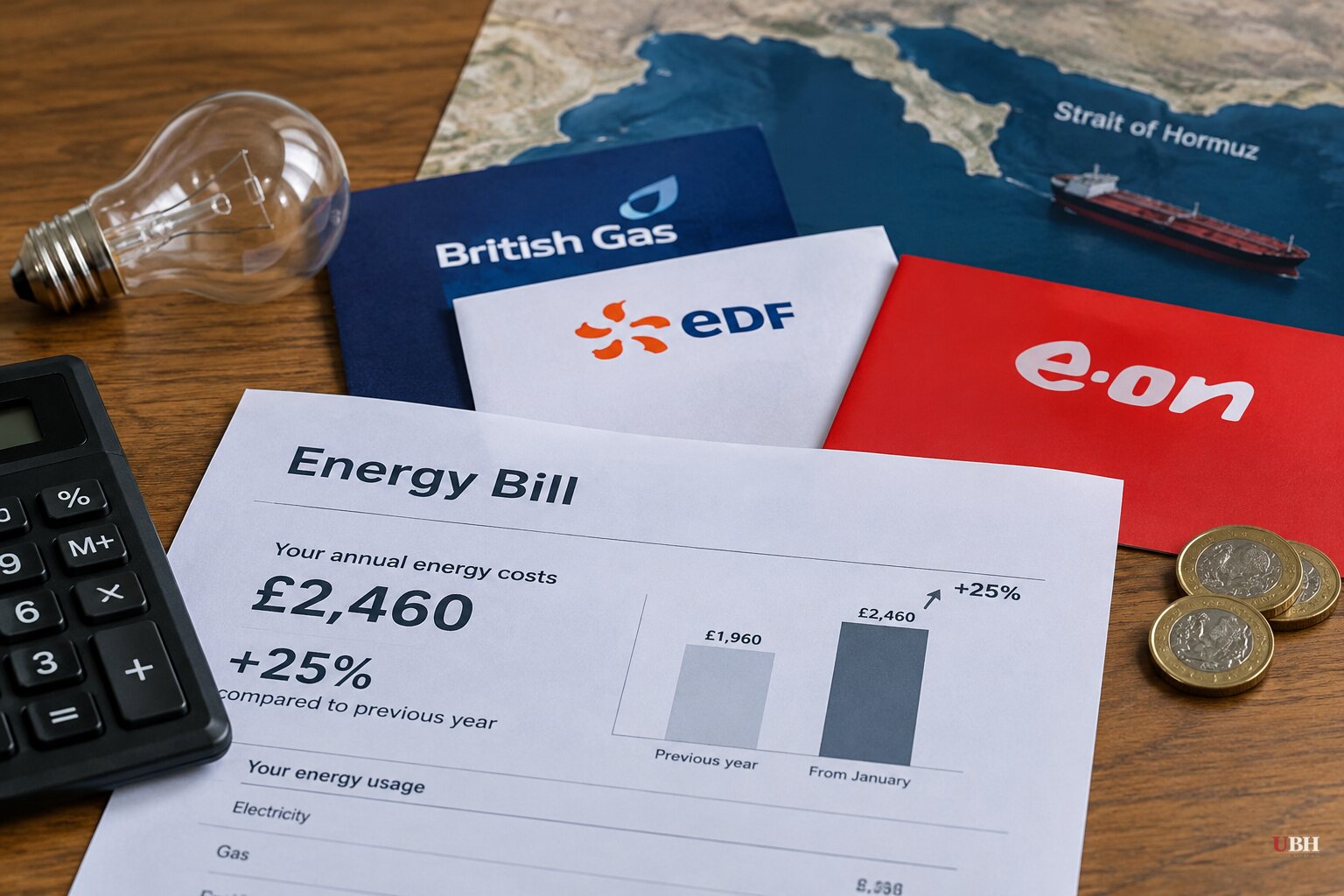
Britain's energy bills are set to jump again, and the forecasts come from the companies that send them.
British Gas, EDF and E.ON forecast that bills could rise by more than a quarter in January. That is about £460 more a year for the typical UK household.
The backdrop is the Strait of Hormuz. Since US and Israeli strikes on Iran in February effectively closed it, oil and gas prices have soared. Winter demand is expected to push them higher still, and Europe's gas storage is at its lowest level since records began in 2011.
Why Britain is exposed
Gas heats most British homes. Much of the time it also sets the wholesale price of electricity. When gas spikes, almost everything on the bill follows.
This is the second shock in four years. After Russia's invasion of Ukraine, households paid an extra £63bn, roughly £2,200 each, according to the Energy and Climate Intelligence Unit and E3G, two climate and energy research groups.
The UK buys nearly a quarter of its imported gas from the United States. It also relies heavily on China for clean energy equipment. Those two suppliers are now pulling in opposite directions.
Molecules versus electrons
Washington is pumping record volumes of oil and gas and pressing allies to buy them. Beijing is flooding the world with solar panels, batteries and electric cars meant to replace those fuels.
London has picked from both menus, but not evenly. In March, ministers blocked a £1.5bn factory at Whiteness Head on the Moray Firth, a yard that built North Sea oil platforms for nearly 30 years. The plan came from Ming Yang, one of China's biggest wind turbine makers, and promised up to 1,500 jobs initially. Ministers cited national security, after US lawmakers urged the UK to stop it.
Last month, the government approved Jackdaw, a new North Sea gas field.
No to Chinese turbines, yes to North Sea gas. Whether that mix lowers bills is unproven. The factory is dead, and the gas field has been approved but is not yet producing.
The American version
The pain is not confined to Britain. Mark Wolfe, writing in The Guardian, says households heating with oil in the US could see bills up 50% this winter, about $878 extra. His organization found electricity shutoffs in 10 states rose 28% over the past two years, before the Iran war began.
Wolfe is asking Congress to add $3bn to the Low Income Home Energy Assistance Program (Liheap) when it returns after the midterm elections and before winter sets in.
President Trump has called higher oil prices from the war "a very small price to pay for USA, and world, safety and peace." He has also said fuel prices will fall "like a rock" when the war ends. Wolfe wrote that he hopes the president is right, but argued that damaged refineries, closed shipping routes and depleted inventories mean prices may not snap back quickly even after a ceasefire.
The sanctions argument
Not everyone blames the Iran war alone. Mike Fredenburg, in an Epoch Times commentary, argues that US and European sanctions on Russian oil left Europe more dependent on Middle Eastern supply, which Iran and the Houthis are now disrupting.
His figures: Russia supplied nearly half of EU gas imports before 2022, and more than half of the diesel used in northwest Europe. After Europe banned most Russian oil products starting in early 2023, those diesel deliveries fell to almost nothing. US crude exports to Europe now run at about 1.5 million to 1.8 million barrels a day, and LNG shipments to Europe have more than doubled from 2021 levels.
Fredenburg calls the sanctions "an unmitigated disaster for Europe" and blames the resulting prices for what he calls the "catastrophic deindustrialization" of the continent. That is his characterization, not a finding from government data. He does credit Trump's expansion of US energy production with keeping American gasoline prices lower than they would otherwise have been.
The Russia question is also live in Washington. Trump has issued a sanctions waiver, which he says is meant to keep Moscow at the negotiating table.
What comes next
The next fixed dates are close. World leaders are gathering this week in Antalya, Turkey, for COP31, where the clash between cutting emissions and keeping bills down is on the agenda. January's price move is the first real test for UK households.
The open question is the Strait of Hormuz. If it stays effectively closed through a winter with record-low European gas storage, the £460 forecast could prove conservative. The suppliers have given no figure for that scenario.
Sources used for this briefing
7 links from 6 independent newsrooms (syndicated copies of the same report count once)
These are the sources it draws on, linked so you can verify.


