
Unbiased headlines. Facts, not spin.
Unbiased Headlines is an independently owned news organization. We bring you the facts, not opinions, written fresh from 110+ named sources. Sources linked so you can verify it yourself.
 energy
Notable (6/10)
Exxon Signs Non-Binding Venezuela Memorandum With PDVSA Ten Months After CEO Called Country 'Uninvestable'
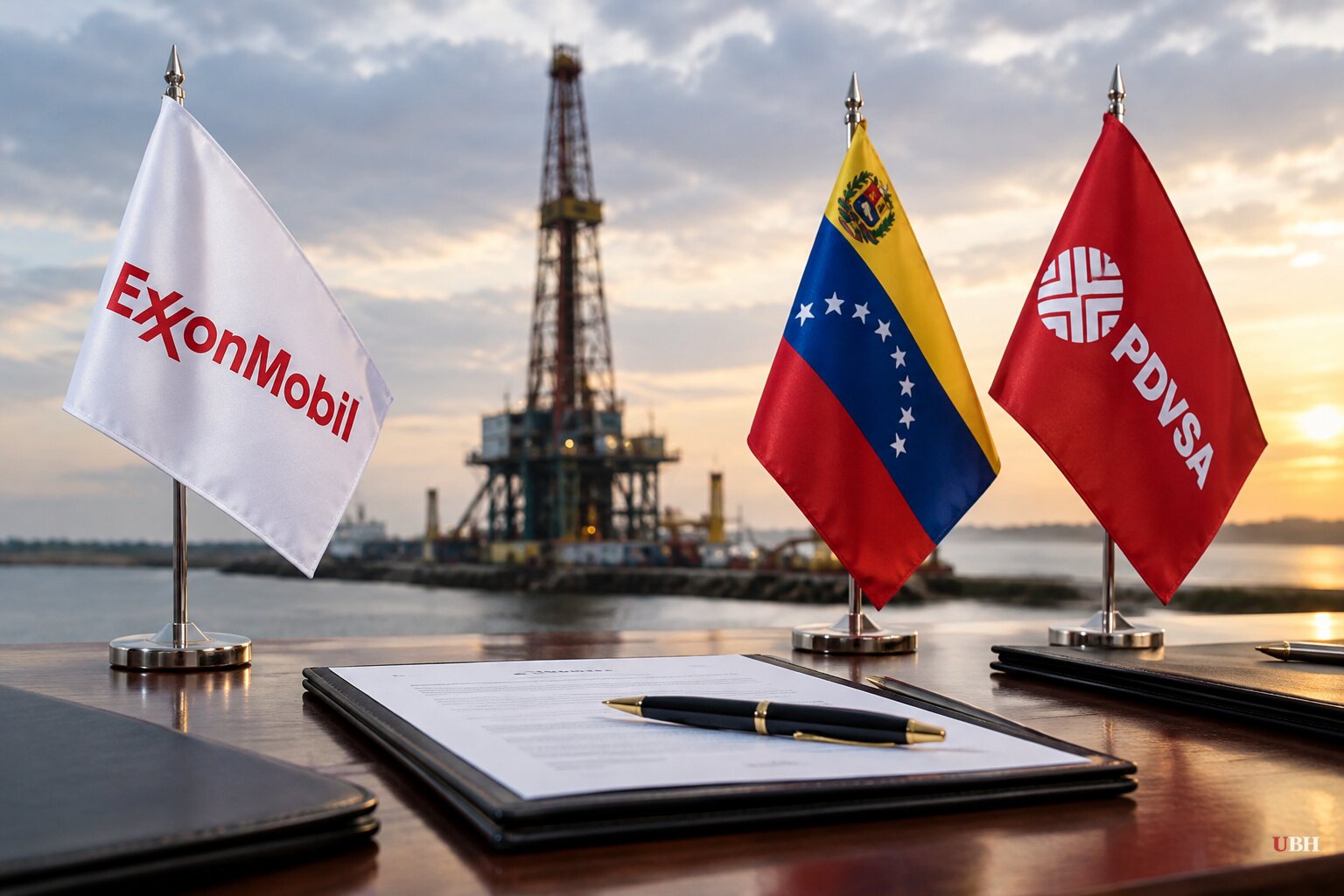
Since U.S. forces removed Nicolás Maduro in a January raid, the Trump administration has pushed American oil companies back into Venezuela. On Monday, Nov. 9, the biggest holdout joined in, at least on paper.
ExxonMobil said it signed a memorandum of understanding with Venezuela's state-owned PDVSA to explore potential upstream opportunities. The document is non-binding. Exxon did not say which projects or oil areas it is evaluating.
"This memorandum is a meaningful first step, but any future investment would require stable policies, clear regulations, strong investment protections and competitive returns," the company said in a statement.
A joint venture or production-sharing contract would be needed to confirm Exxon's participation in production. None has been signed.
From 'uninvestable' to a handshake
In January, shortly after Maduro was captured, Woods told a White House meeting that Venezuela was "uninvestable." He said much more work was needed to protect long-term investments and prevent future expropriations.
President Trump did not take it well. "I didn't like their response. They're playing too cute," Trump said of Exxon.
Woods has not changed his tune on the substance. On the company's third-quarter earnings call last month, he said his rhetoric is the same as in January, when he was describing the country as it stood then.
He also told listeners to treat reports of an imminent Exxon deal with "a little pinch of salt." Still, he said he believes Exxon "ultimately will have a role."
Why Exxon is being careful
Exxon has history here. Its Venezuelan assets were nationalized twice, most recently in 2007 under then-President Hugo Chávez.
Before that seizure, Exxon held a 41.67% stake in the Cerro Negro heavy crude project, now called Petromonagas, and a 50% interest in the La Ceiba project in the southern Maracaibo basin.
Exxon affiliates filed for arbitration at the World Bank's International Centre for Settlement of Investment Disputes in 2007. In 2014, the tribunal awarded Exxon $1.6 billion plus interest dating to 2007. Venezuela has challenged the award, and the matter remains pending.
Reuters has reported that Exxon was interested in returning to Petromonagas and was looking at neighboring areas in the Carabobo block. Petromonagas has one of the few working upgraders that can turn the Orinoco's extra-heavy crude into lighter exportable grades. Exxon has not confirmed where it is looking.
Woods laid out the company's position plainly last month. "It's going to require some substantial changes to the way things have historically been done in Venezuela. There is progress being made on those areas," he said, citing fiscal and legal frameworks. "But there's a way to go."
"We're going to make sure that before we commit that those are in place, and we have confidence that we have a viable project that's sustainable and will generate the returns required to compete in our portfolio," he said. "I expect that to take time."
Woods added that Exxon is "not in a rush" and thinks the opportunity "is going to be there for a while." He has also said Exxon's experience with Canadian heavy crude, which has similar viscosity, could be an edge in Venezuela.
Rivals are already moving
Exxon's caution has not stopped the field. Chevron, which never left Venezuela and remains its top private producer, signed a deal in September to spend $7 billion over five years through its joint ventures. The goal is to double output from about 600,000 barrels per day.
Last month, Continental Resources, founded by Trump ally Harold Hamm, signed its own memorandum with PDVSA to develop an area of the Orinoco Belt.
The administration is moving fastest of all. In late August, Trump announced what he called the "biggest oil deal in world history," involving more than 65 billion barrels of proven reserves across 17 Venezuelan oilfields, to be run through North American Blue Energy Partners, the country's second-largest private oil producer. Many of the details remain unknown.
What opened the door for newcomers was an oil reform pushed by interim President Delcy Rodríguez earlier this year. It allowed outside companies into the energy sector.
The numbers behind the caution
Exxon can afford to wait. Its third-quarter production averaged 4.496 million barrels of oil equivalent per day, the most of any U.S. major and well ahead of Chevron's 3.980 million. Exxon's year-to-date upstream earnings were $20.7 billion, up from $17.8 billion a year earlier. Guyana, the Permian and Golden Pass LNG drove the gains.
Exxon's output did slip slightly from the second quarter's 4.514 million. Venezuela is not needed to keep the company running, which helps explain why Woods can insist on conditions that Chevron, already on the ground, does not have to meet.
For Trump, the memorandum is a political win after the January friction. For Exxon, it is a free option. The company has committed no capital, named no assets and signed nothing binding.
The open questions are specific. Exxon has not said which fields it is evaluating. It has not said whether the long-pending $1.6 billion arbitration award is part of the talks. And it has not said when Venezuela's fiscal and legal changes would be enough for a final contract. Woods has said only that it will take time.
Sources used for this briefing
6 links from 6 independent newsrooms (syndicated copies of the same report count once)
These are the sources it draws on, linked so you can verify.


