
Unbiased headlines. Facts, not spin.
Unbiased Headlines is an independently owned news organization. We bring you the facts, not opinions, written fresh from 110+ named sources. Sources linked so you can verify it yourself.
 energy
Major Story (7/10)
Event date: November 2, 2026 ·
Gulf Crude Exports Near Pre-War Levels as Saudi Arabia Cuts Asia Prices, Pointing to Oil Glut
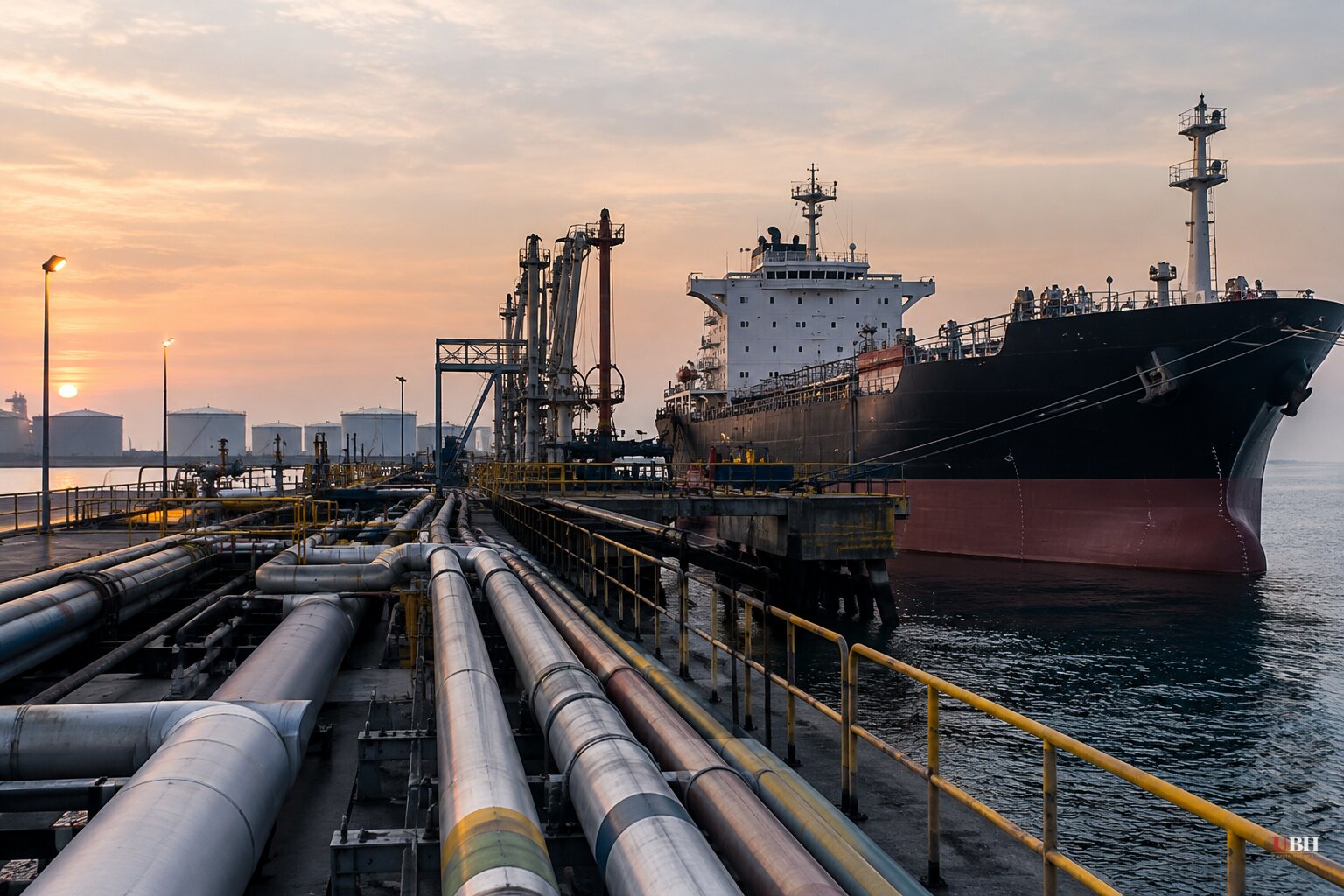
Since the U.S.–Iran war began on Feb. 28, Brent crude has gone from about $72 a barrel to a spike and back down to the mid-$90s. The latest turn is a supply story, not a war story: Middle East producers are cutting prices to win buyers.
Brent fell more than 17% last week to around $97, its steepest weekly drop since the 2020 pandemic. That slide followed the Nov. 3 midterms, in which Democrats flipped both the House and the Senate. The market read the result as raising the odds that Washington moves to de-escalate.
The new angle is what is happening underneath the headline price.
Exports are nearly back
Crude exports through the Strait of Hormuz averaged 10.3 million barrels per day in October, according to Kpler. That is up from virtually zero in the first month of the war, excluding Iranian shipments. The pre-war average was 13.5 million.
The recovery rests on tanker convoys escorted by the U.S. Navy, which Gulf producers have used since September.
Add the bypass routes and the picture is nearly whole. Saudi Arabia's Red Sea port of Yanbu and the UAE's Fujairah terminal pushed total regional crude exports to 16.6 million bpd in October, Kpler data showed. The pre-war average was 17 million.
Producers outside the Gulf also pumped more. Output rose in the United States, Brazil and Canada, and global crude production reached 85 million bpd in October, according to consultancy Energy Aspects. That is the highest since the war began and above the five-year average of 83 million.
Producers start discounting
Saudi Arabia cut the December price of its flagship Arab Light crude for Asian customers by $2 a barrel from November. That widened the discount against the Oman/Dubai average to $6.50 a barrel, the lowest since May 2020.
Spot premiums collapsed too. Oman's premium to the Dubai benchmark fell from $34 a barrel in mid-September to 95 cents last Tuesday, its weakest since July, then recovered to $1.76 on Thursday, according to Reuters data.
The discounts have several drivers, including compensation for elevated freight costs.
Bousso's read: "By almost any measure, the world is set to be awash in crude." He writes that the market faces a glut regardless of whether Washington and Tehran reach a durable peace deal in the coming weeks.
The counterargument: tight inventories and a fragile strait
The same commentary acknowledges the market is "far from its pre-war normal." Demand is constrained by high prices and limited refining capacity, and global inventories are depleted.
June Goh, senior oil analyst at Sparta Commodities, said more volatility is likely because the path to a diplomatic end to the war is uncertain and global strategic reserves have been drawn very thin.
S&P Global's figures show a more mixed picture. Vessel traffic through the strait edged up in October to its highest monthly level since July, but crude tanker movements fell and security incidents continued.
Warren Patterson and Ewa Manthey of ING said in a Nov. 5 note that the post-election selloff appeared overdone. They also said that absent escalation, the market is likely to keep giving back the risk premium it built in recent months.
What it means at the pump
The price drop has not yet erased the war's cost. The national average for regular gasoline was $4.10 a gallon on Nov. 5, AAA data showed, down more than two cents in a day but well above the roughly $3.08 of a year ago. Diesel averaged $6.29 for the week ended Nov. 2, according to the Federal Reserve Bank of St. Louis.
Patrick De Haan, head of petroleum analysis at GasBuddy, said the national average could fall to $3.65 in the weeks ahead, with diesel dropping to $5.50, based on the Nov. 4 close. He said retail prices would start reflecting the wholesale losses on Nov. 5 and Nov. 6.
The politics are on the record. Vice President JD Vance blamed the war for Republican losses. President Donald Trump told reporters Vance's assessment was largely true because the war drove up gasoline prices.
House Minority Leader Hakeem Jeffries (D-N.Y.) wrote colleagues on Nov. 4 that House Democrats must act in their first 100 days in the majority to stop the war.
What comes next
The new Congress does not take office until January. ING's Patterson and Manthey said that gap leaves room for escalation, and that lawmakers are likely to scrutinize the war more closely and could make funding it harder.
Until then, whether the glut materializes depends on two open questions: whether the convoys keep Hormuz open, and whether Washington and Tehran reach a durable deal.
Sources used for this briefing
6 links from 6 independent newsrooms (syndicated copies of the same report count once)
These are the sources it draws on, linked so you can verify.


