
Original briefings. Zero spin.
Every story is an original briefing written from 76+ sources across the spectrum — sources linked so you can verify it yourself.
 energy
Low Interest (4/10)
August 16, 2026 at 04:17 AM
energy
Low Interest (4/10)
August 16, 2026 at 04:17 AM
Nigerians Ditch Petrol Motorcycles for Electric Ones as Fuel Prices Keep Climbing
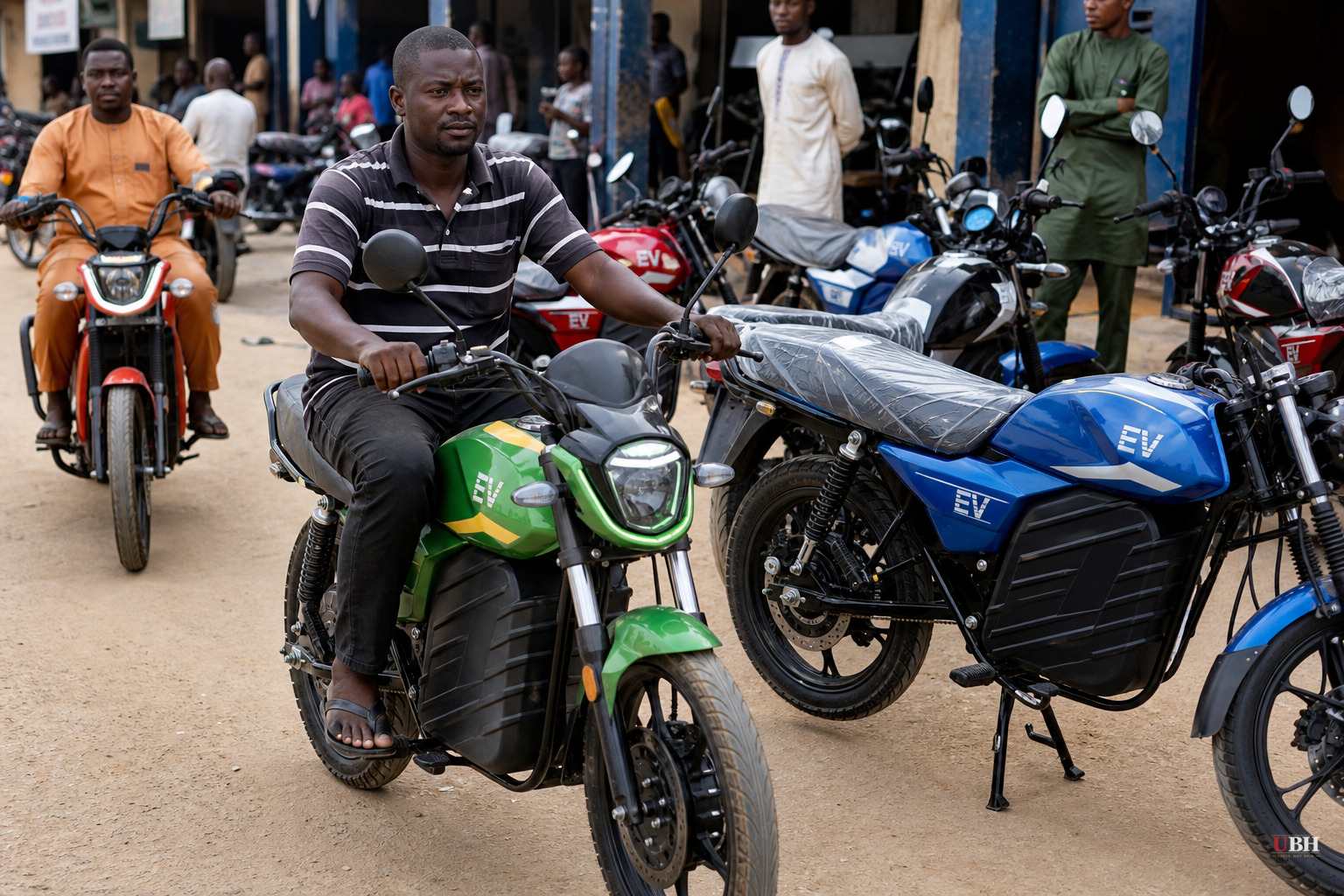
Since President Bola Tinubu ended Nigeria's fuel subsidy at his inauguration on May 29, 2023, petrol prices have risen roughly sevenfold, and that shock is now visibly reshaping how ordinary Nigerians get around, one motorcycle at a time.
In Gombe's Pantami District, electric motorcycles are showing up on streets long dominated by loud, exhaust-belching petrol bikes, according to Al Jazeera. Riders and pedestrians alike are noticing the change mostly because they can't hear it coming. One pedestrian in Al Jazeera's report didn't realize an electric bike was behind him until the rider honked.
The economics are blunt. Petrol in Gombe now runs about 1,365 naira (roughly $1) per liter, up from about 200 naira (15 cents) before the subsidy ended, according to Al Jazeera. That's not a modest bump. It's a fuel-cost shock that hits daily wage earners, farmers and commercial riders hardest, because their income depends on how far they can travel and how much of that income the ride itself eats up.
Ayuba Abubakar, a farmer in Gombe, told Al Jazeera he switched to an electric motorcycle after a friend showed him one earlier this year. He said he can move around Gombe all day without charging and only needs to plug in for longer trips to places like Kumo. Three months in, he says he's avoided the mechanical headaches that plague petrol bikes.
The upfront cost is real. Electric motorcycles in Nigeria run about 1 million naira, or roughly $735, according to Al Jazeera. That's out of reach for a lot of Nigerian households. But for people who can scrape together the purchase price, the ongoing savings on fuel and maintenance are apparently enough to make the switch worth it.
The bigger EV picture is a lot less rosy
Zoom out from motorcycles to full electric vehicles, and the story gets much harder. A TechCabal analysis, cited by streamlinefeed.co.ke, found the average upfront cost of a fully imported electric sedan in Nigeria sits at around 45 million naira. For context on how out of reach that is, that's not a stretch purchase for a middle-class professional, it's simply off the table.
The operational math is where EVs win, and it's not close. TechCabal's analysis put the cost of charging an EV off the national grid at around 15 naira per kilometer, versus 85 naira per kilometer for a petrol vehicle, even after recent tariff hikes from the Nigerian Electricity Regulatory Commission. That's roughly a fifth of the running cost. Over years of use, that gap adds up to real money.
The problem is getting to "years of use" in the first place. TechCabal's reporting, relayed by streamlinefeed.co.ke, identifies Nigeria's near-total lack of public charging infrastructure as the core bottleneck. Lagos State has partnered with private startups to install 50 fast-charging stations across the city by late 2026. TechCabal's own estimate puts the real need closer to 500 stations, meaning Lagos, Nigeria's wealthiest and most infrastructure-forward city, is on pace to hit roughly a tenth of what's actually required.
Compare that to Kenya, where companies like BasiGo and Roam have built electric bus charging depots directly into Nairobi's public transit system, according to streamlinefeed.co.ke. Nigeria's EV ecosystem, by contrast, remains fragmented, with no comparable national or state-level buildout to match.
Two different vehicles, two different stories
Electric motorcycles are cheap enough and simple enough to spread organically, rider by rider, in places like Gombe, without needing much government help. Electric cars are a different animal entirely, needing an import market, grid capacity and a charging network that Nigeria hasn't built.
Nigeria still imposes a 35 percent import duty on fully built electric vehicles, according to TechCabal's analysis, even as the national grid still can't reliably keep the lights on. That duty doesn't fix the charging-station gap, and it doesn't lower the 45-million-naira sticker price on a sedan.
The unresolved question is whether Nigeria's EV shift ends up being mostly a two-wheeled, grassroots phenomenon, driven by riders like Ayuba Abubakar solving their own fuel-cost problem, while the four-wheeled EV market stays a niche product for Nigerians who can afford 45 million naira up front. Nobody in either report offers a timeline for closing that infrastructure gap, and neither NNPC nor NERC has laid out a public plan for expanding grid capacity or charging networks to match demand.
Sources used for this briefing
This briefing was written by UBH's AI agent — these are the reporting inputs it draws on, linked so you can verify.

